So, the decade draws to a close, and so must this project. Between work, social shit, a bit of laziness on my part and the fact that the reviews I started for the last 5 on each list wound up taking a lot more out of me than I'd anticipated, I couldn't get this done in my allotted time frame - note to self: more wiggle room for the next project like this I undertake. So in the spirit of at least finishing the list portion of this on time if not the reviews, here are the top 5 albums and top 5 singles of the decade, according to me, with short blurbs about them with longer, more detailed reviews to come in the new year. Thank you to everyone who followed this in some way and I hope you stick around for the next crazy thing I undertake here (I've got a few in mind, with looser time-goals of course) if not just to see me get the last 10 reviews over with. Since January is a slow month at work I anticipate having a lot more time to do this in the new decade.
So, without further ado...
THE TOP 5 ALBUMS OF THE 00'S
5. Okkervil River - Black Sheep Boy (Jagjaguwar, 2005)
Will Sheff took his band from second tier alt country curiosities to the big time in my eyes with their third album, a song cycle based on the eponymous song written by Tim Hardin. By taking that minute and a half vignette and expanding the character's world out to a full album and equally essential follow up EP, Sheff demonstrated that he was one of the decade's foremost lyricists, storytellers and songwriters and his band showed that they could tackle all sorts of moods and tones while never getting too stagnant. It was the quintessential leap album, delivering on the promise of their under appreciated first two albums and then going beyond that with songs as gut-wrenching as "Black" (one of my picks for song of the decade) and "So Come Back I Am Waiting" and tying them all up in an uncomplicated but universal story of an outsider trying to clean up his life for a girl who loves him but seeks stability. It's an emotionally draining album in the right circumstances, and one I can't help but keep coming back to despite knowing that it will wreck me.
4. The Wrens - The Meadowlands (Absolutely Kosher, 2003)
Teenage angst lost its appeal to me for the most part once I stopped being a teenager, but mid-30s angst? Apparently that I can deal with in larger doses. It took New Jersey's favorite sons seven years to follow up their masterful 1996 album Secaucus, but the wait provided them with more than enough material to churn out the decade's defining statement about how much getting old sucks. The thing is that they did it with just as much, if not a little bit more energy than they brought to their first two albums while imbuing that energy with the sort of emotion and depth that only comes with age. They still cranked out some of the best bitter love songs of the decade - "Happy" and "Every Year You Wasted" are the kind of kiss offs that your little brother's favorite bands wish they could come up with - but but them alongside painful self examinations ("This Boy Is Exhausted") takes of perseverance ("Boys, You Won't") surreal vignettes ("Per Second Second") and "Everyone Choose Sides", which I could go on for days about the genius of but boils down to being the most driving, self-effacing bit of self-mythologizing to come out of this decade. If that's what a seven year break gives us I'm more than excited for the band's new album, tentatively scheduled for release next year.
3. The Microphones - The Glow Pt. 2 (K, 2001)
Even if nothing on Phil Elvrum's main band's masterpiece matches the glorious opening troika of "I Want Wind to Blow", "The Glow Part 2" and "The Moon" that's no reason to dismiss it as a whole. Really, any album that starts off that strongly is bound to fall off no matter how good the rest of it is. And the rest of The Glow Pt. 2 is good, probably the lushest lo-fi album ever recorded and an album that was made for headphones if there ever was one. It's another album that I feel more than I listen to, letting the full 65 minute sprawl wash over and around me as opposed to focusing specifically on the material it contains, but the feel of the album is deeper with each new listen and each new environment (mild pot buzz, post-exam comedown, playing Super Mario Galaxy) that I have a hard time faulting it for the minor sin of leading off with the best 16 minutes of material the decade has to offer.
2. Kayo Dot - Choirs of the Eye (Tzadik, 2003)
If Kayo Dot had a bit of a sense of humour I wouldn't be surprised to see someone credited with 'kitchen sink' in their ranks. There's so much going on at some points during Choirs of the Eye that the addition of a kitchen sink would seem downright logical. Basically, at their heart Kayo are a metal band, but instead of holding on to the basic metal format, the guys and gals throw in everything they can. Strings? Check, horns? Check, woodwinds? Check. The result is possibly the closest thing to an original sound that my generation has been able to hear. Sure other metal bands have gone a bit symphonic, but the fact that Kayo can throw all these auxiliary instruments in to the mix and not sound anywhere near pretentious or overblown is a testament to their skill. For instance, take 20 minute album centerpiece "The Manifold Curiosity." There's one part towards the end where every single thing that has come in to play during the song comes back, layered over top of everything else. And instead of sounding like a mess it's the best moment on an album full of exciting, original and just plain awesome moments. When a band can have close to a dozen members all playing at once and not sounding like a total mess, that takes talent. Kayo Dot have talent in spades, but more importantly they manage to be exciting. Any band can be made up of extremely talented players, but more often than not they seem to want to coast by on their talent while not doing anything really noteworthy. Kayo Dot have some X-factor that elevates them so high above their peers that it's not even funny.
1. Jackie-O Motherfucker - The Magick Fire Music (Ecstatic Peace!, 2000)
And yet the best album of the decade is the one I have the hardest time pinning down. I just know that if it were physically possible to swim in an album, this is the one I'd choose. It's not JOMF's most immediate (that would be the just-about-as-awesome Fig. 5) most expansive (Liberation) most straightforward (Flags of the Sacred Harp) or most all-encompassing (any of their live documents) but it's the one that I don't hesitate in describing as perfect. Each of the eight lengthy pieces takes the literal definiteion of post-rock (use of rock instruments for non-rock purposes) and grafts it onto the bands particularly freaky brand of folk music and Americana. Each individual piece is so endlessly fascinating, so perfectly constructed, so subtle that it's hard to listen to it and not get totally lost in its atmosphere, even when that atmosphere takes a turn for the paranoid on "2nd Avenue, 2 AM" or a turn towards an old-fashioned hoedown on closer "Black Squirrels". It's a fascinating document showcasing the most frighteningly consistent and consistently brilliant band of the decade at the very peak of their powers - not that they had far to go to get there - without necessarily drawing attention to that fact. Maybe its that subtlety that pushes it above the rest, the fact that it all seems so effortless and loose despite being so impeccably constructed. Whatever it is, it's the best thing to come out of this decade as far as I'm concerned and that's all I can say about it for now.
THE TOP 5 SINGLES OF THE 00's
5. Mirah "Cold Cold Water" (video)
I may be a bit of an Elvrum fanboy (see my #3 album and #2 single for more on that) but if any song sums up the reason he's one of my preferred producers of the deacds (non-mainstream category) it's the opener and lead off single from Mirah's Advisory Committee. Just listen to the myriad of slight changes in instrumentation that he pushes forth, never seeming content to repeat the same set of elements under any pair of lines, moving through an album's worth of arrangements in 5 minutes without having the results feel overly rushed or crowded. It's the sort of production that just works for me, intricate and varied yet not at the expense of teh song's flow. And Mirah's in fine form over top of it, laying out one of the best break up songs of the decade in her unmistakable child-like yet assured voice. Easily the highlight of her career and close to the highlight of Elvrum's if not for his main band.
4. Robyn "Be Mine" (video)
How often do songs about unrequited love come across as cheesy? Contrived? Melodramatic? Unnecessary? Often enough that every time I listen to "Be Mine!" it feels like a distinctive breath of fresh air. It's the rare 'he's just not that into me' song that doesn't come off as self-pitying or sound like an over reaction. Robyn's resigned, ultimately touching ode to losing the one she never even had hits all the right buttons, ones that get ignore so often in this type of song that it feels like the first time they were ever accessed. It's the antithesis of every single half-baked song about one-sided relationships ever written, and that's what gets the points. Not to mention that superb bridge section...
3. Radiohead "Pyramid Song" (video)
Simply the most beautiful piece of music Radiohead have ever composed. It may be the most bare bones of any of their singles, nothing but a simple yet complex sounding piano figure, Thom Yorke's most affecting vocal of their later period and in its final section Phil Selway's drumming, but it's also the most effective, doing more for me on a purely emotional level than any of the band's more involved numbers. Think of it as the 00s equivalent of "Street Spirit," but replacing its morbid, gothic tone with something that's almost exultant and angelic. Yorke describing a surreal yet beautiful dream version of heaven while the piano figure refuses to reveal its true beat even when Selway enters. It's a challenging song to figure out on a technical level but on an emotional level it couldn't be more simple: it's absolutely fucking beautiful.
2. The Microphones "The Moon" (video)
Phil Elvrum's best moment, hands down. After the opening hazy acoustic figure, when the song gets swept up in that rush of organ and more frantic than you'd expect drumming, it's one of the most unbelievably powerful moments in music, and that's before the unbelievalby sad yet strangely happy-sounding trumpets take the chorus to a new height. For 5 minutes anf 17 seconds Elvrum pretty much spells out exactly why he deserves a place on you mental list of the best producers of any kind of music, doing so much with the arrangement yet never drawing attention to just how much there is going on (as with the album it's from, headphones addso much to this one) between the panning acoustic riff, the warm yet despondant succession of organ chords and his own mumbled yet undeniably powerful vocals in the verses and the additional trumpet figure in the chorus...it's a masterpiece on a purely sonic level before you even consider looking at the lyrics. And then the song feels so much heavier, Elvrum recounting his return to the sites of some of his happiest memories and then declaring 'I went back and wished I hadn't' as if the memories of his loss are trumping the happiness he felt in those moments. It's the most powerful moment he's ever recorded in my estimation, and if not for what's next it would be a shoo in for single of the decade.
1. LCD Soundsystem "All My Friends" (video)
And yet I go with something completely predictable instead. Say anything you want, that this choice marks me for life as a hipster, a fucking dilletante, a Pitchfork-worshiping sheep, it boils down to a few simple facts. Of all the singles I heard this decade, this is the one I want played at my funeral. This is the one I want played at my wedding. This is the one I want played at last call in every bar I ever visit. This is the song I want to ring in the new decade with. This is the song I will think of first when this decade comes up in conversation years from now. This is the song that, though it may not define the decade in a strictly musical sense definitely defines it in my mind. It's the anthem for every person that just wants to find a connection in an increasingly disconnected world. It's the most concise statement of the importance of something as simple as friendship, especially as wee get older. It's such a great song that its creator was convinced he could never do it justice. It's so well arranged, produced and composed that it almost makes me sorry that I find most of what James Murphy did this decade to be somewhat lacking. It's the single of the fucking decade because I don't even need to hear more than the introductory piano figure to get a smile on my face. It's single of the decade because what the hell else could be?
Showing posts with label Best of the 00s (Albums). Show all posts
Showing posts with label Best of the 00s (Albums). Show all posts
Thursday, December 31, 2009

Sunday, December 27, 2009
#6. City of Caterpillar - City of Caterpillar (Level Plane, 2002)
 For the longest time, the best thing I could find to describe City of Caterpillar to people unfamiliar with their music was to ask tem to imagine a hardcore band that signed to Constellation Records. We've already talked about a few bands that have applied the dynamics and structure of post rock onto screamo way back when I got around to Funeral Diner and Gospel, but as far as I'm concerned City of Caterpillar are the alpha and the omega of that type of synthesis. They weren't the first to do it of course, Envy had already been making motions in this direction back in the late 90s and Maximillian Colby were well into it before their bassist was killed (just listen to "New Jello" if you don't believe me) but City of Caterpillar were the first I heard, so they get the edge here. Is that fair? I'd say so, but only because even if they didn't necessarily do it first they certainly did it best. Better than the stunning prog-screamo of Gospel, better than the more emotional work of Funeral Diner, better than the more epic and huge sounding work Envy did starting with A Dead Sinking Story (which sits just outside the confines of this list), better than any number of their followers. In three years of activity City of Caterpillar all but perfected the grafting of second wave screamo's intensity onto post-rock's scope and dynamics, then disintegrated before they could fuck up their legacy. Live fast, die young, leave a pretty corpse.
The meeting point between the two genres is probably best explored on "Minute-Hour-Day-Month-Year- (The Faiths in My Chest)", a nine minute exercise in tension that gets released only t obe regained by the ending reprise of the initial crescendo. This is the crux of my hardcore-signed-to-Constellation description; take out the middle section and you've got what sounds like Godspeed You Black Emperor!'s long lost brother, keep it in, and keep in mind that the transitions to and from it feel like the most natural and logical progression the song could take, and you've got one of the most amazing compositions in either genre this decade. The quartet know exactly what they're doing here, guitarists Jeff Kane and Brandon Evans using each other as counterpoints while bassist Kevin Longendyke and drummer Ryan Parrish anchor their tapestry with some of the most solid rhythm work in any side of heavier music this decade, be it in the calmeer build up and tear down sections or the aggressive middle section. "And You're Wondering How a Top Floor Could Replace Heaven" might be even better, especially the final section where Longendyke takes the lead riff and he and Evans engage in some sublime call and response vocals, but it feels more like a few separate tracks linked together a bit clumsily, though all told each of those individual songs is class-A material. The last of the longer numbers isn't up to the level of those two, suffering from too much build up for not enough payoff until that last 25 seconds where the band almost dies off and then ROARS back with the fiecest playing on the album for that short burst. Honestly though, by the time the first three tracks of the album were done it had pretty well secured a spot in my top ten of the decade, especially thanks to "Faiths in My Chest"'s excellent sense of composition
The funny thing is that they only really do the synthesis of post-rock and screamo with any sort of scope three times, four if you count the stunning, never officially recorded but widely bootlegged "Driving Spain Up a Wall." That's not to say that the other numbers don't bear the hallmarks of both sides of the coin, but that they get their point across without needing to extend themselves beyond the five minute mark. Hell, "A Heart Filled Reaction to Disatisfaction" does enough in 2:35 to rank as one of the best songs of the whole screamo scene without taking much from post-rock at all.The tracks that expand themselves to upwards of eight minutes are more interesting to examine, of course, but the fact that the shorter numbers still manage to fit in all manner of hairpin turns and stylistic shifts, sometimes even more than their longer counterparts, and intense dynamics is stunning in and of itself. Just listen to "Wen Was the Last Time We Painted Over the Blood on the Wall?", where the band takes a damn good Pageninetynine-esque beginning section - not surprising given the overlapping memberships of the two bands - to its logical end point, but then reveals that it was just a prelude to one of the most unambiguously pretty interludes of the album, almost sounding like it would be right at home on Come on Die Young, and that that was just an excuse to build up to an absolutely mind-blowing climax where the quartet get in some of the fiercest playing of the album (at least until the sudden resurgence at the end of the very next track). Likewise, "Fucking Hero" goes from straightforward hardcore to acoustic guitar-aided (!) breakdown to intense climax without ever sounding awkward or forced. Really, it's just closer "Maybe They'll Gnaw Right Through" that doesn't have any sort of progression within it, but that one's so perfectly evocative and moody that I can't fault it for not moving beyond that one set of riffs. It's not so much the progression that got me into them as the passion, and al lthe songs, regardless of their complexity are brimming with that shit.
Video: "Driving Spain Up a Wall" (not on the album, I know, but DAMN and I repeat DAMN is it essential)
Song: "And You're Wondering How a Top Floor Could Replace Heaven"
Song: "Fucking Hero"
Saturday, December 26, 2009
#7. The 90 Day Men - To Everybody (Southern, 2002)
 This is an album about the grooves. Each song finds an absolutely un-assailable groove and rides that mother fucker 'til the wheels fall off. The grooves are tight, anchored by some surprisingly restrained yet kinetic drumming and rubbery, Contortions-on-quaaludes bass lines, but they aren't grooves in the sense that they are danceable or remotely funky. Yet they are grooves nonetheless. The key to that definition for me is how much time it takes me to focus on the complexities of the songs themselves. "I've Got Designs on You" for instance never struck me as particularly intricate or complex, but it spends a long time in 18/8 that's at once devoid of syncopations yet undeniable off. It could be the drums playing in swing-time while the rest of the instruments are playing in straight 6/4. It could be the way the tandem guitar-piano motif seems to stumble between the first two notes of the pattern on each repetition. It could be the disconnect between both of those patterns and the vocal lines, or the hairpin shift between the caterwauling of bassist Rob Lowe (no, not that Rob Lowe) and the airy slacker croon of guitarist Brian Case. Whatever it is that does it "I've Got Designs on You" just sounds fundamentally off, and that's before it goes into polyrhythms after about 4 minutes. It's a stealthily complex composition is what I'm saying, and that's mostly because the fundamental off-ness of the piece is masked by the addictive groove that it all adds into.
It has everything to do with Andy Lansangan. When Lansangan joined the trio of Case, Lowe and drummer Cayce Key for 2000's transitional (It (Is) It) Critical Band his piano playing seemed at odds with the previously set and barely evolved 90 Day Men sound. When it meshed we got something like "Sort of Is a Country in Love" but for the most part it seemed like they hadn't figured out how to really work this new element into their palette. To call To Everybody a leap forward is an understatement. In only a couple of years the band went from slightly derivative math/noise rockers to the closest thing to 10cc that the modern indie rock scene had. The intricate arrangements, the progressive nature of their new compositions, the embrace of Lansangan's keys as the focal point as opposed to Lowe's bass or Case's jagged guitar bursts. This is straight up art-pop, and no song makes that clearer than "Last Night a DJ Saved My Life." Say what you will about Case's tendency to liberally use interjections of 'yeah' to make his lyrics fit the beat...actually ignore his lyrics for now and just listen to the flow of the piece itself. Once again, the odd time signature is masked by a tight as hell groove, Lansangan's in the driver's seat and the piece briskly rolls along for a scant 3 minutes powered by Key's subtly complex beat. It's skews closer to the 'pop' side of the equation than anything in the band's discography, yet sounds nothing like any kind of pop, art- or otherwise, that the decade has pushed out.
It doesn't stop there though. "St. Theresa in Ecstacy" is eight minutes of cascading keyboards and dreamy textures all held down by Lowe's bass line, possibly the most beautiful sustained piece on the album. "we Blame Chicago" plays like the band's version of "Underture", calling back to various passages from all the other tracks on the album while carrying through it's own undeniable melody, and "Alligator" plays a bit like "I've Got Designs on You" by way of "Last Night a DJ Saved My Life", grafting the formers loping/threatening pulse onto the latter's intimate pop-craft. In the context of the album these represent the weakest section, but isolate them and compare them to every other thing I've talked about so far and they stand proudly above them. Between the band's new found synchronicity - check out those seamless transitions during "We Blame Chicago" - and producer John Congleton's lush yet natural sound you've still got an incredibly strong 20 minute stretch of slightly progressive-minded art pop. It only feels weak because the remaining 20 minutes of To Everbody is so exceptionally strong that it would lay waste to pretty much any like-minded music made in the last 20 years.
And as good as the opening duo are, particularly "I've Got Designs on You," they can't hold a candle to the album's closer, the nealy nine-minute two part suite of "A National Car Crash." Once again, it's the perfect balancing act between the progressive and the pop, the former coming through in the structure and the latter in the melody. The vocals are shared here as well, but instead of caterwauling the way he did on the opener Lowe stays much more low key for his section giving it a nice understated quality- one that was sorely lacking in his contributions to their final release - and gives more emphasis to the truly enthralling and intricate instrumental that Lansangan's leading underneath him. Then the song shifts into Case's section where there's actual catharsis for once. Think about it: "Designs" was 7 minutes of tension that was barely alleviated by its jaunty piano conclusion, the remaining tracks were moody but never to the extremes of release or tension "Car Crash"'s second section is pure release, and it's absolutely glorious to feel after 35 minutes of stasis, as beautiful and fascinating as that stasis was. Even if Case's lyrics aren't high poetry, the feeling that he puts behind his Smiths-quoting breakup allegory (I think) makes the words themselves all but inessential to the proceedings. It stands as one of the best closing sections of any album this decade, only rivaled by the ending of my #1 album here.
It's rather unfortunate that the band couldn't match this with their (so far) final album. PAnda PArk wasn't bad, hell I had it as my #1 of 2004 back in 2004 and I wouldn't hesitate to have it i nthe top 10 there still, but outside of the two numbers that Case sings solo (the already discussed "Too Late or Too Dead" and "When Your Luck Runs Out") and the instrumental closer "Night Birds" it never reaches the heights of even the relatively weak midsection here. To Everybody was a revelation, showing the band progressing into realms that few bands of their lineage had charted previously (Cheer-Accident being the only one I can think of off the top of my head) and doing it while shedding all the awkwardness of their tentative steps in this direction. Panda Park was more of the same, but it didn't push things forward as much as it could have. Either that or having Rob Lowe sing more often obscured the fact that they were pushing things forward...anyway, I don't mean to dump on the band's seeming swan song too much since it is a great album, but it seems destined to stay in the shadow of of To Everybody for the forseeable future. Given the 5 years of inactivty since then - Lowe joined up with TV on the Radio and put out a couple of interesting solo albums under the Lichens moniker, Case became the guitarist for mildly notable post-punkers The Ponys and Lansangan returned to the never-heard-by-me Sterling with a few other Chicago veterans - it's likely to remain that way for quite a while but that's OK by me. At least we have To Everybody.
Friday, December 25, 2009
#8. Clint Mansell - The Fountain (Nonesuch, 2006)
 Kronos Quartet + Mogwai. One of my favorite movies of the decade (yeah, I'm one of those guys). The soundtrack stands on its own - I loved it before I even saw the movie - but now that it's inexorably tied to Aronofsky's visuals it comes off as even better. And if there's a more sweepingly epic bit of music than "Death Is the Road to Awe" that was released this decade I can't say I'v heard it.
Wednesday, December 23, 2009
#9. Godspeed You Black Emperor! - Lift Yr. Skinny Fists Like Antennas to Heaven (Constellation, 2000)

Storm
You think of Godspeed You Black Emperor! and you think about crescendos. I don't begrudge you for this, after all given what post-rock's come to signify in the years since GYBE!'s last missive it's all but necessary that you associate it with crescendos. That and the fact that there are crescendos here. Huge sweeping crescendos that lay waste to everything around them, crescendos that put most other post-rock bands to shame, crescendos that seem to have reached their peak and then go even further. But that's not all there is to GYBE!, and that's definitely not all there is to Lift yr Skinny Fists... If you came here for the crescendos you certainly won't be disappointed, but you'll find so much more as you dig through the quartet of suites that the collective put forth. You'll find potent statements about isolationism, you'll find incredibly subtle arrangements, you'll find a group of people that know how to put together compelling suites that rarely tread over the same ground twice. You may find Jesus if that's your bag. Whatever you find though, it won't stop at the crescendos, it will spiral outwards until you've found yourself completely immersed in the album.
That's how it starts though, with a pair of mighty crescendos. "Storm"'s first two movements milk their build ups for all their worth, the first time around with the addition of that drunken trumpet that sloppily yet precisely overlays the intense, military drumming and ringing guitars, the second with a piercing, "Amazing Grace" quoting guitar solo that devolves into an atonal shower of guitars. It shows you that the best moments aren't the crescendos themselves but what comes next. After that you're thrown into the meat of the album, the ominous recording of a recorded warning at a gas station advising its customers to avoid contact with anyone offering to help them and the solo piano coda with what sounds like wartime radio chatter in the background. The latter is especially chilling, the voices are barely discernable underneath the resonating piano on top of being obscured by static but they sound panicked, fearful. The words aren't important but the feeling is there. The former is just kind of depressing, but it's the album's theme delivered in a nice little package that gets lost during the comedown from the guitar frenzy of the previous section. The world has become place where people trying to make your life easier are to be feared, turned away. They are not employed by this establishment, they are only doing this for themselves, and that's frowned upon. I used to ignore the spoken bits on here but once they came into focus the album made sense.
Static
You could argue that large portions of this are closer to modern classical and experimental music than they are to post rock. There' a heavy reliance on field recordings, interpolations of recorded voice that are commented on by the music. The one at the heart of "Static" is an evangelical sermon, a heartfelt treatise on the powers of god and by extension faith that unwinds as a simple, echoing guitar figure plays in the background and the violins play out a mournful counterpoint over an ominous drone. "Storm" hinted at faith with the "Amazing Grace" crib, but "Static" puts it right out there, this disembodied voice hailing the power of the lord as the band lays the groundwork for their most devastating climax. "Storm" had alienation on its mind while "Static" edges closer to paranoia as the "World Police and Friendly Fire" section rears up, that ominous plucked upright bassline slowly giving way to an intense as hell crescendo that to this day never fails to send a sharp chill down my spine. That's before Efrim lets loose with that incredible solo that's half angular noise and half piercing emotion. To me, it's like the suite is saying 'You can put your faith in whatever you want, but there's still something out there that's gonna take you by surprise. You'll see it coming, you'll prepare for it but in the end it will still completely destroy you. Every. Single Time.' So we've got alienation and faith wrestling with each other, unease and catharsis working hand in hand to drive home a simple message: Something isn't right.
Sleep
'They don't sleep anymore on the beach' - Murray Ostril
We used to be trusting as a species. A young Murray Ostril could go to Coney Island and get lost without the fear of being taken. People could fall asleep on the beach and not worry about what happened after they closed their eyes. That doesn't happen anymore. It's heartbreaking to see how far we've fallen, this society where everything that's done is done with trepidation at best and fear at worst. Something isn't right, indeed, and it's us. We've lost faith because we're afraid of everything. They call the religious 'god-fearing' because even in their fervent worship they're afraid of what happens next. What if they aren't good enough to get in to heaven? What if there's a laundry list of minor sins they need to atone for? I hesitate to refer to this as a spiritual album, but it keeps pushing itself there with each new voice that comes into the melange. We, as a society need faith in each other. We've lost that, and we need it back.
That's what's going through my head before a couple of minutes of the second disc have gone by. I don't know who Murray Ostril is or where GYBE! found that sample of him talking about his youthful experiences, but whatever led to its inclusion here it's a fucking masterstroke. A simple story that comments so heavily on what's come before and what's to come as far as the emotions the album invokes. Before "Sleep" has even really begun it's drawn the whole thing into focus and that clarity reflects on what is possibly the finest 20 minutes that GYBE! have ever laid down. It may be the least adventurous piece on Lift Your Skinny Fists... but it's also the most concise and affecting. There are only two real movements so the slightly schizophrenic edge of the previous tracks is gone, but each of the two movements is in and of itself a perfectly constructed piece of 'normal' post-rock. "Monheim" is more affecting and emotional, but the way that "Broken Windows, Locks of Love Pt. III / 3rd Part" builds into that feverish climax makes it stand out as possibly the most hopeful moment on the disc. They're also the best examples of the group's ensemble playing, with each member being used to the best of their abilities and their interplay being amplified greatly over what was seen in the rest of the tracks.
Antennas to Heaven
I don't have much to say after that. Truth be told the final suite is a bit of a let down after the highs, both thematic and musical of its immediate predecessor, but it's still integral to the experience. It's the denouement if you will, the big come down. It serves its purpose but it doesn't have the depth of the previous three movements. It's a shame that one of the best recordings of the decade has to go out on a slightly disappointing note, but after the high that's sustained over the previous hour of material it's not like I can fault it for running out of steam.
Tuesday, December 22, 2009
#10. El-P - I'll Sleep When You're Dead (Definitive Jux, 2007)

Long day, so we go to bullet points here...
- The first eight tracks make up the strongest stretch of any hip hop album this decade, which is probably 90% of the reason I'm putting this so high up here.
- As with most of the other hip hop albums on the list it truly benefits from the cohesion of having a consistent producer.
- Part of me sees this as a concept album about a disillusioned soldier wandering around New York just before he's to return to duty, or at least an album-long comment on the downfall of NYC in general, but it's not quite gelling yet.
- The version of "The Overly Dramatic Truth" that El-P did at the Plug awards in 2007 is fucking phenomenal in a way that the album version just can't match.
- Funny how El-P gets the best out of The Mars Volta and Cat Power but collaborating with Trent Reznor, arguably someone more on his wavelength, leads to the album's only true weak spot.
- "The League of Extraordinary Nobodies" represents the best use of a laugh-track this decade.
- "Habeas Corpses" is gallows' humour perfected.
- Bleak, bleak production all over the album. It makes Fantastic Damage seem like a Disney movie at some points - and that's saying something.
- Yet for all its bleakness it's an oddly uplifting album. It oculd just be the lovely Cat Power-ed coda of "Poisenville Kids" but the album seems to end on a hopeful note.
- Funny how both Aesop Rock and El-P arguably had the best verses on eachother's 2007 offerings.
- While there's nothing as wrenching as "Stepfather Factory" here it really is hard to begrudge it that, especially during that phenomenal octet it begins with.
Monday, December 21, 2009
#11. Xiu Xiu - Fabulous Muscles (5 Rue Christine, 2004)
There's a certain fascination I had with Xiu Xiu long before I realized just what a legitimately talented group they were. I'd heard both their 2002 debut Knife Play, an album where 'harrowing' seems far too cuddly a term to describe it's tone, and 2003's slightly less unapproachable A Promise and while I couldn't say that I enjoyed either - really, is 'enjoy' ever the sort of term you'd associate with Xiu Xiu? - I definitely saw something in them. I think back then I'd have argued that they were the logical flipside of the 80s revival, the only group of any sort of profile that was taking cues from the darker side of post-punk without cleaning it up and dressing it in a suit. They were visceral, angular, prone to bursts of noise, angry and most importantly without any pretense. Even if neither of their albums would have come within sniffing distance of my nascent yearly best of lists they did leave an indelible impression on me; I probably listened to at least A Promise far more often than a lot of albums that were 'better' than it just to try to get my bearings on it, trying to determine how the album could start out so undeniably awesome and then fade into useless noise so soon thereafter.
Then I got a copy of the stop gap Fag Patrol EP. Hearing the songs in a completely acoustic setting, devoid of the noisy destruction that the band went into on their albums, showed that A Promise at least was made up of more than its fair share of absolutely great songs that were then willfully obscured or destroyed by noise. I figured it out then and there: Xiu Xiu were a much more accessible band than anyone would ever guess because they took their work and destroyed it before it got into any listeners' hands. Fag Patrol was the key to getting on the band's wavelength I guess; I now knew that there was a solid base to the band's material that I just needed to listen closer to hear. Subsequent listens to A Promise raised it in my estimationdramatically, and while Knife Play didn't get quite that kind of boost - it's a much less mature album all told - I certainly appreciated it in a different way than I had before.
 So in a way you could say that Fabulous Muscles was the first album of theirs that I heard properly right off the bat, and thus its position as my favorite Xiu Xiu album isn't surprising. What I didn't expect was just how well it would hold up next to the bulk of other music now that I knew what I was listening to. It could just be that FM was a decidedly large step up from their previous outings on every level, the noisy abstraction was pretty much gone and vocalist Jamie Stewart was clouding his vulnerability with fake bravado or obscuring it painful stabs of noise so the whole album felt that much more...intimate I guess. For once Stewart wasn't holding the listener at arms' length, and to be frank that just made the whole experience even more uncomfortable than being inundated with noise at regular intervals. Uncomfortable, but decidedly better.
Part of the trade off there is that instead of having to root through the noise to find out what Stewart was talking about it was right there in your face. And it was ugly...oh god was it ugly. I think "Nieces Pieces (Boat Knife Version)" was one of the few times that music had come close to making me physically ill at that point, not just for the lyrical content but for Stewart's vocal performance, so frank yet undeniably apologetic as he intoned 'I can't wait til you realize your mommy's heart is broken/I can't wait to watch you grow up around the people who broke it' It still causes a bit of a hard swallow on my part, and the uneasily light accompaniment of trombone, harmonium and guitar only adds to it's fundamental discomfort. It was such a devastating song, and the way it rubbed up against "Clowne Towne," the album's most upbeat moment, made it that much more of an uneasy listen. Similarly the title track could have been played for shock based on it's lyrics ('cremate me after you come on my lips') but once again the vocals made it seems almost touching in spite of that. There were still the confrontational, noisy numbers but they were spread out between these uncomfortably intimate numbers. It's not a coincidence that the most obvious of these, the Generation Kill-inspired "Support Our Troops OH! (Black Angels OH!)" is the one I'm most likely to skip as I go through the album - though Devendra Banhart's re-imagining of it as a doo wop number is strangely inspired.
Outside of the lyrics and those much rarer instances of noisy track destruction, there seems to be a decided move towards something approaching accessibility. "Clowne Towne" particularly borders on being lush, replete with strangely upbeat strings as Stewart jauntily - seriously, jauntily - croons out a litany of character-defamations related to a figure (himself?) who 'has become weak and alone and annoying/a true ridiculous dumb-ass'. It's disconcertingly upbeat, as is the previously dissected single "I Luv the Valley OH!", but even more disconcertingly there's nothing like the former's cathartic 'OOOOOOHHHHHHHHH!' to remind you that this is in fact a Xiu Xiu song. Given the more overtly pop moves that Stewart has made on the band's subsequent releases it feels like "Clowne Towne" is the impetus for all the disappointing material he followed up this masterpiece with, yet the song itself is utterly captivating. Same goes for the much darker opener "Crank Heart" which does the grunge dynamics thing with a decidedly more sinister air than normal and winds up being unnervingly catchy.
Essentially, Fabulous Muscles is the summation of everything that Stewart and his cohorts could do right. It's the one album under the Xiu Xiu name that makes for a consistent back-to-front listen, the only one that doesn't seem to lose any of its magic for me despite 5 years of semi-constant listening and the one that seems to be the most personal. I'm sure all three of those qualities are interconnected somehow, but what it really boils down to is that Stewart seems to have come around with a 35 minute set of material that wouldn't have worked until he got over the need for destroying his own material. It's as if Fag Patrol's relative success showed that people were ready to handle his material in a less abstracted light and he took full advantage by letting loose some of his most horrifyingly personal material. It helped that it was also his best material, and still stands as such to this day.
Video: "Crank Heart"
Video: "I Luv the Valley OH!"
Video: "Clowne Towne"
Then I got a copy of the stop gap Fag Patrol EP. Hearing the songs in a completely acoustic setting, devoid of the noisy destruction that the band went into on their albums, showed that A Promise at least was made up of more than its fair share of absolutely great songs that were then willfully obscured or destroyed by noise. I figured it out then and there: Xiu Xiu were a much more accessible band than anyone would ever guess because they took their work and destroyed it before it got into any listeners' hands. Fag Patrol was the key to getting on the band's wavelength I guess; I now knew that there was a solid base to the band's material that I just needed to listen closer to hear. Subsequent listens to A Promise raised it in my estimationdramatically, and while Knife Play didn't get quite that kind of boost - it's a much less mature album all told - I certainly appreciated it in a different way than I had before.
Part of the trade off there is that instead of having to root through the noise to find out what Stewart was talking about it was right there in your face. And it was ugly...oh god was it ugly. I think "Nieces Pieces (Boat Knife Version)" was one of the few times that music had come close to making me physically ill at that point, not just for the lyrical content but for Stewart's vocal performance, so frank yet undeniably apologetic as he intoned 'I can't wait til you realize your mommy's heart is broken/I can't wait to watch you grow up around the people who broke it' It still causes a bit of a hard swallow on my part, and the uneasily light accompaniment of trombone, harmonium and guitar only adds to it's fundamental discomfort. It was such a devastating song, and the way it rubbed up against "Clowne Towne," the album's most upbeat moment, made it that much more of an uneasy listen. Similarly the title track could have been played for shock based on it's lyrics ('cremate me after you come on my lips') but once again the vocals made it seems almost touching in spite of that. There were still the confrontational, noisy numbers but they were spread out between these uncomfortably intimate numbers. It's not a coincidence that the most obvious of these, the Generation Kill-inspired "Support Our Troops OH! (Black Angels OH!)" is the one I'm most likely to skip as I go through the album - though Devendra Banhart's re-imagining of it as a doo wop number is strangely inspired.
Outside of the lyrics and those much rarer instances of noisy track destruction, there seems to be a decided move towards something approaching accessibility. "Clowne Towne" particularly borders on being lush, replete with strangely upbeat strings as Stewart jauntily - seriously, jauntily - croons out a litany of character-defamations related to a figure (himself?) who 'has become weak and alone and annoying/a true ridiculous dumb-ass'. It's disconcertingly upbeat, as is the previously dissected single "I Luv the Valley OH!", but even more disconcertingly there's nothing like the former's cathartic 'OOOOOOHHHHHHHHH!' to remind you that this is in fact a Xiu Xiu song. Given the more overtly pop moves that Stewart has made on the band's subsequent releases it feels like "Clowne Towne" is the impetus for all the disappointing material he followed up this masterpiece with, yet the song itself is utterly captivating. Same goes for the much darker opener "Crank Heart" which does the grunge dynamics thing with a decidedly more sinister air than normal and winds up being unnervingly catchy.
Essentially, Fabulous Muscles is the summation of everything that Stewart and his cohorts could do right. It's the one album under the Xiu Xiu name that makes for a consistent back-to-front listen, the only one that doesn't seem to lose any of its magic for me despite 5 years of semi-constant listening and the one that seems to be the most personal. I'm sure all three of those qualities are interconnected somehow, but what it really boils down to is that Stewart seems to have come around with a 35 minute set of material that wouldn't have worked until he got over the need for destroying his own material. It's as if Fag Patrol's relative success showed that people were ready to handle his material in a less abstracted light and he took full advantage by letting loose some of his most horrifyingly personal material. It helped that it was also his best material, and still stands as such to this day.
Video: "Crank Heart"
Video: "I Luv the Valley OH!"
Video: "Clowne Towne"
Catching Up With...Xmas Edition
Once again, real life has encroached on reviewing time. I had a few days this week that I was gonna use to focus on writing but those got turned into days I work recently, so while I hate to do a catch-up post this close to the top of the list I do want to get back on schedule here, so placeholders it is.
Also I'll be more vigilant about at least getting an entry per day on each list put up even if a review may not appear for a bit yet...but anyway, to get us back on track"
Albums:
#14. Subtle A New White and For Hero : For Fool
#13. Explosions in the Sky Those Who Tell the Truth Shall Die, Those Who Tell the Truth Shall Live Forever
#12. Jackie-O Motherfucker Fig. 5, Liberation, Change and Flags of the Sacred Harp
Singles:
#14. Mew "The Zookeeper's Boy"
#13. Mogwai "My Father, My King"
#12. OutKast "B.O.B."
Also I'll be more vigilant about at least getting an entry per day on each list put up even if a review may not appear for a bit yet...but anyway, to get us back on track"
Albums:
#14. Subtle A New White and For Hero : For Fool
#13. Explosions in the Sky Those Who Tell the Truth Shall Die, Those Who Tell the Truth Shall Live Forever
#12. Jackie-O Motherfucker Fig. 5, Liberation, Change and Flags of the Sacred Harp
Singles:
#14. Mew "The Zookeeper's Boy"
#13. Mogwai "My Father, My King"
#12. OutKast "B.O.B."
Friday, December 18, 2009
#15. Johnny Dowd - A Drunkard's Masterpiece (Munich, 2008)
Note: This review was originally published by MONDOmagazine last summer. I like it well enough that I can't imagine rewriting it without considerably short-selling the album so I'm just re-posting it here with a few adjustments. Anyway, you really should check out their site (even though my friend who got me published there isn't editing the music section anymore - HI AL!) and if anyone over there has a problem with me re-posting this I'll gladly just replace it with a link.
I’ve long believed that songs about love and lust — or whatever variation thereof you have in mind — are generally their best at their most direct. No matter how ugly the results when unveiled, they’re definitely more interesting to look at than when they’re disguised by flowery prose. Half of A Drunkard’s Masterpiece, Johnny Dowd’s ninth studio album, seems to condone this “rip the band-aid off” philosophy, while the other half relies on hyperbolic surrealism to get its point across. The seeming opposition of the two ideas would make the album an interesting curio even if Dowd and his band didn’t do such a fantastic job of blending the two ideas together, musically as well as lyrically. Throw that bit into the equation and you’ve got an “album of the year” contender.
 Johnny Dowd’s been kicking around in various small-time bands since the late ’70s, but since his first solo outing (1998’s The Wrong Side of Memphis), he’s carved a rather unique sound. His band has been slowly working towards an odd variation of Captain Beefheart’s fucked-up blues-rock, using old-style organ tones to anchor the rhythm section. Dowd often goes for broke with fierce shredding that’s never too over-the-top, with a voice made of equal parts Tom Waits and Mark E. Smith. On recent albums he’s added Kim Sheerwood-Caso, who does the lion’s share of the vocal work. She’s a much more limited vocalist than Dowd, but her lack of affect manages to work well with the material she’s given.
A Drunkard’s Masterpiece, structured like a long story rather than multiple short vignettes, features Dowd and Sheerwood-Caso as opposing parties in a dysfunctional set of adulterous relations, slowly realizing that there’s no going back to whatever stability existed before. It’s a well-worn story - at various times I considered it to be the ideal starting material for a sequel to Francis Ford Copolla's One From the Heart - and the theme isn’t twisted in any innovative way here. There’s something, however, about how Dowd and his cohorts present it, shifting seamlessly between gothic moodiness to rollicking blues-rock, between the serious and the ridiculous, between all the perspectives a tale like this needs, without hitting you over the head with what exactly they’re doing.
It may look pretty nondescript on paper, but in practice the way the elements converge is remarkable. Take album highlight “Infidelity / Gargon vs. The Unicorn.” Dowd and Sheerwood-Caso trade increasingly implausible scenarios in which they’d forgive each other’s infidelity; the strong organ-based motif slowly cedes to Dowd’s increasingly erratic soloing as the scenarios get more demented and absurd. The way the music mirrors the intensity of the lyrics throughout the album is one of the nicer touches, especially here, where you’ve basically got both a thematic and sonic summation of the album in about seven minutes.
There’s the occasional tangent (like the cautionary tale “Easy Money”), but the whole thing manages to be relatively streamlined, despite its nearly 70-minute running time. It’s the big moments — the epic surreal argument of “Infidelity / Gargon vs. The Unicorn,” the lonely lament of “Adulteress,” and the moody place-setting of “Danger / The Blind Painter Paints Black” — that are perfectly executed, bringing the whole album up to a level of greatness. There are no wasted moments, either: even the five-minute exercise in booty worshipping “Caboose” is a lot of fun, out of left field as it is. To top it all off, Dowd’s lyrics are as good as they’ve ever been, leavening the bleak moments with a healthy dose of surreal comedy.
It’s an acquired taste, to be sure: if you’re averse to Tom Waits or Captain Beefheart, this probably isn’t gonna be your cup of tea. But, if you like your blues twisted and bitter, this could work its charms on you pretty easily.
Thursday, December 17, 2009
#16. Electric Masada - 50th Birthday Celebration Vol. 4 (Tzadik, 2004)
I'll give John Zorn credit: the man knows how to celebrate a birthday. Oh sure, you might think it can't get better than hanging out with friends and getting shitfaced, but compared to the manner in which Zorn chose to celebrate his 50th birthday that shit is tame. Instead of the usual festivities he book a month-long residence at New York's seminal Knitting Factory club and got together with a wide variety of ensembles to spend the month of his birthday reinventing his catalog in the best possible ways. Now, I haven't heard the rest of the releases that were spawned from this series, probably because the Electric Masada set was so overpoweringly great that i feared the rest of them would only suffer by comparison, but you can't deny that as far as concepts go that's one of the best kinds of celebration you could think up. Self-congratulatory? Sure, but when you're John Zorn you're allowed to be self-congratulatory.
 Anyway, I think that outside of a cursory listen to Naked City and The Circle Maker, the Electric Masada set from that series was my first exposure to Zorn's catalogue, and as far as entry points for someone coming into this world from a very rock-centric world I couldn't have asked for a better one. Sure, Naked City was more "rock" in the proper sense, but a good half of the album was made up fo those trademark fragmented bursts of aggression that came from and went nowhere. I've come to appreciate tehm more with time, but when I first listened to 50th Birthday Celebration Vol. 4 it still only struck me as half a good album. This, on the other hand is 70 minutes of absolutely killer jazz-rock hybrids, complete with a 3-man percussion section, Marc Ribot on guitar (sounding nothing like he does on Tom Waits' albums) Trevor Dunn from Mr. Bungle on bass and Zorn letting loose as I'd never heard him do before and well integrated electronics and keyboards from Ikue Morie and Jamie Saft respectively. The performances are fierce, fiery and energetic, the interplay is without comparison, the songs are culled from Zorn's extensive Masada songbook so it's material all the players know well (half of the ensemble is part of the Bar Kokhba Sextet and drummer Joey Baron is part of the original Masada Quartet). The result is the most essential Zorn document I've heard even after a minor immersion in his other work (full immersion would require a lot more time since the dude's prolific enough for three of him).
In fact, I don't think I fully appreciated the quality of this until I familiarized myself with the other versions of these seven numbers. Now that I've listened through the original 10 Masada albums, plus Bar Kokhba, The Circle Maker and a few other Masada-based releases in Zorn's discography, and I can say without much hesitation that the performances of the song on here (and on the unit's subsequent outing At the Mountains of Madness) are my favorites. I can hear the originals shining through, but the intensity of these performances really puts them at the front of the line. "Idalah-Abal" never sounded this dark and menacing, "Tekufeh" never sounded as vital and energized, the closing trio of tracks here never sounded so earth-shatteringly monumental. You could argue that the performance of "Hadasha" is a bit meandering, and it is to some extent, but other than that the whole set is absolutely blistering, without much of a wasted moment in the whole works. And listening to the ridiculously talented percussion trio of Baron, Cyro Baptista and Kenny Wollensen at any point in the ordeal is worth the price of admission on its own.
Anyway, I think that outside of a cursory listen to Naked City and The Circle Maker, the Electric Masada set from that series was my first exposure to Zorn's catalogue, and as far as entry points for someone coming into this world from a very rock-centric world I couldn't have asked for a better one. Sure, Naked City was more "rock" in the proper sense, but a good half of the album was made up fo those trademark fragmented bursts of aggression that came from and went nowhere. I've come to appreciate tehm more with time, but when I first listened to 50th Birthday Celebration Vol. 4 it still only struck me as half a good album. This, on the other hand is 70 minutes of absolutely killer jazz-rock hybrids, complete with a 3-man percussion section, Marc Ribot on guitar (sounding nothing like he does on Tom Waits' albums) Trevor Dunn from Mr. Bungle on bass and Zorn letting loose as I'd never heard him do before and well integrated electronics and keyboards from Ikue Morie and Jamie Saft respectively. The performances are fierce, fiery and energetic, the interplay is without comparison, the songs are culled from Zorn's extensive Masada songbook so it's material all the players know well (half of the ensemble is part of the Bar Kokhba Sextet and drummer Joey Baron is part of the original Masada Quartet). The result is the most essential Zorn document I've heard even after a minor immersion in his other work (full immersion would require a lot more time since the dude's prolific enough for three of him).In fact, I don't think I fully appreciated the quality of this until I familiarized myself with the other versions of these seven numbers. Now that I've listened through the original 10 Masada albums, plus Bar Kokhba, The Circle Maker and a few other Masada-based releases in Zorn's discography, and I can say without much hesitation that the performances of the song on here (and on the unit's subsequent outing At the Mountains of Madness) are my favorites. I can hear the originals shining through, but the intensity of these performances really puts them at the front of the line. "Idalah-Abal" never sounded this dark and menacing, "Tekufeh" never sounded as vital and energized, the closing trio of tracks here never sounded so earth-shatteringly monumental. You could argue that the performance of "Hadasha" is a bit meandering, and it is to some extent, but other than that the whole set is absolutely blistering, without much of a wasted moment in the whole works. And listening to the ridiculously talented percussion trio of Baron, Cyro Baptista and Kenny Wollensen at any point in the ordeal is worth the price of admission on its own.
Wednesday, December 16, 2009
#17. James Blackshaw - Litany of Echoes (Tompkins Square, 2008)
Jack Rose died earlier this month. I hadn't thought much about him or his work since 2005's marvelous Kensington Blues came across my radar, but the news still hit me hard. I loved what I'd heard of him, be it from his time in seminal drone-folk collective Pelt or his first few solo outings, and his sudden death felt like a huge blow to the insurgent American Primitivism revival that was building up over the decade. The worst of it was that when I heard the news I realized that both Opium Music and Kensington Blues were albums that had slipped my mind completely when I was making this list, and the latter of which at least would have been a shoo-in for the top 50 if not higher. So even though I'll spend more time talking about one of the newer leading lights f the American Primitivism scene today, consider this post as much for Jack Rose as it is for James Blackshaw. It may not be the epitaph that Rose deserves, but it makes me feel a bit less shitty for having him slip my mind in the list-making process.
 Blackshaw isn't as similar to Rose as I'd initially thought. Based on his marvelous 2007 breakthrough The Cloud of Unknowing I'd assumed he was another in the line of Fahey-worshippers that seemed to wait until this decade to really make their presence felt - Ben Chasny, Rose, Steffan Basho-Junghans, that Locust Records Wooden Guitar compilation from the early decade - albeit one that was played with more conviction and skill than I'd anticipated. If its follow up, 2008's Litany of Echoesmade anything clear it was that we weren't just talking about an exceptionally talented Fahey acolyte but an exceptionally talented composer and performer period. This is still American Primitive Guitar at its core, but there are elements of classical music, chamber music and in collaborator Fran Bury's violin and viola contributions a keen sense of interplay and harmonics. All that is taken to the next level by Blackshaw's guitar playing, using his 12-string acoustic guitar to its full potential and deriving a sort of harmonic richness that just wouldn't be possible on any othe instrument. It never ceases to amaze me that something like "Shroud" is the product of one man and one guitar; the way it's recorded and the way Blackshaw plays, making excellent use of the overtones and reverberations generated by the room to give the song a richness and depth that few others in his immediate group of peers can manage.
As great as "Shroud" and the other purely solo piece "Echo and Abyss" are, the real stunner here is the 12 and a half minute "Past Has Not Passed" which not only takes full advantage of Blackshaw's guitar but adds in Bury's violin as a counterpoint. The melding of the two instruments, Blackshaw letting out a flurry of absolutely beautiful, fluid arpeggios while Bury adds in both a melodic through line and some low viola drones to add to the harmonic texture of the piece. It's some of the most expressive playing the decade has to offer, and from such a bare-bones ensemble it sounds massive, with Bury's multi-tracked string drones reverberating endlessly through the room, Blackshaw's guitar doing likewise and Bury's overdubbed violin sounding out a sharp contrast to the lushness of the rest of the piece. Her other contributions are just as essential, but the confluence of everything on "Past Has Not Passed" gives her her best showcase.
As for the other pieces, the brief "Infinite Circle" is the most droney piece the album offers up, with Bury's viola once again providing the grounding while Blackshaw does a less intricate version of his usual thing, and he album's bookends are foreboding piano pieces reminiscent of Steve Reich at times. They may not be as rich and pretty as the guitar based pieces but they're a key part of what set Blackshaw apart from his peers. He's not just indulging in the American Primitive guitar but taking detours into the realms of classical composition and chamber music sonics to give the album a distinct feel. It would work fine as a straight guitar album with an hour of pieces like "Shroud" but the variety, however slight, it offers pushes it ahead of its obvious peers. That and the fact that it sounds so fucking immaculate, so dense with reverberating guitar notes that seem to hang in the air forever with their overtones mingling to create a rich harmonic bed. It kind of comes with the territory I suppose, but it's stunning nonetheless.
Video: "Past Has Not Passed (Live)"
Blackshaw isn't as similar to Rose as I'd initially thought. Based on his marvelous 2007 breakthrough The Cloud of Unknowing I'd assumed he was another in the line of Fahey-worshippers that seemed to wait until this decade to really make their presence felt - Ben Chasny, Rose, Steffan Basho-Junghans, that Locust Records Wooden Guitar compilation from the early decade - albeit one that was played with more conviction and skill than I'd anticipated. If its follow up, 2008's Litany of Echoesmade anything clear it was that we weren't just talking about an exceptionally talented Fahey acolyte but an exceptionally talented composer and performer period. This is still American Primitive Guitar at its core, but there are elements of classical music, chamber music and in collaborator Fran Bury's violin and viola contributions a keen sense of interplay and harmonics. All that is taken to the next level by Blackshaw's guitar playing, using his 12-string acoustic guitar to its full potential and deriving a sort of harmonic richness that just wouldn't be possible on any othe instrument. It never ceases to amaze me that something like "Shroud" is the product of one man and one guitar; the way it's recorded and the way Blackshaw plays, making excellent use of the overtones and reverberations generated by the room to give the song a richness and depth that few others in his immediate group of peers can manage.As great as "Shroud" and the other purely solo piece "Echo and Abyss" are, the real stunner here is the 12 and a half minute "Past Has Not Passed" which not only takes full advantage of Blackshaw's guitar but adds in Bury's violin as a counterpoint. The melding of the two instruments, Blackshaw letting out a flurry of absolutely beautiful, fluid arpeggios while Bury adds in both a melodic through line and some low viola drones to add to the harmonic texture of the piece. It's some of the most expressive playing the decade has to offer, and from such a bare-bones ensemble it sounds massive, with Bury's multi-tracked string drones reverberating endlessly through the room, Blackshaw's guitar doing likewise and Bury's overdubbed violin sounding out a sharp contrast to the lushness of the rest of the piece. Her other contributions are just as essential, but the confluence of everything on "Past Has Not Passed" gives her her best showcase.
As for the other pieces, the brief "Infinite Circle" is the most droney piece the album offers up, with Bury's viola once again providing the grounding while Blackshaw does a less intricate version of his usual thing, and he album's bookends are foreboding piano pieces reminiscent of Steve Reich at times. They may not be as rich and pretty as the guitar based pieces but they're a key part of what set Blackshaw apart from his peers. He's not just indulging in the American Primitive guitar but taking detours into the realms of classical composition and chamber music sonics to give the album a distinct feel. It would work fine as a straight guitar album with an hour of pieces like "Shroud" but the variety, however slight, it offers pushes it ahead of its obvious peers. That and the fact that it sounds so fucking immaculate, so dense with reverberating guitar notes that seem to hang in the air forever with their overtones mingling to create a rich harmonic bed. It kind of comes with the territory I suppose, but it's stunning nonetheless.
Video: "Past Has Not Passed (Live)"
Tuesday, December 15, 2009
#18. Mew - ...and the Glass-Handed Kites (Sony, 2005)
I understand why in some circles 'prog' is a 4-letter word (oh you know what I mean you literal-minded jackasses) but bear with me here if you are part of that sect of music listeners. I may not be a typical prog fan, someone who gets way too wrapped up in the lyrics of Yes albums or actually tries to defend the numerous excesses of Genesis and ELP, both musical and tonal, but I do have a soft spot for the genre. I can overlook the pomposity a lot of the time, especially if underneath that the music itself is good enough to merit that type of a listen, and usually it is. I can forgive moments of wankery if they feel at east somewhat natural to the progress of the song. I understand why some people can't look past that sort of thing, but it's worth it when it winds up with moments as great as some classic prog could manage. Why am I going on about this? Because I know a few people who got turned off of ...and the Glass-Handed Kites becaue it was basically Mew-gone-prog, and as far as I'm concerned that's missing the point by quite a bit. It's Mew-gone-prog, sure, but not in the way you're thinking of it. They aren't indulging in 5 minute solos or 15 minute suites about the plight of the fictional Elfloric people or Middle...yeah, you know what I'm talking about, they're simply applying a bit more of an epic scope to their already pretty great indie-pop.
 I was a fan of their previous album, 2003's Frengers, but as good as that was it couldn't have prepared me for what lay in the wait. Like I said, this is Mew-gone-prog in the best possible way, an impeccably sequenced utterly gorgeous hour of some hybrid of art pop and shoegaze with the most swoon-inducing vocals this side of Kate Bush (come to think of it this could pass for a rocked out version of Hounds of Love in places). the progressive part applies more to the album's structure than to its music, with the songs bridging between each other in sometimes exhilarating ways and the songs themselves getting more complex and layered, especially the vocals. I wouldn't be surprised if there was a concept behind it too, but the lyrics always seem to be secondary to the sound of frontman Jonas Bjerre's voice, not in the 'singing to hear himself sing' way but in the use of his voice, sometimes in multiple layers, as another element of the album's instrumental palette. Besides, his lyrics have always been more evocative than concrete, and that seems to be the case here more than ever.
Besides, it isn't like the album needs a unified lyrical concept when it all sounds so damn gorgeous. Even the opening dissonance and angular riff of "Circuitry of the Wolf" winds up sounding immeasuarbly beautiful after that piano line and ethereal vocal choir takes over the track to lead it into the just as jagged in places but even more ethereal "Chinaberry Tree." It's odd, but I find that the transitions between the tracks are the album's best moments, especially the sections of the album where there's no breathing room between tracks. Just listen to the stretch from "Fox Cub" through to "A Dark Design" for the best of that type of thing; the way that the calm interlude of "Fox Cub" builds up to the spiky, frantic post-punk of "Apocalypso" whose ending one chord vamp seamlessly transitions into "Special"'s main riff which evolves into the off-center introduction of "The Zookeeper's Boy" whose ending vocal nirvana perfectly dissolves into the warm synth of "A Dark Design" almost puts the constituent songs in that set to shame. It probably would if we weren't talking about three of the strongest songs of the decade on their own and two essential pieces of dream pop on either end of them. Later on the transitions get more tenuous, but the songs that get to stand on their own are some of the most epic and beautiful. I'm talking about the last two tracks here, specifically "White Lips Kissed" which almost reaches the vocal sweet spot that "Zookeeper's Boy" set the bar for, then has Bjerre going even higher into falsetto as a military drum pattern emerges out of the haze, but "Louise Louisa" is far from a shadow of it, especially in its final moments when Bjerre sounds frail and broken as he closes the album with a plea of 'Stay with me/I don't want to be alone'. Really the only moment I can't find much love for is "The Seething Rain Weeps for You" but it's not like it's a bad song - and OK, the guitar solo over the last chorus is pretty awesome despite not being necessary - just a merely OK one in a sea of much better examples of what these guys can do.
Oh, and it's got a really fucking horrible cover just so we can get that out of the way. No way I can defend that piece of shit.
Video: "Why Are You Looking Grave (Edit)"
Video: "Apocalypso"
Video: "Special"
Video: "A Dark Design"
I was a fan of their previous album, 2003's Frengers, but as good as that was it couldn't have prepared me for what lay in the wait. Like I said, this is Mew-gone-prog in the best possible way, an impeccably sequenced utterly gorgeous hour of some hybrid of art pop and shoegaze with the most swoon-inducing vocals this side of Kate Bush (come to think of it this could pass for a rocked out version of Hounds of Love in places). the progressive part applies more to the album's structure than to its music, with the songs bridging between each other in sometimes exhilarating ways and the songs themselves getting more complex and layered, especially the vocals. I wouldn't be surprised if there was a concept behind it too, but the lyrics always seem to be secondary to the sound of frontman Jonas Bjerre's voice, not in the 'singing to hear himself sing' way but in the use of his voice, sometimes in multiple layers, as another element of the album's instrumental palette. Besides, his lyrics have always been more evocative than concrete, and that seems to be the case here more than ever.Besides, it isn't like the album needs a unified lyrical concept when it all sounds so damn gorgeous. Even the opening dissonance and angular riff of "Circuitry of the Wolf" winds up sounding immeasuarbly beautiful after that piano line and ethereal vocal choir takes over the track to lead it into the just as jagged in places but even more ethereal "Chinaberry Tree." It's odd, but I find that the transitions between the tracks are the album's best moments, especially the sections of the album where there's no breathing room between tracks. Just listen to the stretch from "Fox Cub" through to "A Dark Design" for the best of that type of thing; the way that the calm interlude of "Fox Cub" builds up to the spiky, frantic post-punk of "Apocalypso" whose ending one chord vamp seamlessly transitions into "Special"'s main riff which evolves into the off-center introduction of "The Zookeeper's Boy" whose ending vocal nirvana perfectly dissolves into the warm synth of "A Dark Design" almost puts the constituent songs in that set to shame. It probably would if we weren't talking about three of the strongest songs of the decade on their own and two essential pieces of dream pop on either end of them. Later on the transitions get more tenuous, but the songs that get to stand on their own are some of the most epic and beautiful. I'm talking about the last two tracks here, specifically "White Lips Kissed" which almost reaches the vocal sweet spot that "Zookeeper's Boy" set the bar for, then has Bjerre going even higher into falsetto as a military drum pattern emerges out of the haze, but "Louise Louisa" is far from a shadow of it, especially in its final moments when Bjerre sounds frail and broken as he closes the album with a plea of 'Stay with me/I don't want to be alone'. Really the only moment I can't find much love for is "The Seething Rain Weeps for You" but it's not like it's a bad song - and OK, the guitar solo over the last chorus is pretty awesome despite not being necessary - just a merely OK one in a sea of much better examples of what these guys can do.
Oh, and it's got a really fucking horrible cover just so we can get that out of the way. No way I can defend that piece of shit.
Video: "Why Are You Looking Grave (Edit)"
Video: "Apocalypso"
Video: "Special"
Video: "A Dark Design"
Monday, December 14, 2009
#19. Unwound - Leaves Turn Inside You (Kill Rock Stars, 2001)
There are a lot of entries on these lists that find me using words in sentences together that shouldn't ever be in that position. Part of it goes back to my love of being surprised, my love or curveballs that offer a new view of what a band can and does apparently offer, but another part of it is that the cognitive dissonance associated with those odd word pairs never quite goes away, and thus each time that particular album gets played I'm always stuck on how off-format it sounds and thus paying closer attention and getting deeper into the intricacies of it. Any album can keep me focused on it with sheer quality, but to draw me in deeper than that it needs that additional hook, that x-factor that never seems to be the same from one album to the next. Any band can add in elements of classical and chamber music to their sound and make it good, but Oxbow does it and it's fascinating. Any band can take a left turn into quasi-progressive rock and pique my interest slightly, but Mew does it and they make...well, more on that tomorrow. And most importantly for today's post, any formerly noisy post-hardcore band can tone down the harshness to get my ears perked up, but something about the way that Unwound did that on their final (*sniff*) album, 2001's Leaves Turn Inside You, made it into one of the most satisfying albums of the decade.
 Leaves Turn Inside You is pretty. An album made by the same trio that had unleashed the pure nihilism of "Star Spangled Hell," the feedback drenched maelstrom of "Were And Or Was Is" and the deadpan buzz of "Dragnalus" not even a decade prior to this had made an album that could only be described as pretty. The same band that defined 'noise rock' for me in my early days of musical discovery had made an album that was downright beautiful in places, only vaguely associated with the sort of music they'd been making for the better part of 10 years. I keep saying it over and over in my head as the organ buzz of "We Invent You" rises into a soothing near lullabye, as the mechanically precise "Terminus" edges towards an explosion that never quite arrives, as "Demons Sing Love Songs" revels in a sort of blissful euphoria that I wouldn't ever think Unwound were capable of...and that's just on the first disc of the double album. Of the 14 tracks here only "December" and "Scarlette" sound of a piece with the rest of the band's output, yet they also have the same dreamy haze that the rest of the album is drenched in so as not to stick out like a pair of sore thumbs. For the better part of 75 minutes Unwound became the most beautiful band on earth, and that transition didn't ever feel awkward. It's remarkable on quite a few levels, but most of all it makes for a damned impressive swansong.
It helps that the band's dynamic is so firmly established by this point that I'm sure they could have made any kind of album and had it fell this natural. The trio of guitarist Justin Trosper, bassist Vern Rumsey and drummer Sara Lund had been firmly together for a full eight years at this point, and if nothing else Leaves Turn Inside You is a demonstration of the sort of rapport that any group of players will develop over that long a period. Add to this the fact that they were working with longtime producer Steve Fisk and recording it at their own studio and it's got the makings of a very insular record, the sort of defining Unwound document that I'd thought Fake Plastic Ideas was for the longest time. Something about the environment surrounding it makes everyone seem on top of their game, Trosper's guitar isn't as manic as before but he's replaced that with a keen sense of texture and atmosphere - see "Demons Sing Love Songs" and "Below the Salt" - while Rumsey seems to be playing on a whole different level than he ever has in the past, taking on the melodic key role of "December" with aplomb. Lund takes to the calmer material quite well too, but her driving work on "Terminus" and "Scarlette" shows that she's still one of the most subtly complex and aggressive drummers out there. On top of that you've got expertly integrated strings during the non-climax of "Terminus" and a few other places and a set of songs that 90% of the band's peers would kill for.
Even if the album's off-format nature is the hook for me, it would fall apart if it was just a pretty Unwound album. If it had nothing more to offer than that I doubt it would be seen as anything more than an afterthought to their remarkable consistent career. As it is they went out by putting their best foot forward, and more importantly making sure that it was a foot we'd rarely seen before. I mourn their end but at least they went out on a blistering high note.
Song: "Look a Ghost"
MP3: "December"
Video: "Scarlette"
Song: "Below the Salt"
Leaves Turn Inside You is pretty. An album made by the same trio that had unleashed the pure nihilism of "Star Spangled Hell," the feedback drenched maelstrom of "Were And Or Was Is" and the deadpan buzz of "Dragnalus" not even a decade prior to this had made an album that could only be described as pretty. The same band that defined 'noise rock' for me in my early days of musical discovery had made an album that was downright beautiful in places, only vaguely associated with the sort of music they'd been making for the better part of 10 years. I keep saying it over and over in my head as the organ buzz of "We Invent You" rises into a soothing near lullabye, as the mechanically precise "Terminus" edges towards an explosion that never quite arrives, as "Demons Sing Love Songs" revels in a sort of blissful euphoria that I wouldn't ever think Unwound were capable of...and that's just on the first disc of the double album. Of the 14 tracks here only "December" and "Scarlette" sound of a piece with the rest of the band's output, yet they also have the same dreamy haze that the rest of the album is drenched in so as not to stick out like a pair of sore thumbs. For the better part of 75 minutes Unwound became the most beautiful band on earth, and that transition didn't ever feel awkward. It's remarkable on quite a few levels, but most of all it makes for a damned impressive swansong.It helps that the band's dynamic is so firmly established by this point that I'm sure they could have made any kind of album and had it fell this natural. The trio of guitarist Justin Trosper, bassist Vern Rumsey and drummer Sara Lund had been firmly together for a full eight years at this point, and if nothing else Leaves Turn Inside You is a demonstration of the sort of rapport that any group of players will develop over that long a period. Add to this the fact that they were working with longtime producer Steve Fisk and recording it at their own studio and it's got the makings of a very insular record, the sort of defining Unwound document that I'd thought Fake Plastic Ideas was for the longest time. Something about the environment surrounding it makes everyone seem on top of their game, Trosper's guitar isn't as manic as before but he's replaced that with a keen sense of texture and atmosphere - see "Demons Sing Love Songs" and "Below the Salt" - while Rumsey seems to be playing on a whole different level than he ever has in the past, taking on the melodic key role of "December" with aplomb. Lund takes to the calmer material quite well too, but her driving work on "Terminus" and "Scarlette" shows that she's still one of the most subtly complex and aggressive drummers out there. On top of that you've got expertly integrated strings during the non-climax of "Terminus" and a few other places and a set of songs that 90% of the band's peers would kill for.
Even if the album's off-format nature is the hook for me, it would fall apart if it was just a pretty Unwound album. If it had nothing more to offer than that I doubt it would be seen as anything more than an afterthought to their remarkable consistent career. As it is they went out by putting their best foot forward, and more importantly making sure that it was a foot we'd rarely seen before. I mourn their end but at least they went out on a blistering high note.
Song: "Look a Ghost"
MP3: "December"
Video: "Scarlette"
Song: "Below the Salt"
Saturday, December 12, 2009
#20. Mob - I Believe in You (Larm, 2002)
Unlike a lot of the artists on this list, Mob are not a band I sought out specifically. I think it was early 2004 when I was grabbing a couple of Mogwai bootlegs off soulseek that one of the guys I was downloading from suggested I give their most recent album, I Believe in You a try since it was pretty much Mogwai with vocals. So of course having the room at my disposal to do so I grabbed it then and there. Of course when I listened to it a few days later it became clear that the guy had sold it short. Sure, it could be broken down as being Mogwai with vocals, but that didn't go halfway to describing the maelstrom of beautiful, beautiful noise that awaited me. It played out like the ideal meeting point between Sonic Youth post-Experimental Jet Set, ...And You Will Know Us by the Trail of Dead and Swervedriver in their prime if they all decided to try to approximate Mogwai's sound with some vocals, and if that doesn't sound like the kind of thing that might strike your fancy the least bit I'd have to question your taste a little. Really, I Believe in You is the best actual discovery, in the sense of actively uncovered as opposed to simply found out about if that makes sense I made this decade, and that's part of what gets them the points.
 If it weren't an obscurity though I doubt I'd rank it all that much lower. For such a small album to sound this huge yet deep - seriously, the production here is as impressive as anything I've heard this decade - is a feat on its own, but there's also the hypnotic, repetitive riffing that draws you in and overwhelms you. It's the sort of effect I kept waiting for something like Loveless to deliver but it never quite did, but I Believe in You got it so right it's scary sometimes. Witness the chiming guitar coda from opener "Raging Eyes" or the tremolo-picked build up of "Loved" or the ending groove of "Bardur if you want examples; these are things that theoretically go on far too long, but in practice they're so engulfing and huge sounding that it's hard for me to not get lost in them. Given that all but two of the album's nine tracks cross the 5 minute mark it would be easy to write it off as unnecessarily repetitious at times, and to be fair the closing title track does start to get boring towards the end, but in most cases the band knows what it's doing as far as letting their extended codas work as hypnotic set pieces as opposed to unnecessary post-wankery.
Then there's the sound that those codas come out of. Like I said, you could boil it down to the SY/Trail of dead/Swervies/Mogwai tetrad and not be far off, it's got 'gwai's dynamics, Trail's aggression and apssion, late period SY's tendency for extanded instrumental hypnosis and Swervedriver's energy and texture all synthesized together in perfect proportion, but it winds up sounding unlike any of those bands full stop. Sure the monumental "Raging Eyes" has Washing Machine written all over it but that soesn't predict the crash of distorted guitar that crashes through the track after a couple of minutes. "Loved" could pass for Swervedriver played at 16 rpm in a sewer tunnel but that doesn't explain the hauntingly slow guitar lead that pops up 4 minutes in. And the Mogwai-touches go away on the simple, spare and haunting "All Yours" and the brief, aggressive "Pure Shot" - the latter could fit on any more recent Trail of Dead album if you factor out the vocals though. They seem to enjoy juggling their obvious influences, letting each come to the fore at key times then throwing a curveball just when yo think you know what the band is getting at. It could come across as a cheap ploy to distract the listener from the obvious debts they owe to so many bands of yore, but since that type of thing doesn't bother me all that much and it's not like I Believe in You plays as a pure rip off at any point it doesn't work like that for me at least.
So, just like that a random PM from a random guy on soulseek made be become a one man street team for I Believe in You and to a slightly lesser extent mob's debut And This Was a Good Day. If you look at the album's RYM page I'm persoanlly responsible for every single one of those people hearing this album. I have forced upon dozens of people in the 5 years since I stumbled upon it. It's the only album I've ever done that much legwork to get word out about. I've spent my share of time pimping every single album i've ever loved for any amount of time, but I've never gone out of my way to make sure that people actually gave enough of a shit to actually listen to them outside of I Believe in You. It's not rare that I'll come across a little-know, high-quality album but it's rare that I'll get passionate about it to the point where it feels like it might as well be my album. That's the sort of thing this does to me, even these last few listens have simply got me thinking that more people need to hear this damn album. So here you all go, consider this your newest push, your random recommendation from a guy you've never met before to try something that might take your breath away. If even one of you dozen or so readers takes the initiative to find thisI'll feel like I've done my job.
MP3: "Bardur"
If it weren't an obscurity though I doubt I'd rank it all that much lower. For such a small album to sound this huge yet deep - seriously, the production here is as impressive as anything I've heard this decade - is a feat on its own, but there's also the hypnotic, repetitive riffing that draws you in and overwhelms you. It's the sort of effect I kept waiting for something like Loveless to deliver but it never quite did, but I Believe in You got it so right it's scary sometimes. Witness the chiming guitar coda from opener "Raging Eyes" or the tremolo-picked build up of "Loved" or the ending groove of "Bardur if you want examples; these are things that theoretically go on far too long, but in practice they're so engulfing and huge sounding that it's hard for me to not get lost in them. Given that all but two of the album's nine tracks cross the 5 minute mark it would be easy to write it off as unnecessarily repetitious at times, and to be fair the closing title track does start to get boring towards the end, but in most cases the band knows what it's doing as far as letting their extended codas work as hypnotic set pieces as opposed to unnecessary post-wankery.Then there's the sound that those codas come out of. Like I said, you could boil it down to the SY/Trail of dead/Swervies/Mogwai tetrad and not be far off, it's got 'gwai's dynamics, Trail's aggression and apssion, late period SY's tendency for extanded instrumental hypnosis and Swervedriver's energy and texture all synthesized together in perfect proportion, but it winds up sounding unlike any of those bands full stop. Sure the monumental "Raging Eyes" has Washing Machine written all over it but that soesn't predict the crash of distorted guitar that crashes through the track after a couple of minutes. "Loved" could pass for Swervedriver played at 16 rpm in a sewer tunnel but that doesn't explain the hauntingly slow guitar lead that pops up 4 minutes in. And the Mogwai-touches go away on the simple, spare and haunting "All Yours" and the brief, aggressive "Pure Shot" - the latter could fit on any more recent Trail of Dead album if you factor out the vocals though. They seem to enjoy juggling their obvious influences, letting each come to the fore at key times then throwing a curveball just when yo think you know what the band is getting at. It could come across as a cheap ploy to distract the listener from the obvious debts they owe to so many bands of yore, but since that type of thing doesn't bother me all that much and it's not like I Believe in You plays as a pure rip off at any point it doesn't work like that for me at least.
So, just like that a random PM from a random guy on soulseek made be become a one man street team for I Believe in You and to a slightly lesser extent mob's debut And This Was a Good Day. If you look at the album's RYM page I'm persoanlly responsible for every single one of those people hearing this album. I have forced upon dozens of people in the 5 years since I stumbled upon it. It's the only album I've ever done that much legwork to get word out about. I've spent my share of time pimping every single album i've ever loved for any amount of time, but I've never gone out of my way to make sure that people actually gave enough of a shit to actually listen to them outside of I Believe in You. It's not rare that I'll come across a little-know, high-quality album but it's rare that I'll get passionate about it to the point where it feels like it might as well be my album. That's the sort of thing this does to me, even these last few listens have simply got me thinking that more people need to hear this damn album. So here you all go, consider this your newest push, your random recommendation from a guy you've never met before to try something that might take your breath away. If even one of you dozen or so readers takes the initiative to find thisI'll feel like I've done my job.
MP3: "Bardur"
Friday, December 11, 2009
#21. Cheer-Accident - Fear Draws Misfortune (Cuneiform, 2009)
In the 25 years they've been active Cheer-Accident have tried on many different musical guises to varying degrees of success. I mean, in the 90s they went from Jesus Lizard gone math-rock (Dumb Ask) to fractured art-rock (Babies Shouldn't Smoke) to a full on progressive/RIO tribute (Not a Food) to the best approximation of what 10cc would sound like if they had formed a decade later in Chicago (their masterpiece, Enduring the American Dream) all the while adding their own stamp to the proceedings. That mainly came down to vocalist/band-leader Thymme Jones' unique (read: acquired taste) vocals and the production from his main foil in the band Phil Bonnet, who imbued their albums with the sort of deft touch you'd rarely hear in a band as small-time as they were. Unfortunately Bonnet succumbed to a brain aneurysm in 1999, but instead of that sinking the Cheer-Accident machine it seemed to completely revitalize them. Jones began doing a bit of a Mark E. Smith and altering the band's line up and sound even more with every album, leading to some their most intricate (Introducing Lemon's twinned 20+ minute bookends "The Autumn Wind Is a Pirate" and "Find") and accessible (What Sequel?) material ever. If that weren't enough they remained just as consistent as ever, never dipping below my ever changing 'pretty interesting' threshold for good albums even on the rare occasion where they seemed to get a bit over their head.
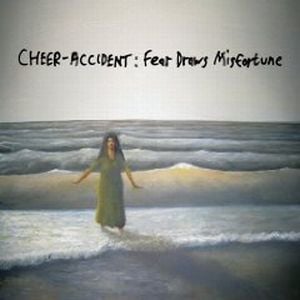 Really, I could have chosen any of their 00s releases for this list, and if you're even marginally interested in progressive rock that actually seems to be progressing you owe it to yourself to hear as much of their output as possible, but this year's Fear Draws Misfortune made my decision that much easier. Imagine an album that takes the band's most prog (avant or otherwise) tendencies and their most pop tendencies, grafts them together and winds up being both accessible and intricate to a fault. It's the odd instance where a band makes their most readily accessible album by amplifying some of the most challenging aspects of their sound, in this case fractured compositions, odd time signatures, non-standard instrumentation and a love of dissonance. A lot of that comes down to the line-up that Jones worked with on Fear Draws Misfortune, a streamlined variation of the What Sequel? line-up that dropped former U.S. Maple guitarist Todd Rittman and saxophonist Sheila Bertoletti and added new vocalist Carmen Armillas to the mix. Armillas' presence seems to be the element that lends the most accessibility to the album; though over half of it is instrumental her vocal contributions are a great foil for Jones. She's got just as distinct a voice as Jones, but hers is its opposite; strong where Jones is frail, lovely and well pitched where Jones isn't as concerned with the technicality of his vocals as the emotion behind them. Her addition to the group works so well that when Jones comes back for a couple of solo vocals late in the album I almost miss her, and I'm one of those weird people who love Jones' voice.
But the real strength here is how the instrumentalists interact. I mean, it's always the highlight of any Cheer-Accident album, but here it's at the fore more than ever. In the pure instrumental moments you're witnessing a very tight and very focused ensemble of players, with Jones providing his usual polyrhythmic drumming at the base, and the remaining members, all of whom are versatile multi-instrumentalists at this point, use his complex but focused patterns to lay down material that can range from driving (the guitar-focused "Blue Cheadle") to fanfare-ish (the sax and trumpet heavy "And Then You Realize You Haven't Left Yet") to dark and minimal ("Disenchantment"). It's a varied melange of stuff, but there's a lot of cohesion at its core, just listen to the should-be-jarring-but-isn't transition between "Mescalito" and "And then You Realize..." and the latter's quick shift into "Blue Cheadle"'s driving riff. Between that and the skill that the players bring to the table, as usual, it makes for one hell of great listen.
I'm saving a lot of my praise for the final trio of songs though. That's where Jones' vocals come back to the forefront after the almost choral approach to the vocals on the first six tracks and where the songs get long enough to really showcase just how great of an ensemble this incarnation of the Cheer-Accident line up can be. Essentially it feels a bit like the logical continuation of Enduring the American Dream 12 years after the fact - hell, "Your Weak Heart" might as well be called "Dismantling the Berlin Waltz Again" though it's not like that's a bad thing - with lots of quick-shifts within the songs, heavy emphasis on piano and keyboards and a lot of excellent interplay between the various members. It may not be as diverse as the rest of the album what with the lack of brass and Carmen, but it's the best example the album gives of what the band can do when they've got room to work. This is especially true of "Humanizing the Distance" where Jones' drumming drives the track for about 5 minutes before sputtering out in the most logical way and leaving the guitar duo of Jeff Libersher and Alex Perkloup to wind it up with some solemn, mournful lightness. It works excellently as a contrast to the more upfront and emotional work that Jones does on the tracks on either side of it, especially "Your Weak Heart" which might have his best vocal performance overall and certainly some of his most heartfelt lyrics. "Your Weak Heart" also manages to be just as varied as the rest of the album without using much more than piano and vocals, outside of Libersher and Andrea Fraught adding some mournful trumpet to the middle section it pretty much a Jones solo piece, and its transition into something resembling a particularly piano-heavy Aphex Twin track at about 4 minutes in is probably the best single section the album has to offer.
I feel like I should reiterate that the order you're seeing these in isn't necessarily reflective of the order they'd be in on my proper list, but in this case I have a feeling that Fear Draws Misfortune could be the kind of grower that might have a chance at attaining this position in a few years time. I know I haven't listened to any full album from this year more than it and none of them have excited me nearly as much as it has. I know that it's an improvement from the last few Cheer-Accident albums, and those were great albums that would make easy top 100 candidates on the "proper" list. I have a feeling it might be the best they've done since Enduring the American Dream, and I know that no progressive rock album this year is gonna top the variety and emotion contained herein. Call its placement hope for the future, I guess.
Really, I could have chosen any of their 00s releases for this list, and if you're even marginally interested in progressive rock that actually seems to be progressing you owe it to yourself to hear as much of their output as possible, but this year's Fear Draws Misfortune made my decision that much easier. Imagine an album that takes the band's most prog (avant or otherwise) tendencies and their most pop tendencies, grafts them together and winds up being both accessible and intricate to a fault. It's the odd instance where a band makes their most readily accessible album by amplifying some of the most challenging aspects of their sound, in this case fractured compositions, odd time signatures, non-standard instrumentation and a love of dissonance. A lot of that comes down to the line-up that Jones worked with on Fear Draws Misfortune, a streamlined variation of the What Sequel? line-up that dropped former U.S. Maple guitarist Todd Rittman and saxophonist Sheila Bertoletti and added new vocalist Carmen Armillas to the mix. Armillas' presence seems to be the element that lends the most accessibility to the album; though over half of it is instrumental her vocal contributions are a great foil for Jones. She's got just as distinct a voice as Jones, but hers is its opposite; strong where Jones is frail, lovely and well pitched where Jones isn't as concerned with the technicality of his vocals as the emotion behind them. Her addition to the group works so well that when Jones comes back for a couple of solo vocals late in the album I almost miss her, and I'm one of those weird people who love Jones' voice.But the real strength here is how the instrumentalists interact. I mean, it's always the highlight of any Cheer-Accident album, but here it's at the fore more than ever. In the pure instrumental moments you're witnessing a very tight and very focused ensemble of players, with Jones providing his usual polyrhythmic drumming at the base, and the remaining members, all of whom are versatile multi-instrumentalists at this point, use his complex but focused patterns to lay down material that can range from driving (the guitar-focused "Blue Cheadle") to fanfare-ish (the sax and trumpet heavy "And Then You Realize You Haven't Left Yet") to dark and minimal ("Disenchantment"). It's a varied melange of stuff, but there's a lot of cohesion at its core, just listen to the should-be-jarring-but-isn't transition between "Mescalito" and "And then You Realize..." and the latter's quick shift into "Blue Cheadle"'s driving riff. Between that and the skill that the players bring to the table, as usual, it makes for one hell of great listen.
I'm saving a lot of my praise for the final trio of songs though. That's where Jones' vocals come back to the forefront after the almost choral approach to the vocals on the first six tracks and where the songs get long enough to really showcase just how great of an ensemble this incarnation of the Cheer-Accident line up can be. Essentially it feels a bit like the logical continuation of Enduring the American Dream 12 years after the fact - hell, "Your Weak Heart" might as well be called "Dismantling the Berlin Waltz Again" though it's not like that's a bad thing - with lots of quick-shifts within the songs, heavy emphasis on piano and keyboards and a lot of excellent interplay between the various members. It may not be as diverse as the rest of the album what with the lack of brass and Carmen, but it's the best example the album gives of what the band can do when they've got room to work. This is especially true of "Humanizing the Distance" where Jones' drumming drives the track for about 5 minutes before sputtering out in the most logical way and leaving the guitar duo of Jeff Libersher and Alex Perkloup to wind it up with some solemn, mournful lightness. It works excellently as a contrast to the more upfront and emotional work that Jones does on the tracks on either side of it, especially "Your Weak Heart" which might have his best vocal performance overall and certainly some of his most heartfelt lyrics. "Your Weak Heart" also manages to be just as varied as the rest of the album without using much more than piano and vocals, outside of Libersher and Andrea Fraught adding some mournful trumpet to the middle section it pretty much a Jones solo piece, and its transition into something resembling a particularly piano-heavy Aphex Twin track at about 4 minutes in is probably the best single section the album has to offer.
I feel like I should reiterate that the order you're seeing these in isn't necessarily reflective of the order they'd be in on my proper list, but in this case I have a feeling that Fear Draws Misfortune could be the kind of grower that might have a chance at attaining this position in a few years time. I know I haven't listened to any full album from this year more than it and none of them have excited me nearly as much as it has. I know that it's an improvement from the last few Cheer-Accident albums, and those were great albums that would make easy top 100 candidates on the "proper" list. I have a feeling it might be the best they've done since Enduring the American Dream, and I know that no progressive rock album this year is gonna top the variety and emotion contained herein. Call its placement hope for the future, I guess.
Thursday, December 10, 2009
#22. Animal Collective - Feels (FatCat, 2005)
You'd think that by toning down the majority of their freakier elements and streamlining their sound into a pretty straightforward pop mold that Animal Collective would have become less essential. I mean, after a quintet of albums that were as dissimilar to each other as anything yet were distinctly their product nonetheless, ranging in sound from near-ambient pop to freak-folk to noise-pop to experimental sound-fuckery, the last thing you'd have expected them to do next was become the accessible indie-pop juggernaut that Feels paints them as. Especially coming off the half folky half pointless experimental wankery that was Sung Tongs, easily their most widely praised album at the time it seemed downright weird that they'd abandon almost all of that style and focus so intently on making this lush, only slightly experimental, capital-P pop music. I'm certainly not complaining though; Feels is easily the one Animal Collective related album that I love almost unreservedly, their most consistent, most enthralling and most fun 50 or so minutes ever put to record.
(more later, word of advice: working retail during the xmas season cuts down on time for this type of thing considerably)
(more later, word of advice: working retail during the xmas season cuts down on time for this type of thing considerably)
Wednesday, December 9, 2009
#23. Do Make Say Think - Winter Hymn Country Hymn Secret Hymn (Constellation, 2003)
Have you ever experienced a moment where the music you're listening to seems to inform the action around you or vice versa? They don't happen all that frequently, but the few times I've had them occur have resulted in some of the most potent music-related memories I hold. Sometimes it's something as simple as a crow cawing in perfect sync with some vocals (creepy as fuck too), sometimes it can just be written off as the song's atmosphere bleeding into your interpretation of your surroundings, but sometimes it gets to the point where I began to wonder whether I was actually controlling something that I shouldn't have control of. The first time I heard Do Make Say Think's Winter Hymn Country Hymn Secret Hymn I was walking to school. It would have been fall of my first year of college so the streets I was walking down were wholly deserted at the point I was trekking out. I had "Fredericia" blasting through my headphones as I walked towards a little pathway through the edge of a park that cut an unnecessary corner off my commute, but as I entered the pathway two things happened at the exact same time: the jazzy groove of "Fredericia" exploded into that first loud section and a very strong gust of wind picked up around me. If it had just been that I would have written it off as coincidence, but the fact that the gust of wind lasted exactly as long as that first loud section and that it picked up again just as the second one hit made it feel like something beyond that. I literally thought that I was controlling the wind with my Discman. It was at once unbelievably creepy ad strangely enthralling. Of course it never happened again, but that one event pretty much cemented DMST as my go to post-rockers for a good few months.
 Of course even without the added stimulation that experience provided me, I think I'd have come to that conclusion anyway. Having already heard the first three Do Make Say Think albums (and having loved Goodbye Enemy Airship, The Landlord Is Dead as much as I had any other post-rock album at that point) it was clear that Winter Hymn Country Hymn Secret Hymn was a step above what they had been doing beforehand. The playing was tighter, the climaxes were more devastating, the jazzier touches were more thoroughly composed and the overall effect of the album was just greater than any of their previous outings. It wasn't wholly focused on the climaxes either, preferring a sort of ebb and flow structure where the climaxes weren't so much a means to an end as a natural consequence of the way the songs were laid out. For once it was post-rock where the excitement wasn't wholly housed with those moments that the band got loud, but in hearing exactly how those moments came to be, hearing the slow builds that were happening underneath the surface waiting to break free as opposed to being shocked by a sudden explosion. It was sophisticated in a way that few albums of its ilk could claim to be, and even if I didn't fully understand the mechanics of that back in 2003 I could see that it felt so much more substantial than most other records of its ilk.
There's also something to be said for the way the album as a whole is structured. As the title suggests we're really dealing with a trio of short segments - the vinyl layout makes this more obvious with each of the separate Hymns getting its own side of wax - not a traditional album. The thing is that despite the triad at its core it still plays just fine as a proper 52 minute album, with the delineation between each subsection being at once obvious yet not distracting. If we look at it in thirds it's three perfectly realized mini-albums, especially the second triad where the band's jazzier side gets to shine the brightest, but looked at as one unit it doesn't seem too disjointed. The jazzy horns of "Ontario Plates" don't sound too alien next to "Horns of a Rabbit" even if the latter has one of the grittiest sounding climaxes of the whole album, and "Auberge le mouton noir" sounds absolutely perfect as a lead in to "Outer and Inner Secret." A lesser album wouldn't have done so much to make sure it's separate sides worked so well together, putting all the focus on how well the trios work on their own without considering how they worked together. It's a great example of how sequencing can be the make or break element of an album like this; if the flow was too greatly compromised, regardless of the overall quality of the material I doubt I'd have much time for it.
Of course the quality of the material is absolutely stellar here. "Fredericia" is an ideal opener, kinetic drumming and a nice snaking bassline giving way to a pair of exhilarating climaxes - the dissonant horn build up to the first one would probably still send chills down my spine even if I didn't have that whole wind storm experience to associate it with - that put the rest of the genre to shame, but I've become a much bigger fan of the sublime closer "Hooray! Hooray! Hooray!"'s gentle acoustic guitar and assorted jazzy solo breaks. Outside of those formidable bookends there's the amazing almost straight jazz of "Ontario Plates" whose oddly syncopated main riff makes it seem almost Tortoise-y in places, the shorter but incredibly well paced "Horns of a Rabbit" and it's percussive leadout "It's Gonna Rain" and the near-perfect post-rock of both "Auberge le mouton noir" and "Outer Inner and Secret." The more interlude-y tracks aren't much on their own outside of "It's Gonna Rain" but they serve their purpose in the scope of their respective sections as well as you could expect. There's not a wasted moment here, and since it doesn't go out of its way to fill up the Cd to capacity it doesn't even begin to wear out its welcome.
Winter Hymn... might not be the best post-rock album of the decade, but it's one that has a special sort of significance. It's not just the whole wind thing that I can't hear "Fredericia" without reliving - it was seriously a frightening yet oddly exhilarating experience - but the fact that it might have been the first step in my road towards focusing less on lyrics than on the actual construction behind the songs. I'd heard a bit of instrumental stuff before, but this was the first album that I recall actively losing myself in the complexities of the arrangement and actively figuring out why certain parts worked so well. So in a way my obsession with Winter Hymn is somewhat responsible for my new lease on pop music - it's an odd connection to make, but it makes sense to me, and the importance it has in that regard all but guaranteed that it would wind up in a fairly lofty position on this list.
Of course even without the added stimulation that experience provided me, I think I'd have come to that conclusion anyway. Having already heard the first three Do Make Say Think albums (and having loved Goodbye Enemy Airship, The Landlord Is Dead as much as I had any other post-rock album at that point) it was clear that Winter Hymn Country Hymn Secret Hymn was a step above what they had been doing beforehand. The playing was tighter, the climaxes were more devastating, the jazzier touches were more thoroughly composed and the overall effect of the album was just greater than any of their previous outings. It wasn't wholly focused on the climaxes either, preferring a sort of ebb and flow structure where the climaxes weren't so much a means to an end as a natural consequence of the way the songs were laid out. For once it was post-rock where the excitement wasn't wholly housed with those moments that the band got loud, but in hearing exactly how those moments came to be, hearing the slow builds that were happening underneath the surface waiting to break free as opposed to being shocked by a sudden explosion. It was sophisticated in a way that few albums of its ilk could claim to be, and even if I didn't fully understand the mechanics of that back in 2003 I could see that it felt so much more substantial than most other records of its ilk.There's also something to be said for the way the album as a whole is structured. As the title suggests we're really dealing with a trio of short segments - the vinyl layout makes this more obvious with each of the separate Hymns getting its own side of wax - not a traditional album. The thing is that despite the triad at its core it still plays just fine as a proper 52 minute album, with the delineation between each subsection being at once obvious yet not distracting. If we look at it in thirds it's three perfectly realized mini-albums, especially the second triad where the band's jazzier side gets to shine the brightest, but looked at as one unit it doesn't seem too disjointed. The jazzy horns of "Ontario Plates" don't sound too alien next to "Horns of a Rabbit" even if the latter has one of the grittiest sounding climaxes of the whole album, and "Auberge le mouton noir" sounds absolutely perfect as a lead in to "Outer and Inner Secret." A lesser album wouldn't have done so much to make sure it's separate sides worked so well together, putting all the focus on how well the trios work on their own without considering how they worked together. It's a great example of how sequencing can be the make or break element of an album like this; if the flow was too greatly compromised, regardless of the overall quality of the material I doubt I'd have much time for it.
Of course the quality of the material is absolutely stellar here. "Fredericia" is an ideal opener, kinetic drumming and a nice snaking bassline giving way to a pair of exhilarating climaxes - the dissonant horn build up to the first one would probably still send chills down my spine even if I didn't have that whole wind storm experience to associate it with - that put the rest of the genre to shame, but I've become a much bigger fan of the sublime closer "Hooray! Hooray! Hooray!"'s gentle acoustic guitar and assorted jazzy solo breaks. Outside of those formidable bookends there's the amazing almost straight jazz of "Ontario Plates" whose oddly syncopated main riff makes it seem almost Tortoise-y in places, the shorter but incredibly well paced "Horns of a Rabbit" and it's percussive leadout "It's Gonna Rain" and the near-perfect post-rock of both "Auberge le mouton noir" and "Outer Inner and Secret." The more interlude-y tracks aren't much on their own outside of "It's Gonna Rain" but they serve their purpose in the scope of their respective sections as well as you could expect. There's not a wasted moment here, and since it doesn't go out of its way to fill up the Cd to capacity it doesn't even begin to wear out its welcome.
Winter Hymn... might not be the best post-rock album of the decade, but it's one that has a special sort of significance. It's not just the whole wind thing that I can't hear "Fredericia" without reliving - it was seriously a frightening yet oddly exhilarating experience - but the fact that it might have been the first step in my road towards focusing less on lyrics than on the actual construction behind the songs. I'd heard a bit of instrumental stuff before, but this was the first album that I recall actively losing myself in the complexities of the arrangement and actively figuring out why certain parts worked so well. So in a way my obsession with Winter Hymn is somewhat responsible for my new lease on pop music - it's an odd connection to make, but it makes sense to me, and the importance it has in that regard all but guaranteed that it would wind up in a fairly lofty position on this list.
Tuesday, December 8, 2009
#24. Oxbow - The Narcotic Story (HydraHead Records, 2007)
Previous to 2002's An Evil Heat the best way to describe any given Oxbow album was as an aural snuff film. The music that the quartet coaxed out of their instruments was a sick, twisted mass of deconstructed blues riffs made to sound horrifying and pained and over it all you had Eugene Robinson's tortured wail that never quite gave away which side of the snuff he was on. It was uncomfortable music to put it simply, very well-played and fascinating but uncomfortable nonetheless. Something was different about An Evil Heat though, and that difference is even more pronounced on 2007's The Narcotic Story. It isn't so much that Oxbow stopped making aural snuff films, both albums are still intense as hell and more than a little disturbing to listen to, but they were going about them with a great deal more clarity. Gone was the grainy feel I associate with their previous outings, replaced with a bit more carefully executed production that highlighted exactly what it was that the band was doing underneath the surface. The layers becoming more obvious didn't make things any less uncomfortable to listen to, but made them much more fascinating.
 My fascination goes deeper with The Narcotic Story for some pretty obvious reasons. Firstly it sees the band considerably expanding their sonic palette, building some of the best songs around strings, woodwinds and pianos in addition to their usual melange of twisted blues riffs and Robinson's wailing. It's also the closest the band's ever come to making music that could actually be mistaken for accessible at points. Even on the much more cleaned up sounding An Evil Heat there was a lot of ugliness that seeped through the mix, but on quite a few occasions the songs on The Narcotic Story sound...well, pretty. Ignoring Robinson's vocals of course, though he's not in full wailing mode for the whole album like usual, even coming close to crooning on "She's a Find," (it still feels weird to type 'crooning' in the same sentence as Eugene Robinson...) the arrangements seem to put a lot more focus on the more comforting - though still not comfortable - aspects of the sound. The strings may have a sinister edge to them, especially in the booming introduction of "Down a Stair Backwards" and the last bit of "Frank's Frolic" but they feel so much more inviting than the usual assault of Niko Wenner's guitar and Dan Adams' complex basslines. Of course those still figure in prominently, but the variety the rest of the album's arrangements offer gives it a great deal more replay value.
Of course if it weren't a little bit uncomfortable it wouldn't be an Oxbow album, so despite the fact that the album's centerpiece "She's a Find" is pretty much an unambiguous love song (feels so weird to say that...) it's not like the band have softened up all that much. We're not talking about the assault of something like "The Last Good Time" or "Gal" but something more...insidious I guess is the word I'd use. The riff from "Time, Gentlemen, Time" for instance wouldn't sound out of place in the course of a normal blues album, but between Wenner's still kinda sick-sounding guitar tone and the production on it sounds downright evil - not clichéd evil but actually capable of frightening the shit out of me in the right moments evil. Even when he's using an acoustic on "The Geometry of Business" Wenner still manages to sound menacing, or maybe it's just Robinson's muttering beneath the surface waiting to break out with one of his normal shrieks. Speaking of Robinson, it almost feels like for once he's not the focal point of the ordeal, allowing his band mates more time to play at the front of the mix even when he's in his usual form. I mean, previous labums have had plenty of great moments from the instrumental side of Oxbow - Serenade in Red's "Over" comes to mind immediately - but The Narcotic Story's production seems to put less emphasis on Robinson than before. He still demands attention, especially on the heavier numbers, but he's just as adept at adding to the discomfort as an underlayer.
It also helps that the albums doesn't sound much like the Oxbow old until the fourth track, and then "She's a Find" comes along sounding nothing like anything the band has ever done. It keeps you off balance, so when you're thrown into the most aggressive stuff on the album immediately thereafter it seems that much more uncomfortable. But "She's a Find" is a fucking amazing song, toning down everything that makes Oxbow Oxbow without sounding like anybody else, getting mildly emotional, close to pretty at times and earning each of its 8 minutes with some of the most involved arrangement of any Oxbow song ever. I once joked that I'd have it played at my wedding, but the more I hear it the less I think of that as a joke - I could totally see it as a logical addition to the DJ list at a particularly dark wedding. The rest of the album isn't quite at its level, but it's also a fairly large step above the rest of the band's output, no small feat when you consider that Serenade in Red is one of my favorite albums of the 90s. It's the most fully realized and least expected thing they've done at htis point, and it seems like they'll only get better from here.
My fascination goes deeper with The Narcotic Story for some pretty obvious reasons. Firstly it sees the band considerably expanding their sonic palette, building some of the best songs around strings, woodwinds and pianos in addition to their usual melange of twisted blues riffs and Robinson's wailing. It's also the closest the band's ever come to making music that could actually be mistaken for accessible at points. Even on the much more cleaned up sounding An Evil Heat there was a lot of ugliness that seeped through the mix, but on quite a few occasions the songs on The Narcotic Story sound...well, pretty. Ignoring Robinson's vocals of course, though he's not in full wailing mode for the whole album like usual, even coming close to crooning on "She's a Find," (it still feels weird to type 'crooning' in the same sentence as Eugene Robinson...) the arrangements seem to put a lot more focus on the more comforting - though still not comfortable - aspects of the sound. The strings may have a sinister edge to them, especially in the booming introduction of "Down a Stair Backwards" and the last bit of "Frank's Frolic" but they feel so much more inviting than the usual assault of Niko Wenner's guitar and Dan Adams' complex basslines. Of course those still figure in prominently, but the variety the rest of the album's arrangements offer gives it a great deal more replay value.Of course if it weren't a little bit uncomfortable it wouldn't be an Oxbow album, so despite the fact that the album's centerpiece "She's a Find" is pretty much an unambiguous love song (feels so weird to say that...) it's not like the band have softened up all that much. We're not talking about the assault of something like "The Last Good Time" or "Gal" but something more...insidious I guess is the word I'd use. The riff from "Time, Gentlemen, Time" for instance wouldn't sound out of place in the course of a normal blues album, but between Wenner's still kinda sick-sounding guitar tone and the production on it sounds downright evil - not clichéd evil but actually capable of frightening the shit out of me in the right moments evil. Even when he's using an acoustic on "The Geometry of Business" Wenner still manages to sound menacing, or maybe it's just Robinson's muttering beneath the surface waiting to break out with one of his normal shrieks. Speaking of Robinson, it almost feels like for once he's not the focal point of the ordeal, allowing his band mates more time to play at the front of the mix even when he's in his usual form. I mean, previous labums have had plenty of great moments from the instrumental side of Oxbow - Serenade in Red's "Over" comes to mind immediately - but The Narcotic Story's production seems to put less emphasis on Robinson than before. He still demands attention, especially on the heavier numbers, but he's just as adept at adding to the discomfort as an underlayer.
It also helps that the albums doesn't sound much like the Oxbow old until the fourth track, and then "She's a Find" comes along sounding nothing like anything the band has ever done. It keeps you off balance, so when you're thrown into the most aggressive stuff on the album immediately thereafter it seems that much more uncomfortable. But "She's a Find" is a fucking amazing song, toning down everything that makes Oxbow Oxbow without sounding like anybody else, getting mildly emotional, close to pretty at times and earning each of its 8 minutes with some of the most involved arrangement of any Oxbow song ever. I once joked that I'd have it played at my wedding, but the more I hear it the less I think of that as a joke - I could totally see it as a logical addition to the DJ list at a particularly dark wedding. The rest of the album isn't quite at its level, but it's also a fairly large step above the rest of the band's output, no small feat when you consider that Serenade in Red is one of my favorite albums of the 90s. It's the most fully realized and least expected thing they've done at htis point, and it seems like they'll only get better from here.
Subscribe to:
Posts (Atom)