Showing posts with label Borderline 4s. Show all posts

Thursday, May 26, 2011

98 the Hard Way: Borderline 4s Week 5

WEEK 5 (May 19th-25th)

Total Albums Revisited: 17

Albums Dropped to 3 Stars: 1
  • Maquiladora The Lost Works of Eunice Phelps (Tectonic) Nice enough on the whole, but outside of a few stellar uses of atmosphere it seems a bit more incomplete and lacking than I had remembered it being. [6.6]
Albums Remaining at 3.5 Stars: 12
  • Emmett Swimming Big Night Without You (Elektra) It's amazing how much this sounds like the entirety of modern rock radio circa-1998 without having actually been part of that tapestry to any notable degree. [7.6]
  • Boubacar Traoré Maciré (Label Bleu) Everything sounds great, but the songwriting isn't quite there and the performance seems a little distant. [7.4]
  • Vidna Obmana Crossing the Trail (Projekt) Wave upon wave of peace. Not transcendent or anything but perfectly immersive. [7.3]
  • Jarboe Anhedoniac (Self-Released) Evil, beautiful music that could stand a little bit of editing. [7.2]
  • Paul D. Miller Viral Sonata (Asphodel) As with 90% of Illbient music, the second listen reveals a much less rewarding album than initial impressions would have given. [7.0]
  • Loren MazzaCane Connors Evangeline (Road Cone) The thing with MazzaCane is that even at his subtlest - which this approaches - there's so much feeling in his playing that the results are eminently fascinating. [7.8]
  • Nature and Organization Death in a Snow Leopard Winter (Snow Leopard) I stand by my 'I Can't Believe it's not Eluvium!' assessment, but that implies far more good than bad. [7.6]
  • Lee Ranaldo Dirty Windows (Barooni) A travelogue of unparalleled unease. Beat poetry meets destructive noise rock. Spoilers for One False Move. [7.7]
  • Archbishop Kebab Bellyhunting (Zorlac) May as well be Dog Faced Hermans demos, for all the good and bad that that implies. [7.3]
  • The Chasm Deathcult for Eternity: The Triumph (Oz) There's definitely something worthwhile going on here, but not to the degree I initially thought there was. [7.4]
  • The Third Eye Foundation You Guys Kill Me (Domino/Merge) Transitional record, eschewing the all consuming darkness of Ghost without fully realizing the genre-mashing grandeur of Little Lost Soul. [7.8]
  • Herbert Around the House (Phonography) Without the novelty of its sources it's just another nice but not exceptional house LP. Still much better than the average though. [7.6]
 Albums Being Elevated to 4 Stars: 2
  • The Renderers A Dream of the Sea (Ajax)
  • The Loud Family Days for Days (Alias)
More on these in the next section.

Albums in the Upper 3.5 Star Area: 2

Bassholes When My Blue Moon Turns Red Again (In the Red)
When My Blue Moon Turns Red Again should be a simple album. There are only two men involved in its creation, and its rare that they sound like anything other than that, and on each of the album's 21 (!) tracks they stick to the tried and true garage-blues formula. Really, not only should this album be simple to sum up but it should be pretty fucking boring. And yet it's anything but.

See, while on paper there's nothing going on here that differentiates Bassholes from any number of their label-mates and other contemporaries, there's something in the delivery and formulation of When My Blue Moon Turns Red Again that makes it into one of the more compelling entries in the field. It's in the fact that the band are rarely content to leave these songs as standard shards of high energy blues, instead opting to pile on the weirdness, the surreal imagery, the caustic mindset and the badass harmonica and saxophone to set them apart. It doesn't hurt that drummer Lamont Thomas is able to perfectly balance the rudimentary time keeping with the interesting flourishes that give even the least individual track on here an identifiable personality of sorts. It also doesn't hurt that Dan Howland sounds like he's about 2 hours off his meds and on the verge of going postal at any minute no matter what he's singing about.

Consider that the secret at work here - the album sounds like it's right at the edge of insanity but never quite falls over into it full on. It's unpredictable in a weirdly comforting way, never quite letting you know where it's headed next other than assuring you that it'll still be unhinged. It may have a few faults working against it - any 21 track album, even one like this where the songs all sit comfortably around the 2 minute mark, is bound to have a few duffers, and the aforementioned unpredictability doesn't necessarily stop it from covering the same ground a few times with diminishing returns - but it more than makes up for them by virtue of having enough of a distinct personality to keep me listening, and invested in listening. [7.9/10]

Arab on Radar Rough Day at the Orifice (Oppoppop)
There are bands who work for years and years to become compelling as artists. There are bands who just seem to have that quality from the get go. There are many more artists who never reach that level.

Arab on Radar seem to have stumbled onto it by sheer drunken dumb luck and I fucking love them for it.

Nothing on Rough Day at the Orifice sounds planned out. The few times they hit on a riff it almost seems accidental, like a weird byproduct of what up til that point could very easily have been 4 people playing their instruments with no idea of what anyone else is playing. It's an ugly, juvenile, shambolic mess of an album that nonetheless ends up sounding frighteningly great in small doses. It's the weird case where nothing should fit but everything does when you get attuned to its wavelength. The drumming is haphazard and spurty, the guitars are dialed in for maximum trebly dissonance and never play in time or key with each other, the lyrics are best left alone since I'm predisposed towards being kind to this album and they can be a detriment if you look at 'em too long. None of that sounds like a formula for anything but derisive giggles in the band's general direction - aw, how cute! they think they're making music! - but somehow it winds up making a uniquely fucked up kind of noise rock that no one else can come close to replicating.

I'm not saying that Arab on Radar's novelty should necessarily be a point in their favor since said novelty ties in pretty heavily with the parts of their sound that can make them incredibly annoying in the wrong circumstances, but every time that I hear them I get the weird 'what the fuck was that?' twinge that all but guarantees that I'll be coming back in the near future.  [7.9/10]

Wednesday, May 18, 2011

98 The Hard Way: Borderline 4s Week 4

WEEK 4 (May 12-18th)

Total Albums Revsited: 23

Albums Dropping to 3 Stars: 3
  • Pelt For Michael Hannahs (VHF) A much more scattershot release than I remembered, and given how much consistency there generally is across a given Pelt release it seems even more disappointing. [6.5]
  • Les Joyaux de la Princesse Exposition Internationale Paris 1937 (Les Joyaux de la Princesse)  On first pass it toed the atmosphere-tedium boundary gracefully. One revisit it seems to not even realize that there is a line. [6.3]
  • Wunder Wunder (Karaoke Kalk) Downtempo, jazzy electronica that falls into the slightly boring category all too quickly after a great start. [6.7]
Albums Remaining at 3.5 Stars: 13
  • Southpacific 33 (Turnbuckle) The ideal midpoint between Blind Idiot God and Tortoise. A bit hesitant but worthwhile all told. [7.5]
  • Tiere der Nacht Sleepless (Captain Trip)
    When Archetti and Neumeier re-interpret big beat through the lens of krautrock it's a damn good album. When they just settle into second rate krautrock things get sketchier. [7.3]
  • Home 13: Netherregions (Arena Rock) Every Home album comes close to making that leap to the other level that i look for, but it never seems to happen enough to merit a higher rating. [7.6]
  • Gate The Lavender Head (Hell's Half Halo) Gone are the aimless feedback excursions, and in their place we have proto-dubstep. Seriously, tell me that "Mary and Mars" wouldn't fit in perfectly on a Burial LP. [7.8]
  • Taku Sugimoto Opposite (Hat Hut) Subtle music that no matter how near to silence it is always beckons far you to listen more closely. [7.4]
  • Six Organs of Admittance Six Organs of Admittance (Pavillion) The noisier atmosphere really suits these tracks, and Chasny's playing is great, as always. [7.5]
  • Hannah Marcus Faith Burns (Normal) Often hints at being something more than half-good, but just as often makes me wonder whether I'm being overly generous. [7.1]
  • Dissecting Table Life (Release) Really not my thing as a rule, but the weird Merzbow meets Godflesh territory that this inhabits is fascinating even if it's not essential. [7.2]
  • Dave Douglas Charms of the Night Sky (Winter and Winter) Figures that the first thing that came to mind when re-listening to this was that it was very Masada-y, but the violin and accordion added a much more mournful texture to the proceedings. [7.4]
  • Terry Bozzio Drawing the Circle (Self-Released) Bozzio's drumming is enough to maintain a whole release on its own. That's praiseworthy in and of itself, but there's also the fact that the pieces are actually catchy, variable and memorable. [7.7]
  • The Jazz June The Boom, the Motion and the Music (Workshop) I like to think of this as what Cap'n Jazz might have sounded like if they were around for long enough to get epic and vaguely experimental on their second or third LP. [7.4]
  • High Rise Desperado (PSF) Straightforward psych-rock'n noise, like Fushitsusha focusing on riffs n solos instead of bludgeoning. [7.4]
  • Knapsack This Conversation Is Ending...Starting Right Now (Alias) The fact that it's formulaic and kinda same-y only slightly detracts from just how good of a formula it is and how consistency is a nice by-product of the saminess. [7.8]
Albums Being Elevated to 4 Stars: 3
  • The Hangovers Slow Dirty Tears (Kill Rock Stars)
  • Species Being Yonilicious (Grauspace)
  • Duotang The Cons and the Pros (Mint)
More on these in the next section.

Albums in the Upper 3.5 Star Area:

Angry Johnny and The Killbillies What's So Funny? (Tar Hut)
It's hard to justify this opinion, but the biggest thing that I find this album has in its favor is its sense of humor. Keep in mind that I'm saying this about an album whose first track details the willful sexual exploitation of an underage girl who ends up HIV positive and where every other song features as much bloodshed, implied or explicit, as a classic Peckinpah western. But underneath all that seeming shock value lies more than enough cleverness and actual wit to counteract the wanton unpleasantness of the proceedings. It's in Angry Johnny's lyrics, sometimes overtly ("Daisies," "My Ghoul Maggie") and in its more lasting moments in simple word choice at key moments. It even bleeds into the arrangements and the backing vocals which are more than up to providing jaunty harmonies to grim stuff like the blood feud of "Jonses." It's just a very darkly funny album at its core, and that's what gives it a great deal of its replay value

Of course that would all be for naught if the music itself wasn't as arresting as the lyrics. While there's a definite quality gradient to the songs depending on their pace - the band in shit-kicking hoe down mode is truly spectacular while their less upbeat material is much less special - there's still a high base-level quality to the band's playing that would elevate the material even without the added kick of the lyrics. What's most impressive is that they manage to do so much more than your average underground country act in terms of tone, mostly thanks to the addition of a truly badass sounding saxophone to their arsenal. Even without that though, they seem to touch on every type of country song you can imagine, from the straight up tear in your beerisms of "Shitty Day" to the funeral march of "A Love More True" on the slower side and from the lighthearted playfulness of "Daisies" and "My Ghoul Maggie" to the hellishly dark atmosphere of "Kill Again" on the faster tip. This sub-genre hoping may rob the album of coherent flow, but it shows a band that's extremely comfortable in just about any style of their chosen genre, which is appreciated in a genre where monotony tends to reign supreme far too often. [8.0/10]

The Grassy Knoll III (Antilles)
Nu Free Jazz?
Free Nu Jazz?
Jazz Nu Free?

It's an interesting combination that Bob Green works with on the third Grassy Knoll release, but the way he plays the unpredictability of free jazz against the rigid formality of nu jazz makes for some great music in the end. Green's assembled cast of contributors - everyone from Sonic Youth guitarist Thurston Moore to free jazz saxophonist Ellery Eskelin to future Sleepytime Gorilla Museum violinist Carla Kihlstedt - are allowed to run loose across their various tracks while the core elements remain in a strict, locked groove. The end result should by all rights be a mess, but the way it's assembled makes it more fascinating than messy.

It helps that even if you remove the free-er moments from the album, at its base III is still one of the better nu jazz releases of its time. There's something to the grooves that the album is built upon that instantly grabbed me; the dark tone of the bass and the crisp, rigid feel of the drums is basically the ideal midpoint between trip-hop and cool jazz, making it one of the few albums in this style to understand that balance. The rest of the elements may be what gives the release its true character, but without that solid base to work from it would be difficult to give them their proper due. And boy do they deserve their due, whether its for the way that they enhance the grooves as they do for the better part of album standout "The Violent Misery of All Things" or rub against them in all the right ways as they on tracks like "Paul Has an Emotional Uncle" the way that Bob Green pieces the tracks together is always interesting and at its best totally unexpected.

It's also worth noting that another thing that III excels at where so many similar releases fail is that its slower, more minimal sounding tracks rarely some off as boring. I can't imagine any other project in this genre pulling off a track like "A World Reduced to Zero" with anywhere near the aplomb that Green does, honing in on the parts of the minimal soundscape that enhance the atmosphere and ensuring that the track comes off as being just as 'crafted' as anything else on the album despite seeming to be made up of so much less. It also furthers the sort of juxtapositions that green seems so fond of on a sonic level by ensconcing i between the most darkly layered piece on the album and one of it's most chaotic and free, giving it the feel of a necessary 'breather' of sorts without shortchanging its own quality. That's also a testament to how well arranged the album's tracklist is, letting the variously toned pieces co-mingle  in a way that enhances their variety without distracting from each track's quality. [8.1/10]


Order From Chaos An Ending in Fire (Osmose)
A few things that make me feel much more fondly towards An Ending in Fire than I do towards a lot of death metal albums:

 - Brevity. I am saying this about an album whose centerpiece is almost 12 minutes long, but the fact that the album proper doesn't quite reach the 40 minute mark does it a lot of favors. Namely, it means that the things about albums like this that I tend to have the hardest time dealing with don't wind up being around for long enough to begin to actively bother me.

 - Flow. There's a sense that the band was pulling off the rare trick of composing both songs that stand in their own right and songs that work so perfectly in their intended place on the album that bringing them out of context makes them feel incomplete somehow. It's in the way that "Tenebrae" subtly twists the riff from "Dawn Bringer Invictus" into its own core riff, then twists it again to form the basis for "The Sign Draconis." Essentially, the fact that there was a modicum of thought put into the sequencing of the album.

 - Micro-Solos. I may be overstating this one a bit, but the fact that Order From Chaos guitarist Chuck Keller seems to be content with tasteful and brief solos rather than long-winded bouts of instrumental wankery does more for this album than anything else. Hell the fact that he'll occasionally let a song go by - a six minute song at that - without feeling the need to solo at all is pretty much the reason that I'm close to giving this 4 stars. My main gripe with death metal is that the guitarists seem to think its their Satan-given duty to dazzle the listener with their ability to playnotesreallyfast at every opportunity, so whenever I come across one who understands that this sort of thing works so much better when it's a) properly integrated and b) not overlong, I tend to heap on the praise.

 - Complexity over technicality. A related point here, but the fact that more often than not the times I find myself saying 'man, these Order From Chaos dudes are incredibly talented players' are when they're simply letting their riffs evolve rather than displaying how well they can play on their own. Sure, Keller's solos are impressive enough, but I'm more impressed with the way he and his bandmates can subtly alter their riffs without disturbing the flow of the songs.

 - Vocals that aren't comically overdone. This is a comfortable level of growliness for me I guess, not so polished that it's at odds with the music but not so incomprehensible that it toes its way into unintentional comedy.

All in all, this is a testament to how well a certain level of tastefulness can be used to make a somewhat great album in a genre I find it so easy to be annoyed by. Order From Chaos don't forgo the traditional death metal elements so much as they dial them in at just the right levels to work better for me, personally, than so many in their genre. The fact that they do it all without fundamentally distancing themselves from the genre the way a band like Gorguts did around this time is pretty commendable as well, proving that you don't necessarily need to go weird in order to make a compelling case for this type of music. [7.9/10]

Wednesday, May 11, 2011

98 The Hard Way: Borderline 4s Week 3

WEEK 3 (May 5th-11th)

Total Albums Revisited: 17

Albums Dropping to 3 Stars: 3
  • Sasha Frere-Jones / Loren Mazzacane Connors Subsonic 5 (Sub Rosa) Pains me to drop it since Connors' material is about as good as he's done outside of Long Nights, but Frere-Jones' isn't anywhere near that good even at its high points. [6.4]
  • PsychophonographDISK Ancient Termites (Bomb Hip Hop) What was invigorating the first time around became annoying upon revisit. Frustrating since there are times I found myself getting into its fucked up groove. [6.7]
  • Judy Dunaway Balloon Music (Composer's Recordings) I can't outright hate this even if it annoys me/physically pains me to hear it at times...and you gotta respect that this was done mostly with balloons yet at times sounds like Merzbow. [6.2]
Albums Remaining at 3.5 Stars: 10
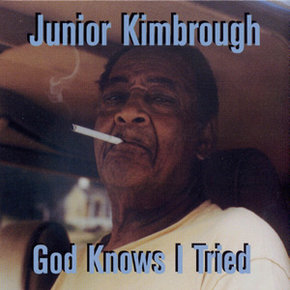
  • Junior Kimbrough God Knows I Tried (Fat Possum) Look at that cover, it explains the music herein so much better than words. [7.7]
  • Glassjaw The Don Fury Sessions (Self-Released) Rawer (yay!) versions of the best stuff from ...Silence (read: minus the troublingly misogynistic lyrics for the most part). Cut out the repeated material between the two discs and You've got a much better debut record than Ross Robinson managed to give them. [7.4]
  • The Sadies Precious Moments (Bloodshot) Their most playful and surf-rockin' LP, masterfully recorded by Albini no less. I definitely prefer some of their later stuff but this is a mildly auspicious start. [7.5]
  • Other Dimensions in Music Now! (AUM Fidelity) Like a less well heeled companion to The Peach Orchard. Stimulating but never transcendent. [7.3]
  • Mr. Dibbs Turntable Scientifics (4 Ways to Rock) Skilled as fuck, as in it doesn't rely on the obvious/readily recognizable samples to draw you in so much as the way its put together and complimented through Dibbs' scratching. [7.6]
  • Boris Kovač East Off Europe-Closing the Circle (Les Disques Victo) Another one with more moments of greatness than anything sustained, but there's more than enough of those moments + an over riding atmosphere that keeps it from falling too sharply in my estimation. [7.1]
  • Ennio Morricone La leggenda del pianista sull'oceanao (Sony Classical) Extremely evocative, lyrical piano pieces that make me want to see the movie more than anything (this is a compliment from me in terms of soundtracks). Shame it had to be topped off with that wholly out of place Roger Waters track. [7.8]
  • Pele Teaching the History of Teaching Geography (Star Star Stereo) Half the time the keyboard adds to the songs and makes them into upper-middle tier post/math rock. Half the time they seem to be there for the sake of being there and add nothing. [7.2]
  • Quetzal The Messenger Lies Bleeding...(Conspiracy) On the one hand it's pretty much a standard post-hardcore/emocore release. On the other it's attacked with such ferocity that it begs to be noticed. On the other other hand, it's pretty much the love child of Unwound circa-Fake Train and McLusky. [7.5]
  • Albert Marcoeur M, A, R et Coeur comme Coeur (FRP Music) Avant-quirk pop with more than enough substance behind the quirk to cause actual resonance. [7.6]
Albums Elevated to 4 Stars: 2
  • Alvarius B. Alvarius B. (Abduction)
  • Guapo Hirohito (Cuneiform)
More on these in the next section.

Albums in the Upper 3.5 Star Area: 2


Nguyên Lê  Mahgreb and Friends (ACT Music and Vision)
For a percussion and bass fiend such as myself, this is an incredibly diverse and layered album to dive into. It's not just in the complexity of guitarist Nguyên Lê's compositions and arrangements, but in the scope of his inspiration, drawing on his own Vietnamese heritage, various stripes of African music - mostly in the frequent involvement of Moroccan vocal/percussion quintet B'net Houariyat - Arabian touches and a deep fondness for 70s jazz-fusion. This mix gives the album's best moments a density and scope that very few of his peers can claim, mixing the varied percussion arsenal of B'net Houariyat and his own drummer Karin Ziyad with bassist Michel Alibo's funky, complex fretless runs, Lê's own tasteful soloing and a shifting ensemble of both traditional jazz instruments and more indigenous ones to breathtaking effect.

I'm not gonna claim that Lê is the first one to do this sort of globe-trotting mish-mash, but based on the contents of Mahgreb and Friends I won't hesitate to say that he was doing it at a higher level than any of his peers. The way he navigates these tricky waters, balancing a half dozen distinct styles within some songs without the mix ever sounding forced, is something to be praised. I'm thinking specifically of "Louanges" where a procession of vocalists from assorted countries meld seamlessly with the always evolving arrangement that at once never seems to bend at the will of the vocalists' distinct cadences but compliments them all the same, coming to a head with a frantic rush of choral vocals underpinned by some of Alibo and Zaid's most uninhibited playing. It's one of a few truly stunning numbers contained here in, from the dark, twisty "Constantine" to the emotional "Nora" and the calm and soothing sound of "Guinia" that makes it plain to see that while Lê isn't a very well known name in the jazz world he probably should be.

It also makes it all that much more painful when he falls into a more standard style a few times. None of that stuff is bad per se, it's still as involved compositionally as anything here and the core quartet of Lê, Alibo, Zaid and pianist Bojan Zulfikarpasic acquits itself admirably, but in the midst of the effortless cultural synthesis I talked about above stuff like "FunkRaï" comes off as an afterthought, a half-hearted attempt to Africanize a basic 70s fusion piece. Luckily, these unnecessary detours are few and far between on Mahgreb and Friends, leaving a two-thirds brilliant album of nearly unparalleled cultural breadth and depth. [8.0/10]

Closed Caption Radio Slang X Generator (Brickyard)
You've heard all the things that Closed Caption Radio do on this album before. You've probably heard them done better, lord knows I have. Slang X Generator isn't a holy grail for post-hardcore/noise rock aficionados by any stretch of the imagination, but all the same it's a lost gem in its own way. It's hard to explain why that is, because on paper all the elements in play here look like a 'Now! That's What I Call Post-Hardcore' checklist - tense, agitated vocals, crunchy guitar tone dialed in with just the right amount of feedback, involved but not complex drumming, bass mixed to be equal with the guitars, structure that effectively contrasts the loud and the quiet, appropriate additions of samples and keyboards to broaden the palette - but all the same, the way that the elements come across here is welcomingly familiar without being insultingly derivative.

Put another way, this is a prime example of why being original isn't necessarily paramount to creating a great album. Like I said, there's nothing here that you haven't heard before, but it's all performed so solidly and confidently that it's hard to really fault the band for playing it so close to the chest in that respect. I mean, it results in an album that I have a hard time finding a low point on, and the consistency that that implies is probably a good portion of the reason I'm so taken with Slang X Generator while many other more adventurous post-hardcore releases don't leave much of an impression. Each of the seven actual songs here is as fully developed and memorable as the last, from crushing "People of the Lie" and "Whoa Magellan" to the vaguely mathy "For Science" to the jagged "In the Black" and "Strangers in Unison." "All Put Away" is probably the highlight if only for that ridiculously catchy harmonic riff that punctuates the verses and its book-ending, almost post-rocky movements, but there's such a low dip in quality between it and the rest of the material that it's hard to qualify it as such.

It also helps that even though the band deals almost exclusively in tropes, there's a sort of personality to the release as a whole. It's something in the production's cold, clinical texture and the way it rubs against the band's energy, almost making them seem defiant of the sound they've created. It gives the whole album a different kind of tension than many of the albums it so clearly follows in the footsteps of - Fake Train and Exploded Drawing to name a couple - despite not sounding remotely novel. I really hate that I keep coming back to that point, but I don't want to oversell this album even though I really do like it. It may come across as little more than an exercise in extreme competence, but it gets under my skin in a way that kinda defies logic. [8.1/10]

Wednesday, May 4, 2011

98 The Hard Way: Borderline 4s Week 2

WEEK 2 (April 29th-May 4th)

Total Albums Revisited: 26

Albums Dropping to 3 Stars: 5
  • Jim O'Rourke, Zeena Parkins, Toshinori Kondo, David Shea, DJ Low & Dirk Wachtelaer Fear No Fall (Lowlands) One thing I'm noticing here is that I tend to focus a lot on the best moments of albums on first pass without fully realizing how much space there is between them. [6.3]
  • Peter Scion Tree Music (Domestica) I think the big issue I wind up having here is that it's just too brief - under half an hour - to really make its mark. Given that Devachan's defining moment is only 7 minutes shorter than this entire release... [6.8]
  • Parmentier Luxsound (Sigma Editions) For all the good aspects - the insidiously dark vibe mainly - there's not enough to grasp or to get lost in at the heart of this one. [6.6]
  • Jean Derome et Les Dangereux Zhoms Torticolis (Ambiance Magnétiques) Another case where the moments of greatness - or pure uninhibited insanity as the case is here - are far more sporadic than I recalled. [6.4]
  • Marc Ducret and Bobby Previte In the Grass (Enja) Far more standard than I remembered. The people involved here can do so much better than this. [6.2]
Albums Remaining at 3.5 Stars: 17
  • Kočani Orkestar L'orient est rouge (Cramworld) Gets the right balance of frantic and smooth. The best stuff here is truly exciting in a way that few jazz groups are able to get. [7.7]
  • Sephardic Tinge Morenica (Tzadik) Much more exciting than Coleman's other RJC entry from this year - the previously RAIed Selfhaters album - which given the heavy Masada overlap doesn't shock me, but outside of a few moments it doesn't seem to fully realize the potential it has. [7.6]
  • Alvin Curran Theme Park (Tzadik) First track on its own might have gotten a plus distinction if not a 4 star mark, just the right kind of percussive racket for me. The second track doesn't hit even the lowest points of its predecessor thus it drags. [7.0]
  • Milford Graves Grand Unification (Tzadik) Impressively varied and at times downright weird for an album of nothing but pure, untreated percussion. At times it almost sounds of a piece with Ruins in terms of energy and variability, but more often it just doesn't make the jump. [7.5]
  • Joe Hisaishi Hana-Bi (Milan) Might have more of a reaction to this if I'd seen the movie it comes from, but even on its own it stands as a great piece of music. Effortlessly dramatic without falling into needless bombast or the realms of the maudlin. [7.6]
  • Golden Golden (Trans Solar) Fleetingly great if that makes sense...the kind of album that sounds like 4 stars when you listen to it but leaves you hard pressed to remember why after its over. [7.1]
  • Stefano Scodanibbio The Voyage That Never Ends (New Albion) Sustained menace and interest with just an upright bass at his disposal. Minimal and repetitive but never boring. [7.8]
  • Peter Scion Devachan (Domestica) Blessed with personality and an overriding sense of doom. The best of his releases in this time period. [7.6]
  • Joëlle Léandre No Comment (Red Toucan) Freewheeling solo bass explorations where half the enjoyment comes from the unpredictability of Léandre's playing. [7.6]
  • David Shea Classical Works (Tzadik) "The 'Voice' Suite" is breathtaking, probably the best thing I've heard Shea do in any context. Unfortunately, "Chamber Symphony" is nowhere near the same level. [7.8]
  • Creation Is Crucifixion In_Silico (King of the Monsters) The general vibe of this one - weirdly technological and foreboding - gives it a distinct flavor that I appreciate even when the songs don't quite stick. [7.4]
  • Nels Cline and Devin Sarno Edible Flowers (WIN) As with the previous Cline-Sarno joint, the atmosphere is there in great portions but beyond that there's precious little to hold on to. This one has a few more weirdly pretty moments to spice it up at least. [7.6]
  • Dumb Type [OR] (Foil) Call it glitch done right. Shards vs slabs, huge sound that allows the nuances to shine, clinical precision. [7.5]
  • Hasidic New Wave Psycho-Semitic (Knitting Factory Works) A bit weirdly mixed - guitar in particular is WAY too loud - but the overall Bar Kokhba homage never trips into rip off territory which is admirable. [7.2]
  • Nostromo Argue (Snuff) The answer to the question 'What would Agoraphobic Nosebleed sound like if they wrote actual songs?' A bit of a hidden gem in ways, but also kinda monotonous. [7.6]
  • Ivor Cutler A Flat Man (Creation) So compellingly odd that nothing else really matters. I want to go around quoting this just to see how many odd looks I receive for it. [7.8] 
  • Pangolin Beneath These Darkened Trees (Domestica) While Peter Scion's solo material explored facets of dark folk, his band from the same time frame gives it all to full bore acid-drenched psych rock of a high enough order. The title track is a real gem. [7.7]
  • Keith Jarret, Gary Peacock and Jack DeJohnette Tokyo '96 (ECM) Three old pros take on a variety of standards and make them sparkle without necessarily making them their own. If it weren't so damned well played I might be annoyed by that last part. [7.6]
Albums Elevated to 4 Stars: 2
  • El Hadj N'Diaye Thiaroye (Siggi Musique)
  • The Shadow Ring Hold Onto I.D. (Siltbreeze)
More on these in the next section.

Albums in the Upper 3.5 Star Area:

Joe Morris, Ken Vandermark and Hans Poppel Like Rays (Knitting Factory Works)
The word that I keep returning to whenever I listen to this album is 'playful.' Even in its most forceful moments there's a decided lightness of touch to the playing that gives it the sort of replayable quality that I find very rare in the scope of free improvisation. There's an air of tossed off effortlessness to the proceedings that you might think would undercut the dazzling displays of instrumental pyrotechnics that Ken Vandermark (on reeds) Joe Morris (on guitars) and Hans Poppel (on piano) are prone to indulge in, but in the end it's the fact that this feels so breezy and uninhibited that gives it the extra push that so many in this style seem to lack.

But let's be fair here: this is an album on which everyone plays like a motherfucker. Vandermark's the biggest name here and thus the most known quantity, but his distinctive tone and style shines through as usual without obscuring either of his two collaborators. Morris acts most like a foil to Vandermark, underpinning his flights of fancy while adding subtle counter-melodic shades to his more straight playing, but when he getsthe spotlight he makes the most of it. He never descends into cliched jazz-fusion shredding or overt McLaughlin worship like so many jazz guitarists seem to do, opting for a clean, precise tone that makes each note stick, even when it comes in the middle of a formidable run of them. Poppel, though, winds up being the disc's MVP. He acts as the defacto rhythm section for the Morris/Vandermark duo, but at the same time adds so many nuanced fills and occasionally crashes through with a perfectly placed solo - the title track in particular illustrates this so much better than I can explain it - without ever neglecting his backbone duties as it were. It's a shame that he doesn't seem to have many other credits to his name because given what's on display here he might be up there with the bigger names in free jazz piano of our times.

The real joy, though, comes in the moments where all three players are at once seemingly going off on their own tangents but doing so in a way that perfectly compliments everything else that's occurring at the same time. It's the sound of three players who seem uniquely attuned to each others' frequency for the whole album's length without ever letting that synchronicity develop into complacency. On top of that, they do this all like it came to them as naturally as breathing. There's no moments that sound forced or overworked, everything flows with a degree of self-assuredness that makes the album feel so light and playful. The players' skill might make for the best moments - and if we're gonna name 'em they would be "Like Rays" and "Life Stuff" - but it's their ease of interaction that makes for a great album. [8.1/10]

Gary Lucas Busy Being Born (Tzadik)
Maybe it's just indicative of my own preferences above anything else, but the best moments in Tzadik's Radical Jewish Culture series seem to be built around at times radical re-interpretations of traditional numbers. Ignoring John Zorn's entries in the series, my undisputed favorite release so far has been Kletka Red's Hijacking where a who's who's of art punk luminaries set about dismantling any number of Jewish standards and re-building them as fractured shards of art punk. While Busy Being Born isn't quite at that level of re-invention, it's certainly of a certain piece with it all the same, warping an array of standards through Gary Lucas' unique sensibilities and coming out with an album that for all its reliance on familiar material feels somewhat fresh and new.

A lot of it comes down to the fact that no matter what he's playing, no one else in the game plays guitar like Gary Lucas does. Even if you've only heard him once or twice, it's hard to imagine that you've come away thinking that he's just another guitar slinger. Something in the tone of his guitar and his loose, ambling style of playing sets him apart from any of his closest peers. As a result, even when he's riffing on the hoary likes of "A Hundred Ponds of Clay" or "The Mensch in the Moon" the results are much more individualistic than you might expect. He doesn't even do as much to reinvent them as you might think, but the mere act of applying his own style to them gives them a decidedly Lucasian vibe that over-rides their familiarity.

But the fact that the best moments don't just stop there is the real joy of Busy Being Born. I'm thinking of "Sandman"'s twin devolutions into skronk punctuating the incredibly creepy vocals that Lucas adopts, or the three sides of "Adon Olom" explored as the CD's bookends, or the punkish fervor of "Crawlspace." It might be enough to pique my interest with just Gary Lucas re-interpreting the Jewish songbook, but it's the other avenues that he and his cohorts take that idea down that give Busy Being Born a lot of its residual charm. It may not be his best solo outing - really, he has a long way to go to recapture the magic of Skeleton at the Feast - but it's certainly an interesting detour for him to take, and the results more than justify it. [7.9/10]

Kramer Let Me Explain to You Something About Art (Tzadik)
It's hard to put into words, but the closest I can come to describing the experience here is this: Imagine if The Fiery Furnaces' Rehearsing My Choir was re-imagined as a tragedy instead of a surreal comedy. Translate the album in that way and you might come close to the feeling that Let Me Explain... gives me. Kramer - yes, the same guy that was at the heart of Bongwater and Shimmy-Disc Records - describes it as a meditation on the dying process, and that shines through even without having his word for it. It's in the foreboding accordion and bass pulse that backs what appears to be a series of bar mitzvah guests congratulating the birthday boy on "Jupiter and the Infinite," the various snippets of history that he loops and returns to during "Odds Against Tomorrow," the very sound of the voices on "Umberto D." It's never full on bleak, thankfully, but it's not exactly a laugh riot either.

If I described the basic elements that Let Me Explain to You Something About Art is based upon, you might not understand why I'm so hung up on it. The major elements at play are a series of oral histories from aging Jewish men and women and a static yet shifting bed of dark classical music. That's it really, and yet something in the way that Kramer manipulates them, the oral histories especially, that makes it resonate a lot more than I'd have thought it would. I'm not invested in the stories, but they stick with me because Kramer takes a particular line or two and loops them to almost devastating effect. I'm hard pressed to say that the instrumentals are great in any way, but the way that they evolve and shift so subtly underneath the samples is perfectly evocative. The two elements don't interact too much, but they imbue each other with qualities not inherent to them on their own.

Like I said, it's hard to explain this album since so much of it defies verbalization. It's all about the feeling it evokes, the subtleties of the mix and Kramer's treatment of the material more than any show-stopping element that I can point to and say 'that! right there!'. Nevertheless, it's an album that sticks with me in an odd way, a way that very few albums do to be quite honest. I may not be able to do it justice here, but it's hard to hold that against the album itself. [7.9/10] 

Wednesday, April 27, 2011

98 the Hard Way: Borderline 4s Week One

Rather than do the whole daily update thing for this portion of the project, I'm going to do a weekly post summing up the albums I re-visited and the results of that re-visitation. That way there's some meat to the posts - especially the ones from days that I work when I only have time to really listen to a couple of albums - and a set format that's easy to replicate each time.

So, what's the purpose of this section of the project? Well, like I said in my EP summary post, the ratings I'm working with are basically gut instinct first pass ratings. These had proven to be a bit unreliable in the past, so to try and normalize things and ferret out the growers that I hadn't given enough time to I'm going to give all the borderline 4 star rated albums I flagged another listen. There are a few possible outcomes from that process; either I was overly generous on first pass, was in the general ballpark or hadn't let the given album work its charms on me for long enough. As a result, these posts will summarize the week's listening into four headings...

  • Albums that are getting bumped up into the four star category. These will be further revisited in that section of the project.
  • Albums that aren't getting bumped up, but which would populate the very uppermost tier of the 3.5 star rating. These will get the review and download link treatment as seen in the EP section.
  • Albums that are remaining at the 3.5 star rating's lower tiers. These will just be summed up briefly.
  • Albums that are dropping down to a 3 star rating. Once again, these will be summed up briefly with more emphasis on how they fooled me initially.
So without further ado

WEEK ONE (April 21st-27th)

Total Albums Revisited: 28

Albums Dropping to 3 Stars: 7
  • Song of Kerman The Unamerican Sounds of Song of Kerman (Moo Cow) The passion is there in spades, but the execution isn't. Sometimes an excess of the former can cancel out the latter but not in this case. [6.6]
  • Griver / The Exploder A Split Twelve Inch Recording (Skylab Operations) Griver's side held its ground admirably, but The Exploder's never came close to being very noteworthy. [6.4]
  • Mark Helias' Open Loose Come Ahead Back (Koch) The interplay was enough to convince me that this might be fairly great, but the songs never quite connected.[6.5]
  • Clemencic Consort Troubadors (Harmonia Mundi) Fundamental otherness drew me in on first pass, second pass didn't turn up anything truly noteworthy besides said otherness. [6.2]
  • Michel Doneda Anatomie des clefs (Potlach) I remembered the sporadic bursts of horn playing adding up to a fairly satisfying whole. That doesn't seem to be the case. [6.1]
  • Brass Knuckles for Tough Guys Noise Man Kills Him (Divot) I was swayed enough by the most propulsive moments to overlook the fact that most of the time the songs are weirdly incomplete. [6.4]
  • Teodoro Anzellotti Erik Satie Compositeur de Musique (Winter & Winter) The pieces are still exceptional, especially the Gnossiennes, but the translation to accordion robs them of a lot of character somehow and doesn't imbue them with enough new character to compensate.[6.7]

Albums Staying at 3.5 Stars: 15
  • Marteau Rouge ...un jour se lève (Self-Released) Very, very Ruins-y improv with a decidedly darker tinge to its production. The parts that hit hit hard, but they're broken up by material that's just not quite there yet. [7.4]
  • Fabulous Trobadors On the Linha Imaginot (PolyGram) Comes damn close to being elevated if only because of the loose, zydeco-influenced vibe of the production gives it nice degree of ramshackle charm. Shave it down to 45 minutes and we'd have a much better contender. [7.7]
  • Selfhaters The Abysmal Richness of the Infinite Proximity of the Same (Tzadik) Minimalist jazz that I always come away from thinking 'that should have been boring...' yet never reveals itself as such. May not be exceptional but is certainly recommendable. [7.0]
  • Bruce Ackley Trio The Hearing (Avant) No matter how formulaic it becomes, the juxtaposition of the straight bass lines and Ackley's more uninhibited flights of fancy works consistently for me. [7.2]
  • KCE Japan Sound Team Metal Gear Solid (King) If not for the (necessary given its origins but still irksome to me) recycling of the same general themes in new tempos this might get the plus distinction. What's here is interesting enough though, more Martial Industrial than Video Game Music to my ears. [7.6]
  • Krzycz Trauma (Nikt Nic Nie Wie) At points it's more interesting in theory than in practice, but when the sludge/noise rock/screamo hybrid works and works for sustained periods of time it's incredibly noteworthy. [7.3]
  • Hellworms Crowd Repellant (Alternative Tentacles) Same issue that I have with Victims Family applies here: for all the skill apparent the songs never quite stick. [7.2]
  • Nels Cline and Devin Sarno Rise, Pumpkin, Rise (Volvolo) There's a lot to be said for the atmosphere - tense as hell, sonic equivalent of looking at a nuclear wasteland - but it doesn't get to the sort of queasy-making grandeur that Cline's other albums in this vein achieve. [7.7]
  • The Berlin Contemporary Jazz Orchestra Live in Japan '96 (DIW) The one-two punch of the Dolphy medley and Schlippenbach's "The Morlocks" sets the bar too high for the rest of the material to reach. [7.8]
  • The Keller Quartett Die Kunst der Fugue (Bach) (ECM New Series) Perhaps I've just been spoiled by Yo Yo Ma's Bach cello suites, but this seems far too cold and distant. Excellent composition and performance, but the piece itself doesn't do much for me. [7.3]
  • Komeda What Makes It Go? (North of No South)  Comes across as the Swedish version of Stereolab in both good - impeccably crafted lounge pop! - and not so good - no sexy French vocals! - ways. [7.6]
  • Joel R.L. Phelps and The Downer Trio 3 (Pacifico) Phelps is still one of my favorite vocalists, but bar a few songs here he doesn't seem to be as invested as previously. Still makes his mark, but nowhere near as deeply. [7.1]
  • Black Box Recorder England Made Me (Chrysalis) Slight musically, but Haines' wry, mordant lyrics coupled with Sarah Nixey's vocals give it a certain cachet for me. [7.8]
  • Denman Maroney Hyperpiano (Mon$ey Music) Incredibly interesting sounds come out of this one, but they're also kind of annoying and haphazard at times. [7.5]
  • Susie Ibarra and Dennis Charles Drum Talk (Wobbly Rail) These were two of the most dynamic and exciting drummers in the jazz world at the time, but while they both thrived in ensembles putting the focus on them isn't all it should be. Some splendid moments though.[7.3]
Albums Being Elevated to 4 Stars: 2
  • Shpongle Are You Shpongled? (Twisted)
  • Franklin Building in A and E (File Thirteen)
More on these in the next section

Albums in the Upper 3.5 Star Area: 4

Sea of Cortez Age of Anxiety (Voice of the Sky)
There are three bands at work here. All three bands are heavily indebted to Unwound and Shotmaker in various proportions. All three bands are anchored by some fast-paced but not overly busy drumming. All three bands have a slight desert-baked vibe that makes them sound at a bit of a remove from the rest of their obvious peers. Basically, all three bands are decidedly the same band, but they come at it from three different angles. This is at once the best and worst part of Age of Anxiety, because while it ensures that there's enough variety to keep things interesting it also gives the album a bit of a hodge-podge feel that detracts from the experience a bit.

The first band is the most Unwound-indebted of the lot. Hell, the vocalist in this band may as well be Justin Trosper for all I can tell - same detached, slightly hoarse voice, same inflections. This is the band that gives Age of Anxiety its biggest triumphs, namely the fluidly shifting opener "Break Right Now" and the slow building yet frantic "Reset All Controllers." This is the most consistent of the three units at work here, and given that it's the mode that Sea of Cortez operate in about half the time they're the biggest reason I might hold this up as a high quality hidden gem of a release. If you pared back Age of Anxiety to an EP containing the material in this vein it would be an easy 4 stars from me.

The second band is the most problematic aspect of the release. This is mostly due to the vocalist residing in that weak, thin, reedy range so prevalent among the most run of the mill emo acts of this time period. The band behind him is decidedly on a different level from those acts, but any time that this particular vocalist rears up in the mix it drags the album down enough to be noticeable. Essentially, the tracks on the album that I have the least trouble skipping past if I'm in a more cursory mood are courtesy of this make of the band.

The third band is the most Shotmaker-leaning of the three. They're the one whose songs are the most energized, frantic, driving and focused of the whole album. They're the side of Sea of Cortez that gives them the most character out of the three we're talking about. Unfortunately though, this is also the band that shows up the least often, only really rearing up on the excellent album highlight "Negative Space" and the brief "Discovering the Wonders of the Universe." Actually, scratch that 'unfortunately' - really, the fact that this side of the band is relegated to the background more often than it's given the spotlight is its biggest asset. While I'd appreciate more stuff in that vein all told, the fact that this side of the band is kept on a leash as it were makes their brief moments in the sun that much more powerful.

In the end though, it's the fact that all three of these bands are sides of the same coin that makes Age of Anxiety stand out from the rest of the late 90s emocore scene. The disjointedness it creates aside, it gives the album a degree of depth that so many similar bands of this era would kill for, and a degree of unpredictability that makes each listen that much more exciting. It may be the reason I don't give the album a higher rating, but it's also the reason I find the album much more replayable than most of its peers. [8.0/10]


Dose One Hemispheres (Self-Released)
Dose One is an acquired taste. His voice is so nasal that it makes Aesop Rock sound like DMX by comparison. His flow comes across as haphazard and jagged at first. His lyrics are abstract to the point of impenetrability. He's not normal, in other words. In fact he's incredibly odd even in the realm of the most abstract hip hop. You won't like him, but you will never have heard any thing like him either. Even if you hate him with a fiery passion like some seem to, you can't exactly accuse him of being lazy or formulaic.

The thing is that, underneath all the impenetrable weirdness there's a skilled craftsman at work. That's probably more clear here than on his later output if only because he's front and center for most of the release. It's also his most normal sounding outing, very much rooted in his history as a battle rapper rather than the abstracted realms he favors nowadays, which might make it the most palatable entry point for the uninitiated. Sure, a lot of the beats are a bit substandard and overly minimal for my tastes at times, though the ones that are more carefully constructed - "Spitfire" and "Etherial Downtime" namely - make for album highlights, but the unadorned quality puts more focus on the skill that Dose has as a rapper.

He's verbally dextrous to a fault for one. Just listen to "Spitfire" where he and show-stealer Lionesque - seriously, why has she not done more shit since this? - wind around each other wit ha sort of practiced fluidity that elevates both of their performances if you want an example of that. On the other hand though, he also has a facility with finding these weird inflections and phrasings that sound fundamentally wrong if you remove them from context but sound absolutely perfect in the sphere of the song itself. That's what i mean when I talk about him as a craftsman first and foremost; he's not going to use every moment of this tape to demonstrate his skill in straightforward ways only, he's going to find the best way to work within the song even if it might sound weird or, well, wrong if you pull-quote it. And while this is his "normal" album, it's not without hints of his more avant leanings either. "Etherial Downtime" especially seems like the template for his later triumphs, with its moody piano loop and overlapping vocals that make it stand out from the rest of the album.

So this is probably the least representative Dose release on the whole, but that's probably why it's the one I'd suggest trying first. Think of it as acclimatization; you need to see if you're on the right wavelength to dive deeper into his stuff, so it makes sense that you should go with the toe dip of weirdness that is Hemispheres over something much more rewarding as an album but also much further removed from normalcy like Ha or Circle. You'll probably come out of this with an idea as to whether or not you even want to continue on or not, and it's easy to see why you might not, but you won't go into shock from the outre if you start here. [7.9/10]

Jackie-O Motherfucker Flat Fixed (IMP)
The main word that comes to mind as I'm listening to Flat Fixed is 'transitional.' After two LPs of very, very weird, all over the map freak folk/post-rock experiments, this double LP finds the boys and girl at the core of JOMF honing in on the parts of those albums that worked the best and developing them as best they can. As such it feels like the sort of missing link between the more freewheeling early material and the more expansive and focused stretch of albums that the band released between 1999 and 2005 - which is probably the best six album stretch any artist even tangentially related to post-rock can be said to have. It also feels very much like a dry run for the material from that era, the album where they figured out exactly what worked in what proportions by fiddling around with it more than usual.

What I'm trying to say is that while Flat Fixed could probably be said to mark the beginning of JOMF as I know and love them, that is as the makers of an intensely atmospheric and evocative post-rock/free-folk/jazz hybrid that so few can be said to even begin to approach, it's also oddly incomplete as it were. It's the album where they figured things out, and the process of the figuring was laid out quite plainly in the record itself. You can hear them trying various degrees of the alchemy from their earlier days, most notably on the almost electronic sounding "Dot Riot," in the attempt to get the balance just right. It's the very essence of a transitional album, at once very much a step in the right direction but still a bit too hesitant to pull it off with the right degree of aplomb or consistency.

That's not to say that its a write off though. Even if the early going is a bit choppier than I'd come to expect from this gang, there more than enough to recommend therein. "Turtles" is straightforward and pretty, almost like the material that would make up Flags of the Scared Harp a full 7 years later. Both "Bewitched" and "Ferrarris" are worthwhile even if they don't have the room to breathe that JOMF benefits from the most. "Honey" is almost there, as close as the album has come so far to properly dialing in the right mix of elements, but it hold s back where it needs to push forward and winds up feeling like a missed opportunity. "Dot Riot" is a definite step back into their older style, though it's played much more low key and subtle than that might indicate. The thing is that, "Dot Riot" aside, none of the tracks are bad at all, in fact most of them are great in comparison to the last two albums' material. They're just not quite there in light of what the band could do so effortlessly not even two years down the road.

That said though, when they do get the balance right on the album's final two tracks it's breathtaking. "Wolf Brother Blues" is a seventeen minute suite that would sit proudly next to any of the best songs from the forthcoming run of albums, pretty much defining the JOMF sound from here on out with its seamless blend of free jazz saxophones over an epic folk base. "Crazymaker" takes that blueprint in all manner of new directions over the course of its 24 and a half minute run time, but never goes so far afield that it loses the center. The build up to these two tracks is mildly frustrating at times, though the first 5 tracks are not without their charms, but the payoff is 40 of the best minutes of material JOMF have ever laid down and it's more than worth the effort to get there. [8.1/10]

The Stickmen The Stickmen (Self-Released)
As far as I'm concerned, the key to good noise-rock is that you don't shortchange the rock half of the equation in favor of the noise. It's all well and good to be punishing, feedback drenched noise-mongers, but if you're not also doing something akin to rocking as you do that you've missed the point. In a nutshell, that's why The Stickmen work for me so well. Underneath the intoxicating haze of psychedelic/bludgeoning guitar fuzz and incredibly well integrated turntable scratching that resides at the forefront of their self titled debut album there's an honest to goodness rock band that's pushing things forward in the most driving, insistent but not flashy way possible. It's a balance that's difficult to maintain, and at a few points herein they don't quite get it right either, but when they do it's utterly fantastic.

Let's just get back to that turntable thing though, because that's about where these guys separate themselves from the pack on their best material. You wouldn't necessarily think that turntables would make for a great addition to noise rock, but the way that Matt Geeves works it into the fabric of the band's sound, almost acting like its a second guitar more than anything remotely DJ-ish, allows for the songs to really come alive. More specifically, it lets guitarist Aldous Kelly push out riffs while Geeves provides the texture thus satisfying the noise and rock halves of the equation without stepping on each other's toes. Take "Creep Inside" for instance, where Kelly can devote his guitar solely to the double-picked surf riff at the song's core while Geeves can fill the background with just the right amount of percolating noise to act as an ideal backdrop. It's a unique set up, but it doesn't rely solely on that novelty to get its point across. Add in the perfectly propulsive rhythm section and you've got a recipe for some interesting, inventive times ahead.

Given all that, it's hard to say why I don't like this more than I do. Maybe it's the degree of sameness that can seem to overtake things towards the end, or the fact that the slower tracks don't play to the band's strengths and kinda drag things to a halt. Fact remains that when the band's working on all cylinders, and they are doing that for about half the tracks here, they make some of the most unique and peerless noise rock of any time period. It's a crime that it's so hard to come by - only 500 were made, self released by the band in their native Tasmania and given the reverent tone that everyone in this article adopts when speaking about the band I'd wager that the people who own those 500 copies aren't about to let go of them - but when you do get your ears on it you'll be in for a real treat. Trust me. [8.0/10]