So it's a day later than what I had anticipated it taking, but it's done. Each of the EPs I'd given at least a 3.5 star rating (7.6/10 in terms of rating I'll be using on here) has been reviewed and ranked - hell, even a couple of late comers have made their way in here. So of course that means that it's time for a summary post - the top 20 EPs of 1998 and some reflection on how this month went (usually there'd be a mix CD to go with it, but that'll have to wait until my main computer is better)
So, without further adieu....
The Top 20 EPs of 1998, According to Me at Least
20: Third Eye Foundation / v/vm - Split #1 (FatCat)
19: The Gloria Record - The Gloria Record (Crank!)
18: Boredoms - Super Roots 7 (Warner Music Japan)
17: The Day of Man as Man - The Day of Man as Man (Ricecontrol)
16: Super Furry Animals: Ice Hockey Hair (Creation)
15: Art of Fighting - The Very Strange Year (Half a Cow)
14: Ganger - With Tongues Twisting Words (Domino)
13: Coil - Spring Equinox: Moon's Milk or Under an Unquiet Skull (Eskaton)
12: Bästard~Tiersen - Bästard~Tiersen (Ici d'ailleurs)
11: Modest Mouse - Neverending Math Equation (Sub Pop)
10: The Legendary Pink Dots - The Pre-Millennial Single (Soleilmoon)
09: Clinic - Monkey on Your Back (Aladdin's Cave of Golf)
08: Fridge - Kinoshita Terasaka (Go! Beat)
07: Modest Mouse and 764-HERO - Whenever You See Fit (Up/Suicide Squeeze)
06: Lifter Puller - The Entertainment and Arts (Threatening Letters)
05: Fridge - Orko (Output)
04: Penfold - Amateurs and Professionals (MilliGram)
03: Coil - Autumn Equinox: Amethyst Deceivers (Eskaton)
02: The Dillinger Escape Plan - Under the Running Board (Relapse)
01: Belle and Sebastian - This Is Just a Modern Rock Song (Jeepster)
Other Observations
The whole process of revisiting and reviewing these releases has made me realize a few things, namely that my gut reactions are far more generous than I'd anticipated. I started this off with the following subsets
-29 releases at the 3.5 star level
-32 releases at the 4 star level
-9 releases at the 4.5 star level
-7 releases at the 5 star level
After this month those releases now fall as such:
-4 releases at the 2.5 star level
-7 releases at the 3 star level
-24 releases at the 3.5 star level
-27 releases at the 4 star level
-9 releases at the 4.5 star level
-6 releases at the 5 star level
All in all, of the 77 releases I started with 24 wound up falling by at least a half star vs 4 that wound up going up that much. So if the pattern holds when I get to albums, I'll have one underestimated release for every 6 that I was overly kind to on first pass, not counting the ones that stayed within their initial rating but wound up much lower in that subset than I'd have assumed on first pass. That's a bit of a damning figure, but it's also the reason that I decided to go about this process in such a painstaking manner - my gut is unreliable. Depending when I listened to an album, what mood I was in, whether I heard it on headphones or on speakers, whether I was fully engrossed in other things at the time and only got a rough idea of the release's make up, all kinds of other variables, my perception was skewed. More often than not it was skewed in the album's favor.
This affects the way I'm going to approach the albums when I get to that - in a week or so, depending on the state of my PC . Basically, I'm not going to do the sort of in depth review process I did here. That game plan worked for EPs because, by virtue of their length, I could easily tackle multiple listens to anywhere from 2 to 8 in a day complete with reviews for each one. Albums are more problematic in that regard, really if I expected to properly relisten to and review each of the albums I've rated 3.5 stars and above..well, we'd be here for a long time. So here's the game plan for albums, revised and ribbed for your pleasure:
3.5 Star Albums - I'll give each of these one extra listen. If the stand out as deserving of a more in depth revisit, I'll review them. If not they'll just get a brief blurb.
4 Star Albums - Each of these will get two extra listens. Once again, if the inspiration fairy hits me over the head I'll do reviews but it won't be for every single one (though probably more frequent than for the 3.5 star releases).
4.5 and 5 Star Albums - These will all get the in depth treatment, even if I find myself dropping them down to the lower tiers. Probably wind up eating, breathing and sleeping the particular albums for a couple of days each.
That seems a bit more manageable, especially since the 3.5 and 4 star albums make up about 90% of this section and enforcing a strict limit on how often I revisit them will certainly help make
sure I can finish this up by year's end.
UP NEXT: 1998 in Country and Rock singles. Expect the first post in this series sometime tonight or early tomorrow
Showing posts with label EPs. Show all posts
Showing posts with label EPs. Show all posts
Friday, April 1, 2011

5 Star Corner: Belle and Sebastian - This Is Just a Modern Rock Song (Jeepster)

Oh Belle and Sebastian, I could never stay mad at you...
Sure in the years since this was released you've fallen on hard times. Neither Fold your Hands Child, You Walk Like a Peasant nor Storytelling were as warmly received as the untouchable streak you enjoyed from 96-98, and even the albums hailed as being your return to form have left me, well, frustrated. Even angry at times. Hell, my review of Dear Catastrophe Waitress is one of my more venemous screeds...but I can't stay mad at you even after that crushing disappointment. You know why?
This EP is why. Hell, the title track alone forgives so much water treading, so much overly cutesy pandering, so much overbearing 'cleverness.' It's remarkable that despite how involved and production-indebted it is that "This Is Just a Modern Rock Song" sounds like it was hammered out in one take, just a lark that the band took one day in the studio that wound up resulting in their best overall song. Everything about it feels completely effortless and spontaneous; the entry of the various extra instruments during each of the climaxes has no calculation to it at all in my ears, it just feels like a split-second decision by that player to jump in. Even Murdoch's lyrics, which often seemed overworked and stilted even at their best feel much looser than normal. They're still quotable and clever - not 'clever' like a lot of his later material - but thy somehow seem more genuine this time. It probably helps that he gives the song's best passage over to Stevie Jackson, whose much less effete performance works just as many wonders as Murdoch's resurgent harmony does in the penultimate stanza.
Yet for all that it could just as easily be seenas a heavily calculated 'Belle and Sebastian do Post-Rock!' move. If not that, then at least the sort of one-off genre exercise that EPs are generally made to contain, keep separated from the album that they might stick out from like a sore thumb. The thing is that even if it does feel like the band trying on a different set of clothes to see how they fit, it's still the same basic body underneath. And truthfully, the post-rockier flourishes are what make the song stand out in all the best ways, amplifying the things about B&S that I loved most from this era and giving them room to build and shine. Even the best material from their albums can't compare to the scope that "Modern Rock Song" allows for, and the band use it to their full advantage while still making sure that you never forget who they are. That's why it makes me willing to forgive their recent transgressions; it shows all of the best aspects of the band in one place, and makes me remember exactly why I love them.
But it doesn't stop there, thankfully. One great song, even one as great as the title track, isn't enough to make this EP the sort of full blown classic that makes up for every sin the band committed to tape in the year since. The truth is that unlike the string of EPs they had released the year before, there isn't a duffer in the whole set here. "Slow Graffiti" is everything I love about the title track transposed onto a smaller scale, and while it's no match for the epic sprawl of "Modern Rock Song" it's still a highlight in the band's catalog. "The Gate" might feature Isobel Campbell's best performance in the band's history over top of a similarly spontaneous feeling number. Even "I Know Where the Summer Goes," which is about as close to the 'overly cute' side of the band's personality as the EP gets, is buoyed by a great set of lyrics and a breezy, charming performance. They may not merit the full two-paragraph treatment I afforded the title track, but they're all examples of the band at their peak in various guises. More importantly, they all maintain a similar mood, making for a much more cohesive statement than...well, any other B&S release.
So yes, Belle and Sebastian, I forgive you. You did this, and that makes up for everything you've squandered since. That's how good it is. [10/10]
5 Star Corner: The DIllinger Escape Plan - Under the Running Board (Relapse)

Four hundred and fifty-three seconds.
In the half hour I dedicate to listening to a given EP when I'm sitting down to review it, I can listen to Under the Running Board four times.
If I did my usual thing and wrote the review as I listened to it one final time, I doubt the review would make it to 200 words (I'm a slow typer, so fucking sue me)
Seven-and-a-half minutes, and yet this is the standard bearer for an entire subgenre.
Is it wrong to heap that sort of a plaudit onto a release so small? Well, keep in mind that the subgenre we're talking about here is one where quick-change acts are the raison d'être, or at least the dominant feature. So a seven-and-a-half minute stretch in mathcore circles is more than enough time to get all manor of ideas across. Hell, even in the sub-two minute ball of fury that kicks off Under the Running Board there are at least a half dozen distinct movements, and that's the shortest of the release's three tracks. So in terms of ideas, there's more than enough time here to assert your dominance over your peers, to provide a sort of benchmark for your followers, to create a release that even you can't ever match up to as you go on. A release like Under the Running Board would be an appetizer for most other artists, for The Dillinger Escape Plan it's a challenge.
The gauntlet is pretty handily laid down by the opening track, the aforementioned "The Mullet Burden," which lays out everything that this EP will be doing in less than two minutes. As I said, there's a wealth of distinct movements herein, but the key is that they all work together to create a compelling whole. It would be one thing to lay out the various pieces that make up the track and play them as is - this is the sort of thing that I think Coalesce did at this point, one of the reasons they never really worked for me - but another to find ways to integrate them into each other, to make them work as a song and not just as unrelated pieces. There's also the fact that even though the various movements barely last more than 20 seconds apiece on average, they all make an impression. Whether it's the interlocking scales that end the song or the weirdly arrhythmic solo that's underpinned by chords that wouldn't sound out of place on a jazz album, each tiny piece of the whole leaves a mark.
That's even more true on "Sandbox Magician," where my single favorite part of the song is the unprecedented clean guitar break that interrupts the burgeoning rhythm riff at the start. It comes almost out of nowhere, it's never even hinted at again, but it winds up being the song's defining moment for me. Maybe it's just that it distills the thing that I love most about this EP, the sense that anything can happen, and will happen, if only for a few seconds. There's similar interruptions at other points in the song too, but that first one stands out most, probably because it's never explained or revisited. It could also be a function of the more straightforward nature of the song. Sure, there's still an array of distinct pieces in play, but they're much more uniform in their tone. Of all the tracks on there it's the closest to straight up metalcore, heavily rhythmic and breakdown-y though not without its flourishes.
Similarly straightforward, but better overall, is "Abe the Cop." In the scope of this EP, "Abe" is epic and sprawling, a whopping three minutes long, which does something that the other tracks can't do: it lets the movements breathe. There's also a greater sense of escalation, building up to a slightly more intense, oddly timed breakdown from a less grandiose set of early movements. It's also the EP's best showcase for vocalist Dimitri Minakakis, whose intense, foreboding vocals carry the song much more so than the tightly interlocking instrumental underneath. More than that though, it's the biggest hint that the band's compositional style has more to it than being well executed riff salad. The way that the song loops back around to the initial theme after it climaxes shows a lot more thought that those who write this off as complexity for its own sake would believe.
So yeah, in less time than it takes to properly barbecue a burger, Dillinger Escape Plan made the entire nascent mathcore genre their bitch. I don't think any other release in this particular arena has come close to the sustained level of quality that this EP offers - even Calculating Infinity has a couple of moments that just don't quite work - and even if its a slighter offering timewise it more than makes up for that with just how much it gets done within that period, and how well it makes excess of information work as individual songs. It's still hard to believe just how much this accomplishes in so little time, but any time that I convince myself that I'm over-praising it, one listen sets me straight. [9.7/10]
98 The Hard Way: EPs, Final Days
Art of Fighting: The Very Strange Year (Half a Cow)
 It always mystifies me that in the realm of slowcore we never had many bands that followed in the footsteps of Bedhead more rigidly. That could just be my personal bias though, I always thought that the Kadane brthers' take on the genre, where the 'slow' part of the genre moniker didn't get in the way of the heaviness they could bring, almost like a miserablist take on sludge metal. So to hear a band like Art of Fighting pretty much amplify both of the best qualities of Whatfunlifewas - the epic streak and the dynamic tension - to their breaking point, it always makes me smile a bit. The fact that they manage to pull it off even better through that amplification is just the icing on the cake.
Think of it this way: this EP is over 40 minutes long. No song is less than 5 minutes long. The songs utilize that length to their advantage - "Wild Beast" in particular uses all of its 7 and a half minutes perfectly, building to a crushing, exciting conclusion after 5 minutes of tension build up. This is a band that knows what they're doing from the first moment, expertly deploying light touches of piano, subtle strings, epic crescendos, dueling vocals and melodic bass at just the right moments. Even the lesser pieces on this EP have a certain spark to them that indicates that given time the band might even make these types of songs work - I'm thinking mostly about "The Unappreciate" which comes closest to being textbook slowcore but still makes great use of the band's more unique features in the background. Even the theoretically overlong "Twenty-One and Eighty" manages to hold my attention during the stretches of sameness because there's so many subtle, interesting things that are going on in the background. And the scariest thing is that this is what they pulled off on their debut recording, bar a couple of demos. They got it almost completely right their first time out, which has me more than excited to see where they headed to next. [8.7/10]
Idlewild: Captain (Deceptive)
 There's a definite pattern here. Idlewild operate in three modes: short, jagged punk bursts akin to their early singles, anthemic, mid paced rockers and dark, brooding post-punk. Each set of three songs on Captain lays out one example of each type, almost as though the band were going for a Side A/Side B feel despite this only ever being released on CD from what I can discern. This of course leads me to two observations:
1. "Side A" is far better than "Side B"
Just matching up the representative slice of each of the bands modes it's easy to see that the EP is heavily frontloaded. "Self Healer" edges out "Last Night I Missed All the Fireworks" thanks to a much more developed set of riffs and lyrics in the sub-two minute range. "Annihilate Now!" is a big step up on "Satan Polaroid," arguably coming off as a dry run for Hope Is Important's crowning glory "When I Argue I See Shapes" in all the best ways. And "Captain" handily destroys the overlong, messy "You Just Have to Be Who You Are" without much question at all. It's not an issue of the second half being bad - you'll notice that "You Just..." aside I didn't indicate that the matchups were incredibly lopsided - so much as the first half containing some of Idlewild's best material, full stop, even a full decade plus later.
2. The mild identity crisis is actually a selling point rather than a detriment.
Usually when I hear a band with more than one clearly defined style at this point in their career, I wind up saying to myself 'I really hope they keep going with style A over style B/C/D etc.' Strangely, even though the hierarchy is pretty clearly in the mid-paced anthemic rockers' favor in the end I don't find myself wishing that they eschew any of the tones offered here for more of another. Each of the band's modes is equally well defined and well played, such that I find myself wishing for more of everything from every subsequent Idlewild release. This is odd, especially for someone like me who values flow in his albums, but somehow the band makes me glad that they aren't stuck in one particular mode all the time, even though it makes the EP sound haphazardly arranged. I'd usually consider that a cardinal sin on any release, so making it into a slight advantage gets the band a lot of points in my book. [8.5/10]
The Promise Ring: Boys and Girls (Jade Tree)
 It's tough to go into much detail here, really. Both songs are great - all three if you're looking at the CD version - in the same way that other good Promise Ring songs are great. The big deciding factor is that they're isolated. The band's albums have always been very hit or miss with me. For every song that stands out and says 'Yes, we're a worthy addition to the indie emo canon' there's another that just sits there listlessly and another that's actively trying to sit though. Here though, you've got no fat to wish to trim off. "Best Looking Boys" is sprightly, poppy and addictive in ways that these guys didn't get that right previously (and only got consistently right when they morphed into Maritime). "Tell Everyone We're Dead" might be even better, it's definitely their best mid-paced number outside of "A Picture Postcard" if only because there's actual build to it. I guess that's the thing with both of these songs: they go somewhere when a lot of previous PR songs were content to stay in place, and while some bands can find the glory in water treading promise Ring could not. It could also have something to do with new bassist Scott Schoenbeck, who carries over more than a little bit the fluid, jazzy style that marks his other band from this period, Pele. Whatever the case, it's my go to Promise Ring release and barring a radical revision of my thoughts on their full lengths I don't see that changing anytime soon. [8.5/10]
Dødheimsgard: Satanic Art (Moonfog)
 I'm willing to bet that the reaction most people will have to this EP will go something like this:
"Oneiroscope: OK, mood setting, can't fault that.
"Traces of Reality": Holy shit, intense progressive/My Dying Bride/black metal! More please!
The rest: You know, I liked In the Nightside Eclipse too...
So why doesn't this get cast aside like any number of albums I've heard with one stellar track surrounded by filler? Well, the fact of it is that that one track makes up almost half of the EP's running time, so even if the other material was incredibly dire - which it isn't - this would still hit the top half of my rating scale. There's also the fact that while the other two songs on here - discounting the intro/outro portions - could easily be written off as emblematic of the band's songwriting process, just stopping halfway to the point that "Traces of Reality" reaches instead of continuing onward.It also helps that in the real of one song wonders, "Traces of Reality" is exceptional in terms of quality. Sure it makes the rest of the EP look half-assed by comparison, but the end results are worth it. [7.6/10]
Think of it this way: this EP is over 40 minutes long. No song is less than 5 minutes long. The songs utilize that length to their advantage - "Wild Beast" in particular uses all of its 7 and a half minutes perfectly, building to a crushing, exciting conclusion after 5 minutes of tension build up. This is a band that knows what they're doing from the first moment, expertly deploying light touches of piano, subtle strings, epic crescendos, dueling vocals and melodic bass at just the right moments. Even the lesser pieces on this EP have a certain spark to them that indicates that given time the band might even make these types of songs work - I'm thinking mostly about "The Unappreciate" which comes closest to being textbook slowcore but still makes great use of the band's more unique features in the background. Even the theoretically overlong "Twenty-One and Eighty" manages to hold my attention during the stretches of sameness because there's so many subtle, interesting things that are going on in the background. And the scariest thing is that this is what they pulled off on their debut recording, bar a couple of demos. They got it almost completely right their first time out, which has me more than excited to see where they headed to next. [8.7/10]
Idlewild: Captain (Deceptive)
1. "Side A" is far better than "Side B"
Just matching up the representative slice of each of the bands modes it's easy to see that the EP is heavily frontloaded. "Self Healer" edges out "Last Night I Missed All the Fireworks" thanks to a much more developed set of riffs and lyrics in the sub-two minute range. "Annihilate Now!" is a big step up on "Satan Polaroid," arguably coming off as a dry run for Hope Is Important's crowning glory "When I Argue I See Shapes" in all the best ways. And "Captain" handily destroys the overlong, messy "You Just Have to Be Who You Are" without much question at all. It's not an issue of the second half being bad - you'll notice that "You Just..." aside I didn't indicate that the matchups were incredibly lopsided - so much as the first half containing some of Idlewild's best material, full stop, even a full decade plus later.
2. The mild identity crisis is actually a selling point rather than a detriment.
Usually when I hear a band with more than one clearly defined style at this point in their career, I wind up saying to myself 'I really hope they keep going with style A over style B/C/D etc.' Strangely, even though the hierarchy is pretty clearly in the mid-paced anthemic rockers' favor in the end I don't find myself wishing that they eschew any of the tones offered here for more of another. Each of the band's modes is equally well defined and well played, such that I find myself wishing for more of everything from every subsequent Idlewild release. This is odd, especially for someone like me who values flow in his albums, but somehow the band makes me glad that they aren't stuck in one particular mode all the time, even though it makes the EP sound haphazardly arranged. I'd usually consider that a cardinal sin on any release, so making it into a slight advantage gets the band a lot of points in my book. [8.5/10]
The Promise Ring: Boys and Girls (Jade Tree)

Dødheimsgard: Satanic Art (Moonfog)
"Oneiroscope: OK, mood setting, can't fault that.
"Traces of Reality": Holy shit, intense progressive/My Dying Bride/black metal! More please!
The rest: You know, I liked In the Nightside Eclipse too...
So why doesn't this get cast aside like any number of albums I've heard with one stellar track surrounded by filler? Well, the fact of it is that that one track makes up almost half of the EP's running time, so even if the other material was incredibly dire - which it isn't - this would still hit the top half of my rating scale. There's also the fact that while the other two songs on here - discounting the intro/outro portions - could easily be written off as emblematic of the band's songwriting process, just stopping halfway to the point that "Traces of Reality" reaches instead of continuing onward.It also helps that in the real of one song wonders, "Traces of Reality" is exceptional in terms of quality. Sure it makes the rest of the EP look half-assed by comparison, but the end results are worth it. [7.6/10]
Sunday, March 27, 2011
98 The Hard Way: EPs, Days 24-25
Isis: The Mosquito Control EP (Escape Artist)
 At this point in time, Isis weren't quite as comfortable with the 'post' half of the post-metal tag. The calmer moments don't necessarily feel out of place, but they aren't a fully integrated part of the band's sound yet. As such, what Mosquito Control amounts to is about a half-hour of crushing,abrasive sludge metal, like peak period Neurosis' heaviest moments, that rarely lets up but never gets stagnant. Really, that last part alone makes this the highlight of the band's early years - as they started integrating electronics and ambient sounds into their overall aesthetic, they overdid it to a certain extent before things fell into place almost perfectly on Celestial, so this EP, which just bludgeons the shit out of you for 28 minutes, comes off smelling like roses even if it's the least 'progressive' of the bunch.
Yes, I'm saying that their concept EP is their least progressive material. Besides that little wrinkle, this is very much a straight ahead sludge metal album. That doesn't stop it from being a very good one though, I mean just listen to the confluence of elements near the end of "Life Under the Swatter" where the tribal drums collide with the chunky rhythm riff as a wash of treated, dissonant guitar descends on the track, that sort of thing doesn't happen on lesser albums for sure. There's also the fact that, as a concept record, it really does get the feeling of a giant insect invasion across through sound alone, even without Aaron Turner's rasped lyrics. Once again, not exactly the hallmark of a lesser release. The only real criticism I could level at it is that it's a bit too derivative of Neurosis at times - "Hive Destruction" could pass for a "Locust Star" sequel if not for the vocal style - but that's not exactly a bad thing when you get down to it. All in all, while this doesn't go as far into the post-metal realm as the band's best known material, it provides a solid foundation of balls out rocking that grounds even the band's most experimental material from here on out. [8.3/10[
Arab Strap: Here We Go / Trippy (Chemikal Underground)
 I've never had a very bad drug experience, truth be told. Probably owes a lot to the fact that even in the wildest days of my youth I never went further than alcohol, pot and mushrooms when it came to drugs - no prescription drugs, nothing inhaled or injected, not even ecstasy - but nevertheless, I have no 'bad times on drugs' stories like a lot of my friends did. Worst I got was a few mildly disturbing hallucinations the first time I did 'shrooms, but after that nothing stands out besides being able to actually come out of my shell a bit more at parties when I had a little more chemical courage in me. This really just a long-winded way of saying that if "Trippy," both on a lyrical and sonic level, is anything like a bad drug trip I'm very, very glad that I kept it pretty vanilla in my partying days.
"Trippy" adds a new layer to Arab Strap's sound, one that I don't think they ever re-discovered thereafter and definitely not one that has any precedent on their previous outings: menacing. Malcolm Middleton's guitar, even before it gets distorted towards the middle of the track, sounds much more threatening, Aidan Moffat's vocals are frantically ranted in a way that even his most desperate moments couldn't approach, and the addition of what sounds like an actual live rhythm section - there aren't credits on the EP itself to confirm or deny that speculation, but it sounds very live in comparison to the obviously synthetic rhythm section on "Here We Go" - adds a lot more depth to the proceedings. That's all before you get to the song itself, the way it progresses from a normal, albeit darker tinged, Strap track and slowly, but surely evolves into something far removed from that. First, it gets vaguely mathy as Middleton's basic arpeggio starts to slip into 5/4 occasionally, then the straight 'chorus' pattern slides into 7/4 giving the track an unbalanced quality. Then the second guitar, relegated to moderately creepy marginalia for the first bit, becomes more and more present encroaching on the song until it merges with the main riff. Then the song goes into overdrive, becoming increasingly frantic as the bad trip at its center reaches its breaking point, eventually breaking into a much more 'modern rock' styled palm-muted power chord section that I don't think anyone would have thought would fit in an Arab Strap song, never mind fit in logically. All the while Moffat's describing the recipient of the drug fairy's menace as he becomes more and more paranoid - the first time the second vocalist jumps into the mix screaming 'GET AWAY!' is frightening beyond compare - until things get even weirder.
Arab Strap have thrown caution to the wind before and allowed their songs to devolve into techno interludes before - think of legendary b-side "Drug Song for Paula" - but the one they go into on "Trippy" is something much, much better than they usually get to. It's not just that it flows so logically out of the previous song, or that it really does approximate a faceless rave DJ to a frighteningly accurate degree, but that as it happens the song never goes out of focus; The bass riff never lets up, and eventually the guitar adds a modified version of one of the main riffs to the margins of the mix. It's a little thing, but it makes the track that much more engrossing to me; here was the left turn of the track, the moment that the build up turned into instead of exploding like the Mogwai song this seemed to be aiming towards, and yet instead of it sounding like that it remains grounded in the basics of the track up to the point. It also helps that it lasts long enough that it's actually a tangible episode of the saga as opposed to a minor detour.
"Trippy" might be the one song I remember Arab Strap for if I limit myself that way in the future. It may not be their quintessential moment, if anything it's the antithesis to their normal style, but at the same time it brings the two core elements of the band to the fore: Middleton's ease with naturalistic, seemingly unpracticed playing and Moffat's storytelling ability. It highlights both in a way that's at once unexpected and yet perfect, allowing the darker tone of the track - I think I saw a review that referred to it as a lost chapter of Trainspotting and that's as accurate a description as exists - to let the core duo indulge in a variation of their normal schtick without it sounding too out of place in their oeuvre. It's the ideal fodder for a b-side, as this definitely would not have fit on Philophobia tonally yet is as high quality as any of the band's best moments.
I suppose I should mention the actual A side at some point, so here it is: "Here We Go," one of the better tracks off Philophobia though not a highlight. Your basic Arab Strap tune. The drum machine makes me want to kill myself. Gets slaughtered by the flip side. Almost wish that this was a single sided addendum to Philophobia, but any vehicle for giving "Trippy" to the general public is a good one in my estimation. [9.3/10]
Samael: Exodus (Century Media)
 Blame/Thank the rise in prominence of keyboardist Xytras, I guess. After a few albums of solid if not exactly noteworthy death metal the direction of the band seemed to be driven by giving Xytras more input. Passage was the first step, fully integrating electronics into the band's sound where they'd been a shading before. Exodus is the next logical step in that direction, testing just how much the two sides of the band - the synthesized, industrial textures that were coming to the fore and the mid-paced black metal roots that they were pushing aside - could peacefully coexist without ruining the band's sound. You can hear that duality quite clearly on the title track, and more importantly you can hear why the industrial edges were to the band's advantage at this point. Really, any track here would be a mid-level black metal track without the extra layers added by the synthesizers, whether they be overt ("Exodus" and especially "From Malkuth to Kether") or more subtle ("Mark of Caïn.") It's the synthesis that manages to elevate the material to a slightly higher level, and while there's nothing as great as "Rain" or the forthcoming "Infra Galaxia" to be found here, the EP is probably the band's most consistent release on the whole, never really knocking any of the tracks out of the park, but also never faltering too badly the way that its surrounding albums did. [7.6/10]
Coil: Summer Solstice (Bee Stings) (Eskaton)
 The issue I have with this release, easily the weakest of the Equinox/Solstice series, is that it feels more like patchwork than like a real album. It's a weird case where the individual songs are fairly good, "Summer Substructures" in particular, but they don't connect in the way the vast majority of Coil's releases do. You've got a proto-MtPitD number, a throwback Love's Secret Domain-style track, a full on organic ballad that bears more in common with the resurgent Throbbing Gristle material than anything and a weird sound collage, all great entries into that particular mode of Coil's output but they feel very out of place next to each other. Unlike the rest of the series there's no through line, no unifying concept that draws the disparate parts into a tighter whole. I mean, I don't expect them all to be as unified as the Equinox EPs were, but I do expect a certain attempt at tying the songs together - this is Coil after all, and even their least essential releases are made of material that feels like its of a piece with its surroundings. This feels far too disjointed even if the material is more than adequate. [7.7/10]
American Football: American Football EP (Polyvinyl)
 Something happened between the recording of this and the recording of the American Football LP a year or so later: the band got really, really good. There's hints of that here, particularly in the vaguely mathy guitar patterns that Steve Holmes lays out during the bookending tracks, but even the best stuff here feels so slight and ill-conceived next to even the lesser tracks on the LP. I really hate to trash this retroactively, but in light of the easy grace that the band conjured up on their next releases, the stuff here feels awkward and unrealized. In short, there's no ease to the proceedings, everything feels forced from Mke Kinsella's overly high-pitched wails to the instrumentals' attempts at something more complex. It's he band finding its feet basically, nothing to be ashamed of but definitely not something I'd hold as highly as the LP either. [7.2/10]
Download link and image courtesy of A Wolf at the Door.
Mogwai: No Education = No Future (Fuck the Curfew) (Chemikal Underground)

Every change that Mogwai made between "Xmas Steps" here and "Christmas Steps" on Come On Die Young was for the better. That's not to say that as it was presented here it's bad per se - I mean, if this was the only remnant of the song ever recorded I'd be perfectly fine with it. But being confronted with it after already having "Christmas Steps" stamped onto my cerebellum it's easier to view it as a rough draft of one of Mogwai's best compositions. Hell, it's not even like the differences are all that drastic bar the big change in the second climax, where the lurching, feedback-punctuated sludge of this version is replaced with an actual discernible chord progression that's more distorted than the preceding guitars. In the end it's nice to have an embryonic version of the song, if only to demonstrate how pieces evolve in Mogwai's world; minor changes that result in a much better final product than even the fairly good demo versions could provide.
Outside of that, the EP contains a pair of shorter pieces that show the evolution that the band was going through at this point, between the more aggressive tone of Young Team and the tighter, more extravagant sound of Come on Die Young. More specifically, they showcase how vital pianist Barry Burns was becoming to their overall sound as they moved forward. Both "Rollerball" and "Small Children in the Background" feel like the band took stuff in the vein his solo pieces from Young Team and arranged it for the whole band this time around. The results still have Burns front and center, but feel much more complete and inclusive than their obvious predecessors. While neither is top shelf 'gwai material, they're damned good for what could just be written off as 'transitional' pieces. [8.4/10]
Dirty Three: Ufkuko (Bella Union)

Oddly enough, the two pieces here that feel the most like they were meant to go with Ocean Songs are the two that weren't actually on the bonus disc that came with that particular album. The three that were - the rollicking "To Aster!," the more jagged "Mihelkos Arm" and the accordion assisted "Cast Adrift" - all sound like the sort of thing you'd hear on Sad and Dangerous or the band's self-titled album; much harder and more upbeat than the meditative edge that took over on Ocean Songs. "Wish I Could" and "Three Wheels" on the other hand feel much more of a piece with the material that Dirty Three were pushing out at this point in their career. They're the sort of drawn out, evocative pieces that the band made its specialty after Horse Stories, not quite on the same level as Ocean Songs' stuff but certainly much more in line with it than the previous tracks. The oddity of what ended up where aside though, this actually feels like it's own release, much more so than the concurrently released Sharks EP. The gradual easing up that occurs as the EP progresses works very much in its favor, moving from the much more energetic and fiery "To Aster!" through to the much more languid and ethereal "Wish I Could" with a gradual decrease in energy that lets the whole EP hang together as a unit. [8.4/10]
The Seatbelts: Cowboy Bebop - Vitaminless (Victor)
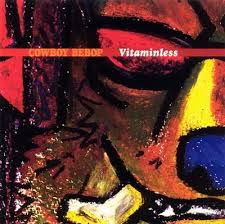 Disclaimer: I have never seen Cowboy Bebop. At all. It's one of those things that lingers on my mental 'Oh I should really watch that...' list, which is very much like my mental 'Oh I should really listen to that...' list in that there about five items I add for every one that I watch. So it's not something I will sit down with any time soon...but the music that I'm hearing from it has my interest even more piqued.
Specifically here we're talking about "The Real Folk Blues," which is equal parts pastiche of cheesy action show theme song and legitimately entertaining and layered song in its own right. It's and endlessly listenable song, one that seems to encompass all the other aspects brought in at various points on this EP - jazz, rock, humor - in one barnstormer of a 6 minute track. The rest of the material here isn't anywhere near that good, but it still paints enough of a picture - one confirmed by the full lengths that came out around the same time - of a composer and a set of musicians that are able to handle all manor of moods, styles and tones without any sense of strain. You want straight up jazz? Here's "Odd Ones" and "Cat on Mars." You want lounge music? "Piano Bar 1" coming right up. In the mood for some trip-hoppy French music? "Fantaisie Sign" looms on the horizon. It's an impressive array to cover in such a relatively short release, but unlike "Real Folk Blues," none of them reach that other level - OK, "Fantaisie Sign" comes damn close - that makes them classic material. [7.9/10]

Yes, I'm saying that their concept EP is their least progressive material. Besides that little wrinkle, this is very much a straight ahead sludge metal album. That doesn't stop it from being a very good one though, I mean just listen to the confluence of elements near the end of "Life Under the Swatter" where the tribal drums collide with the chunky rhythm riff as a wash of treated, dissonant guitar descends on the track, that sort of thing doesn't happen on lesser albums for sure. There's also the fact that, as a concept record, it really does get the feeling of a giant insect invasion across through sound alone, even without Aaron Turner's rasped lyrics. Once again, not exactly the hallmark of a lesser release. The only real criticism I could level at it is that it's a bit too derivative of Neurosis at times - "Hive Destruction" could pass for a "Locust Star" sequel if not for the vocal style - but that's not exactly a bad thing when you get down to it. All in all, while this doesn't go as far into the post-metal realm as the band's best known material, it provides a solid foundation of balls out rocking that grounds even the band's most experimental material from here on out. [8.3/10[
Arab Strap: Here We Go / Trippy (Chemikal Underground)

"Trippy" adds a new layer to Arab Strap's sound, one that I don't think they ever re-discovered thereafter and definitely not one that has any precedent on their previous outings: menacing. Malcolm Middleton's guitar, even before it gets distorted towards the middle of the track, sounds much more threatening, Aidan Moffat's vocals are frantically ranted in a way that even his most desperate moments couldn't approach, and the addition of what sounds like an actual live rhythm section - there aren't credits on the EP itself to confirm or deny that speculation, but it sounds very live in comparison to the obviously synthetic rhythm section on "Here We Go" - adds a lot more depth to the proceedings. That's all before you get to the song itself, the way it progresses from a normal, albeit darker tinged, Strap track and slowly, but surely evolves into something far removed from that. First, it gets vaguely mathy as Middleton's basic arpeggio starts to slip into 5/4 occasionally, then the straight 'chorus' pattern slides into 7/4 giving the track an unbalanced quality. Then the second guitar, relegated to moderately creepy marginalia for the first bit, becomes more and more present encroaching on the song until it merges with the main riff. Then the song goes into overdrive, becoming increasingly frantic as the bad trip at its center reaches its breaking point, eventually breaking into a much more 'modern rock' styled palm-muted power chord section that I don't think anyone would have thought would fit in an Arab Strap song, never mind fit in logically. All the while Moffat's describing the recipient of the drug fairy's menace as he becomes more and more paranoid - the first time the second vocalist jumps into the mix screaming 'GET AWAY!' is frightening beyond compare - until things get even weirder.
Arab Strap have thrown caution to the wind before and allowed their songs to devolve into techno interludes before - think of legendary b-side "Drug Song for Paula" - but the one they go into on "Trippy" is something much, much better than they usually get to. It's not just that it flows so logically out of the previous song, or that it really does approximate a faceless rave DJ to a frighteningly accurate degree, but that as it happens the song never goes out of focus; The bass riff never lets up, and eventually the guitar adds a modified version of one of the main riffs to the margins of the mix. It's a little thing, but it makes the track that much more engrossing to me; here was the left turn of the track, the moment that the build up turned into instead of exploding like the Mogwai song this seemed to be aiming towards, and yet instead of it sounding like that it remains grounded in the basics of the track up to the point. It also helps that it lasts long enough that it's actually a tangible episode of the saga as opposed to a minor detour.
"Trippy" might be the one song I remember Arab Strap for if I limit myself that way in the future. It may not be their quintessential moment, if anything it's the antithesis to their normal style, but at the same time it brings the two core elements of the band to the fore: Middleton's ease with naturalistic, seemingly unpracticed playing and Moffat's storytelling ability. It highlights both in a way that's at once unexpected and yet perfect, allowing the darker tone of the track - I think I saw a review that referred to it as a lost chapter of Trainspotting and that's as accurate a description as exists - to let the core duo indulge in a variation of their normal schtick without it sounding too out of place in their oeuvre. It's the ideal fodder for a b-side, as this definitely would not have fit on Philophobia tonally yet is as high quality as any of the band's best moments.
I suppose I should mention the actual A side at some point, so here it is: "Here We Go," one of the better tracks off Philophobia though not a highlight. Your basic Arab Strap tune. The drum machine makes me want to kill myself. Gets slaughtered by the flip side. Almost wish that this was a single sided addendum to Philophobia, but any vehicle for giving "Trippy" to the general public is a good one in my estimation. [9.3/10]
Samael: Exodus (Century Media)
Coil: Summer Solstice (Bee Stings) (Eskaton)

American Football: American Football EP (Polyvinyl)
Download link and image courtesy of A Wolf at the Door.
Mogwai: No Education = No Future (Fuck the Curfew) (Chemikal Underground)
Every change that Mogwai made between "Xmas Steps" here and "Christmas Steps" on Come On Die Young was for the better. That's not to say that as it was presented here it's bad per se - I mean, if this was the only remnant of the song ever recorded I'd be perfectly fine with it. But being confronted with it after already having "Christmas Steps" stamped onto my cerebellum it's easier to view it as a rough draft of one of Mogwai's best compositions. Hell, it's not even like the differences are all that drastic bar the big change in the second climax, where the lurching, feedback-punctuated sludge of this version is replaced with an actual discernible chord progression that's more distorted than the preceding guitars. In the end it's nice to have an embryonic version of the song, if only to demonstrate how pieces evolve in Mogwai's world; minor changes that result in a much better final product than even the fairly good demo versions could provide.
Outside of that, the EP contains a pair of shorter pieces that show the evolution that the band was going through at this point, between the more aggressive tone of Young Team and the tighter, more extravagant sound of Come on Die Young. More specifically, they showcase how vital pianist Barry Burns was becoming to their overall sound as they moved forward. Both "Rollerball" and "Small Children in the Background" feel like the band took stuff in the vein his solo pieces from Young Team and arranged it for the whole band this time around. The results still have Burns front and center, but feel much more complete and inclusive than their obvious predecessors. While neither is top shelf 'gwai material, they're damned good for what could just be written off as 'transitional' pieces. [8.4/10]
Dirty Three: Ufkuko (Bella Union)

Oddly enough, the two pieces here that feel the most like they were meant to go with Ocean Songs are the two that weren't actually on the bonus disc that came with that particular album. The three that were - the rollicking "To Aster!," the more jagged "Mihelkos Arm" and the accordion assisted "Cast Adrift" - all sound like the sort of thing you'd hear on Sad and Dangerous or the band's self-titled album; much harder and more upbeat than the meditative edge that took over on Ocean Songs. "Wish I Could" and "Three Wheels" on the other hand feel much more of a piece with the material that Dirty Three were pushing out at this point in their career. They're the sort of drawn out, evocative pieces that the band made its specialty after Horse Stories, not quite on the same level as Ocean Songs' stuff but certainly much more in line with it than the previous tracks. The oddity of what ended up where aside though, this actually feels like it's own release, much more so than the concurrently released Sharks EP. The gradual easing up that occurs as the EP progresses works very much in its favor, moving from the much more energetic and fiery "To Aster!" through to the much more languid and ethereal "Wish I Could" with a gradual decrease in energy that lets the whole EP hang together as a unit. [8.4/10]
The Seatbelts: Cowboy Bebop - Vitaminless (Victor)
Specifically here we're talking about "The Real Folk Blues," which is equal parts pastiche of cheesy action show theme song and legitimately entertaining and layered song in its own right. It's and endlessly listenable song, one that seems to encompass all the other aspects brought in at various points on this EP - jazz, rock, humor - in one barnstormer of a 6 minute track. The rest of the material here isn't anywhere near that good, but it still paints enough of a picture - one confirmed by the full lengths that came out around the same time - of a composer and a set of musicians that are able to handle all manor of moods, styles and tones without any sense of strain. You want straight up jazz? Here's "Odd Ones" and "Cat on Mars." You want lounge music? "Piano Bar 1" coming right up. In the mood for some trip-hoppy French music? "Fantaisie Sign" looms on the horizon. It's an impressive array to cover in such a relatively short release, but unlike "Real Folk Blues," none of them reach that other level - OK, "Fantaisie Sign" comes damn close - that makes them classic material. [7.9/10]
5 Star Corner: Coil - Autumn Equinox (Amethyst Deceivers) (Eskaton)

1. Procure a copy of this EP. I won't tell you to shell out the 100$+ I've seen it go for on eBay - though it might almost be worth it - but get it somehow.
2. Turn off the lights.
3. Put on some headphones - good headphones - and hit play.
4. Close your eyes. Do NOT open them until the EP is over.
Why go through all this? Well, it's all about the experience with any Coil album, the process of letting the overall feeling of things enfold you and put you somewhere that you'd never think music can take you. This is especially true of the era that this EP fully ushers in after having it hinted at on the previous two Equinox/Solstice EPs: the Music to Play in the Dark era, or my favorite era of the band's output. The most moody, the most evocative, the most layered, the most transportative. Autumn Equinox might actually be the highlight of this particular model of the band; at the very least it's the most gently evocative 20 minute span that they can claim responsibility for, and that's definitely a feat for these guys.
The word that I keep coming back to when I think of this album is 'regal.' The mood may be gentle, but the execution is lush, opulent and full of splendor. "Rosa Decidua" lets a trio of vocals - one angelic, one sinister and one soulful - bounce off each other as if they're at opposite walls of a great hall, echoing over and through each other. The subsequent instrumentals are equally open, if that makes sense. I mean that they sound like they've got more breathing room than your average Coil nightmare piece - "Switches" in particular is full of powerful moments of near silence that punctuate the escalating intensity of the various odd sounds that the instrumentalists are throwing at you. It's a necessary breather before the much more grand and stunning "The Auto-Asphyxiating Hierophant," which even more so that "Rosa Decidua" plays with the openness of the EP's sound. At its core there's a sinister orchestral fanfare, around that, there's complimentary vocals coming from either side, and no matter what they're saying the message is that you should be afraid by now. That orchestral fanfare? It's coming for you on heavy feet that sound like they're getting closer. You should run now but you don't know where you are.
In this scope, the finale of "Amethyst Deceivers" represents a peaceful death. It's a stunning piece - even more so here than on The Ape of Naples - of effortless, soothing beauty as if to calm you down after the nightmare fuel of the previous track. Instead of telling you to be afraid, the vocals are now telling you that you'll be alright. The music is spare yet full, driven along by a simple upright bass and a meandering harpsichord that never quite become a unit, but somehow anchoring the track when put together. It's as free as the EP gets, never seeming to repeat itself but still getting to the hypnotic, lulling place that the calmer parts of the Music to Play in the Dark series occupied. And then it ends on a soothing yet spooky note with Jhonn Balance whispering the title while panning from one ear to the other. All in all it might be my favorite Coil track of all time, or at least the one I'm most likely to have played at my funeral. [9.6/10]
Thursday, March 24, 2011
98 The Hard Way: EPs, Days 22-23
Hurl: We Are Quiet In This Room (My Pal God)
 Any band can take some songs and throw them together on a CD. Any band can realize that those songs play better in a certain order. Very few bands go to the trouble of making the songs work together in such a way that they must be played in the order they've been laid out. Even fewer bands seem to compose songs with the express intent of them leading into each other in organic, meaningful ways. For this fact alone, Hurl win me over. They've gone to the trouble of making the loping, minimal "This Numbness" build into the frantic, angular "Test the Waters" in such a way that the two tracks are both inexorably connected and each their own entity. They've done this for pretty much the length of this EP, even including their cover of Nice Strong Arm's "Amnesia" in the tapestry, and they've made it sound effortless all the while.
This EP is a definite grower. At first I was just moderately respectful of both the band's chops and the sense of unity the EP had, but every subsequent listen has pulled out new things to be awed by. All this before it became more than obvious that the songs themselves were all great examples of extremely mathy indie rock, like what would happen if Minus the Bear's DNA was mixed with Don Caballero's. The two guitarists expertly wind around each other without stepping on toes, bassist Matt Jencik - sometime Don Cab member, and it shows - ably handles the more melodic playing over the guitars' scenery and while the drummer isn't a virtuoso he navigates and directs the changes with a nice, deft touch. I still wouldn't call this a sterling example of the form, but it's certainly one that keeps me coming back. [8.4/10]
The Azusa Plane: Cheltenham (Ochre)
 If Cheltenham is anything like it is portrayed by Cheltenham, I don't think I'd put it on my travel itinerary whenever I get around to visiting England. This EP sounds like failure. It reeks of a dead industrial plant that used to provide jobs but has shut down and begat an unemployed massive. In the background, you can almost hear a child's spirit breaking as he realizes that he's stuck here forever. That's the level of detail that The Azusa Plane imbue this piece with. The beauty of it is that that detail is spawned from as few elements as possible; two heavily treated guitars occupy either channel and play very few notes, each is stuck against a stark drone. It's almost like the more minimalist-leaning pieces of Steven R. Smith's catalog, but played for depressing effect moreso than anything Smith's done, or Jackie-O Motherfucker if they were stripped down to just the guitar figures. Essentially, it's droney space rock with a heavy negative streak that rewards a close listen just as well as it fills the role of background music. That's as much as you can ask for with this type of thing, really. [8.2/10]
90 Day Men: 1975-1997-1978 (Temporary Residence)

I struggle with what to rate this one, honeslty. On it's own terms it's definitely upper-middle tier post-hardcore imbued math rock - think the intersection of Unwound and U.S. Maple - with fantastic bass playing and hints towards bigger, brighter things based on the ease with which it uses atmosphere. In the scope of what 90 Day Men would become shortly hereafter, once they brought on keyboardist Andy Lansangan and moved into much less abrasive waters, it's significantly lacking and utterly juvenile. So how to proceed? Do I rip into it for not being anything like the band that, quite frankly, I don't think they knew they could become, or do I set aside the future greatness and offer it praise for being what it is?
If the rating wasn't a big enough clue, I lean towards the latter quite decidedly in this case; regardless of how it fails to measure up to the twin triumphs of To Everybody and Panda Park, this doesn't even seem to be the work of the same band. This is a group of young, angry guys who worship at the altar of Steve Albini ("Streamlines and Breadwinners" couldn't sound more like Shellac if it tried) but have a nascent sense of songcraft that occasionally rubs against their more abrasive instincts ("My Trip to Venus" is incredibly catchy, especially that little guitar break in the chorus, for all its dissonance.) They probably spent a bit of time digging through the Gravity Records back catalog ("Sweater Queen" calls to mind Clikitat Ikatowi until it builds up to that half-speed breakdown) but might have eyes towards Chicago-bred post rock even before they know how to harness that sound ("Sink Potemkin" and especially "Hey, Citronella!" seem to have appropriated an epic streak or two from that lot, even as they thrive on uncomfortable levels of abrasion.) It's a very young sounding release, but at the same time it's incredibly practiced and polished. It's of two minds, but never sounds like an identity crisis. It doesn't hint towards the melodic beauty that they'd unleash a few years later, but it works its own kind of magic within its own confines. [8.1/10]
Download link and image courtesy of Last Train to Cool.
Clinic: Cement Mixer (Aladdin's Cave of Golf)
 If you look at them in the abstract, each of the first three Clinic singles follows a similar pattern; the A-side is usually a fairly energetic rocker while the two B-sides are some combination of a moody instrumental, an even more energetic punk approximation and a slow, atmospheric ballad. In the case of "Cement Mixer" the punkier number is eschewed leaving a pair of moody number on the B-side, but the title track is probably the hardest rocking of the A-sides from this period. "Cement Mixer" almost sounds like a reprise of the previous single's "D.P.," except it feels much more relentless. Everything from the driving guitar line to the vocal delivery seems to push the track onward at a relatively breakneck pace while still maintaining the hookiness that all three A-sides had in spades. It's nowhere near the perfection of "Monkey on Your Back, but it's easy to see why it's the one that led to their breakthrough.
The B-sides aren't as much of a letdown this time out, probably owing to the whole not having to live up to "Monkey on Your Back" thing. "Kimberly" especially seems like the blueprint for most of Clinic's better ballads from here on out - unsettling as fuck, but with a weirdly sweet undercurrent. "Voot" fills the instrumental requirement, and while it doesn't quite match "Evil Bill" in that department it's a nice enough way to end the single. [8.5/10]
Clinic: Monkey on Your Back (Aladdin's Cave of Golf)
 Why is it that the way that Ade Blackburn snarls the word 'nervous' during the first verse makes it sound so damned unnerving? Is it the scuzzy, VU-ish organ backdrop? The delivery, with that first syllable extended to the perfect point to induce spine tingles? Is it just that the whole song is so weirdly engrossing yet unbearably tense that every word carries menace not exactly inherent to it? Whatever it is, every time he says it, my back feels like it's been bombarded with tiny shards of ice. That's what one word does in this song.
So yeah, without extending myself into further hyperbole, "Monkey on Your Back" is absolutely perfect. It's perfect in the macro, it's perfect down to the tiniest details, like that bass swoop that kicks in during the second verse then becomes part of the main riff for the third, or the weird 'frame missing' vibe that the instruments dropping out before the third verse lends to the song. It's not the first time the Clinic showed just how good they could be - "Porno" was equally noteworthy if not as perfect - but it's the first time they hit the nail right on the head without any reservations. It's their mission statement, really: take Spectorian grandeur, add Velvet Underground abrasion, let the atmosphere do the rest. Really, even if the rest of this single was utter gash there's no way that I could hand it less than 4 stars.
Luckily though, both of the B-sides deliver even if it's on a much lesser scale than the A-side. "Evil Bill" in particular re-affirms the band's ease with mood and atmosphere as it takes about half the running time of most post-rock tracks to develop a similarly deep reserve of mood and tension. "D.T." is much more slight than either of its bookends, but in terms of displaying the band's versatility it does a decent job of showing how well they take to noisier material while still retaining their core Spectorian vibe. Neither lives up to the standard that "Monkey" sets, but both are integral parts of the band's canon nonetheless. [9.1/10]
Download link courtesy of Amor Louco. Contains the full self-titled compillation with all three of Clinic's early singles.
Tintoretto: The Sound of Someone You Love Who Is Leaving...And It Doesn't Really Matter (Highwater)
 Ever wished that someone would take the Shotmaker / Max Colby split and combine the two sides into one EP? If so, your wish is Tintoretto's command. They've taken Shotmaker's aggression and drive and married it to Max Colby's tight, intricate playing and math-rock inclinations, essentially giving you the best of both worlds in one fairly excellent package. It's far from being at their influence's quality level for the whole 21 minutes, but there are moments, particularly on the raging, intense "Rifle Merit Badge" and at various points during the two longer numbers, that suggest that had they kept going long enough they might have gotten there eventually. What's here is good enough to keep around though, definitely an overlooked entry in the later day emocore scene. [8.0/10]
Dowload link courtesy of Wisconsin Sickness.
Clikatat Ikatowi: River of Souls (Gravity)
 I don't know what exactly it is about this particular release that catches my fancy while the rest of Clikitat's discography never did much for me. At any rate, this release basically stations Clikitat Ikatowi as the Public Image Ltd. of the San Diego hardcore scene. The guitars are icy and distant, the bass is warm and almost dubby, the drumming is amazing - Mario Rubalcaba can be a beast when the mood strikes him - and most importantly, the songs are intricate without being too proud of that fact. Take closer "Pleiadian Dance" for example; it winds through about a half dozen themes, all in different times and tempos, but it doesn't call attention to that fact the way a lot of math-rock inclined bands do, it just feels like that's the way the song should logically go. At the same time though, it almost feels like they're holding back to some degree. "The Appliance" feels incomplete, like they had another 4 minutes of material that went with what was presented but just decided to cut it off. Likewise, there are a few tracks that hint towards a much heavier jazz influence than they ever manage to show, like the shuffling rhythm of "Ramble on Candywrappers" or the drumming on any given track - like I said, Rubalcaba's among the best drummers I've heard in this type of band. That restraint stops this short of being a necessity unfortunately. It's a big step up for the band - just as they dissolved, natch - but it feels like it could have gone even farther and been even better. [7.9/10]
Download link and image courtesy of Shiny Grey Monotone.
Three Mile Pilot: Three Mile Pilot (Gravity)
 While the rest of Three Mile Pilot's output post-Another Desert seemed much geared towards where the various members were heading afterwards, this EP finds them looking decidedly backwards. I'm not just talking about the elegaic cover of Brian Eno's "By This River," though that is a highlight here, but the material here feels very much like it was meant to come in between Chief Assassin and Another Desert. "Worry" especially feels like a transitional piece, working both the unsettling, cold aggression of the former and the art-pop of the latter simultaneously to glorious, if slightly muddled effect. "Wahn" has it's toes even further back in to Assassin territory, almost dropping the piano that became so integral to the band's sound towards the end of its run. Really, this functions more as the last gasp of Three Mile Pilot before the main members started to lay out their post-break up course, and while it's not as consistent a farewell as I might have hoped for - it's probably their least unified release overall - it still manages enough quality material to keep from breaking the streak of 4-star level greatness that the band ran with through their whole first run.
Oh, and "On a Ship to Bangladesh" is the least 3MP thing they've ever done, and it's also awesome in all its cheesiness. Not a highlight so much as an interesting side-trek that merits note. [8.2/10]
Jaga Jazzist: Magazine (Smalltown Supersound)
 Given how much they'd refine, expand and improve upon the ideas that show up here, it's easy to write off Magazine as the embryonic stages of what would become one of, if not the, most interesting and forward thinking jazz ensembles of modern times. Really, you'd be half right to ignore this and go straight to A Livingroom Hush - the electronics that would become their trademark isn't fully integrated into their sound, the music is nowhere near as dynamic and multifaceted and they throw in a random, incredibly forgettable slice of singer-songwriter piffle in the form of "seems to Me" that sticks out like a sore thumb. But at the same time, this gives context to the greatness that came only a couple of years later. You can look at this less as a piece of the puzzle than as a rough draft. I can easily picture the core members looking at this after it was completed and parsing out exactly where they got it right - "Serafin i Junglen," most of "Swedish Take Away" - and what just didn't work - "Seems to Me," the overly repetitive first couple of tracks - before starting up on their next album. In that light it makes sense, but as it is it's a flawed first step for one of the most reliably forward looking group of the last decade and a bit. [7.6/10]

This EP is a definite grower. At first I was just moderately respectful of both the band's chops and the sense of unity the EP had, but every subsequent listen has pulled out new things to be awed by. All this before it became more than obvious that the songs themselves were all great examples of extremely mathy indie rock, like what would happen if Minus the Bear's DNA was mixed with Don Caballero's. The two guitarists expertly wind around each other without stepping on toes, bassist Matt Jencik - sometime Don Cab member, and it shows - ably handles the more melodic playing over the guitars' scenery and while the drummer isn't a virtuoso he navigates and directs the changes with a nice, deft touch. I still wouldn't call this a sterling example of the form, but it's certainly one that keeps me coming back. [8.4/10]
The Azusa Plane: Cheltenham (Ochre)

90 Day Men: 1975-1997-1978 (Temporary Residence)
I struggle with what to rate this one, honeslty. On it's own terms it's definitely upper-middle tier post-hardcore imbued math rock - think the intersection of Unwound and U.S. Maple - with fantastic bass playing and hints towards bigger, brighter things based on the ease with which it uses atmosphere. In the scope of what 90 Day Men would become shortly hereafter, once they brought on keyboardist Andy Lansangan and moved into much less abrasive waters, it's significantly lacking and utterly juvenile. So how to proceed? Do I rip into it for not being anything like the band that, quite frankly, I don't think they knew they could become, or do I set aside the future greatness and offer it praise for being what it is?
If the rating wasn't a big enough clue, I lean towards the latter quite decidedly in this case; regardless of how it fails to measure up to the twin triumphs of To Everybody and Panda Park, this doesn't even seem to be the work of the same band. This is a group of young, angry guys who worship at the altar of Steve Albini ("Streamlines and Breadwinners" couldn't sound more like Shellac if it tried) but have a nascent sense of songcraft that occasionally rubs against their more abrasive instincts ("My Trip to Venus" is incredibly catchy, especially that little guitar break in the chorus, for all its dissonance.) They probably spent a bit of time digging through the Gravity Records back catalog ("Sweater Queen" calls to mind Clikitat Ikatowi until it builds up to that half-speed breakdown) but might have eyes towards Chicago-bred post rock even before they know how to harness that sound ("Sink Potemkin" and especially "Hey, Citronella!" seem to have appropriated an epic streak or two from that lot, even as they thrive on uncomfortable levels of abrasion.) It's a very young sounding release, but at the same time it's incredibly practiced and polished. It's of two minds, but never sounds like an identity crisis. It doesn't hint towards the melodic beauty that they'd unleash a few years later, but it works its own kind of magic within its own confines. [8.1/10]
Download link and image courtesy of Last Train to Cool.
Clinic: Cement Mixer (Aladdin's Cave of Golf)

The B-sides aren't as much of a letdown this time out, probably owing to the whole not having to live up to "Monkey on Your Back" thing. "Kimberly" especially seems like the blueprint for most of Clinic's better ballads from here on out - unsettling as fuck, but with a weirdly sweet undercurrent. "Voot" fills the instrumental requirement, and while it doesn't quite match "Evil Bill" in that department it's a nice enough way to end the single. [8.5/10]
Clinic: Monkey on Your Back (Aladdin's Cave of Golf)

So yeah, without extending myself into further hyperbole, "Monkey on Your Back" is absolutely perfect. It's perfect in the macro, it's perfect down to the tiniest details, like that bass swoop that kicks in during the second verse then becomes part of the main riff for the third, or the weird 'frame missing' vibe that the instruments dropping out before the third verse lends to the song. It's not the first time the Clinic showed just how good they could be - "Porno" was equally noteworthy if not as perfect - but it's the first time they hit the nail right on the head without any reservations. It's their mission statement, really: take Spectorian grandeur, add Velvet Underground abrasion, let the atmosphere do the rest. Really, even if the rest of this single was utter gash there's no way that I could hand it less than 4 stars.
Luckily though, both of the B-sides deliver even if it's on a much lesser scale than the A-side. "Evil Bill" in particular re-affirms the band's ease with mood and atmosphere as it takes about half the running time of most post-rock tracks to develop a similarly deep reserve of mood and tension. "D.T." is much more slight than either of its bookends, but in terms of displaying the band's versatility it does a decent job of showing how well they take to noisier material while still retaining their core Spectorian vibe. Neither lives up to the standard that "Monkey" sets, but both are integral parts of the band's canon nonetheless. [9.1/10]
Download link courtesy of Amor Louco. Contains the full self-titled compillation with all three of Clinic's early singles.
Tintoretto: The Sound of Someone You Love Who Is Leaving...And It Doesn't Really Matter (Highwater)
Dowload link courtesy of Wisconsin Sickness.
Clikatat Ikatowi: River of Souls (Gravity)

Download link and image courtesy of Shiny Grey Monotone.
Three Mile Pilot: Three Mile Pilot (Gravity)

Oh, and "On a Ship to Bangladesh" is the least 3MP thing they've ever done, and it's also awesome in all its cheesiness. Not a highlight so much as an interesting side-trek that merits note. [8.2/10]
Jaga Jazzist: Magazine (Smalltown Supersound)
Tuesday, March 22, 2011
5 Star Corner: Fridge - Orko (Output)

This EP is a minor masterpiece of post-rock as it should be, not post-rock as it is. The tracks here are held down by impeccable grooves courtesy of the band's rhythm section but not dictated solely by their whims. Each of the tracks has room to breathe, room to let the trio's various odd whims run wild. These pieces are fluid, unrestrained compositions that have the intimacy and unpredictability of a live jam session. Every time I think that a given track will keep going in one direction, stay the course laid by Adem Ilhan's impeccable bass grooves and Sam Jeffers' precise time keeping, a new element pops into the mix to drag it away from that course.
Take "Distance as the template for this; starting out with a simple, hypnotic groove it abruptly devolves into arrhythmic jazz for a few minutes, destroying the established rhythm only to have it resurrect itself with just as little fanfare as it was dropped with. Not all the tracks are as self-destructively inclined as that - "Jessica" skips the formality of an establishing groove altogether - but that sort of unpredictability permeates the whole release, keeping the listener on edge while never giving the impression that these guys don't know what they're doing. It's a tough balance to pull off, but Fridge at this point in their evolution had mastered it.
I think the biggest thing in the pro-column for this EP is that you can hear the trio getting as bored with post-rock as a lot of listeners became not too long after this. You can hear the restlessness, the desire to branch out beyond the sound they'd established on Semaphore being channeled into some exceedingly creative directions. In other words, it's the sound of a band destroying the box they'd been placed in, carefully hinting at the dancier direction they'd take on their next releases without fully revealing it while forcing their way through jazz to get there. Listening to the evolution of Fridge through their 1998 releases alone is like watching Neu become Squarepusher over the course of 90 minutes. It's not the direction I might have expected to hear them take, but the results make for one of the best strings of releases that the whole post-rock scene has to offer. [9.5/10]
98 The Hard Way: EPs, Days 19 and 20
Arab Strap: Afternoon Soaps (Chemikal Underground)
 The reason I think I find Philophobia to be a bit of a slog on the whole is that it gets lost in its own world towards the end, becoming more insular without ever quite drawing me in. It's a function of its length more than anything, so it makes a lot of sense that the EPs that surround it fare a lot better, or at least call for more repeated listening, than the album itself. Here, for instance, you could say you're getting more of the same, even reprising one of the album's highlights in "Soaps," but the end result is that 15 minutes worth is easier to stomach than a full hour. It also helps that a great deal of the time is spent letting Malcolm Middleton shine over Aidan Moffat's rambling misery. The last part of "Forest Hills" especially reminds me why Middleton is one of my stealth favorite guitarists; it's one riff repeated over and over for 5 minutes, but each recurrence has these subtle differences - a stray note here, a seeming miss-hit there - that give the track a strange new layer to its already hypnotic atmosphere. It's a distinctly human element of their sound that often cuts against the inhuman, programmed drumming to give the tracks life in an unexpected way. It's almost too bad that such a great example of what the band are capable of when things turn out right shares space with an overly maudlin re-imagining of "Soaps" though. There was a bit of a miscalculation in the decision to ramp up the drama of the song when its charm lay in its deliberate small scale. "Toy Fights" fares much better, borrowing the riff from Mogwai's "Summer (Priority Version)" to back up a sweet duet about the joys of simply vegging out for an afternoon with your woman. It's a nice touch to have the overlapping 'you' and 'I' halves of the song deviate form each other so frequently while maintaining the same overall lyrics for both. [8.1/10]
!!!: The Dis-Ease (Sound Virus)

Given how far they've come from this little 7" in addition to how under-known it is, it's easy to forget that !!! once had their toes much, much further into the punk side of dance-punk than the other way around. Of course, given the fact that the backbone of the band - vocalist Nic Offer, Guitarist Tyler Pope and drummer Mike Gius - were recently the core of The Yah Mos, a strict post-hardcore outfit, the punkier shades of this single don't come as much of a surprise. What might come as a surprise though is just how well they pull it off. Both of the songs here are miles ahead of anything that The Yah Mos did, seamlessly fusing the energy of that outfit with funkier bass playing, well deployed saxophone and trumpet and a much improved sense of structure. "The Dis-Ease" in particular benefits from the latter, threatening to collapse through two chorus of off-kilter, herky-jerky guitar rhythms before it pulls itself into focus fora minute or so, the rebuilds itself back to its former chaos all without losing an ounce of energy. Plus there's all manner of colourful detail at various points - that panning guitar that punctuates the choruses should not work, but it's always mildly exhilarating to hear - which give the song endless replayability. "The Funky Branca" is much more straightforward and melodic, though no less invigorating. I could swear that I almost hear tinges of (very white) afrobeat in the chorus, with the tandem trumpet and sax stabs between spiky, clean guitar rhythms, though once again the band pulls that into chaos as the chorus finishes (kinda like the descent at the end of the theme in "Theme de Yoyo" and yes I am comparing !!! to Art Ensemble of Chicago deal with it). It's too bad that they shed this side of their sound almost immediately because while their later material may be much more polished very little of it is this immediate and forceful. [8.3/10]
The Gloria Record: The Gloria Record (Crank!)
 'I just want something beautiful to happen here'
When I was doing my initial toe-dip into emo a few years back one of the biggest disappointments I'd come across was Mineral's two albums. I know, 'sacrilege!' 'heretic!' blah blah blah, but there was a fundamental disconnect between the band as they were sold to me and the band I finally heard. The big turn off was the vocals though, something about Chris Simpson's drawn out phrasings and overall dramatics just rubbed the wrong way against the music. So when I finally got around to hearing his second band, The Gloria Record, I was a bit apprehensive. Luckily though, the band here seems to understand what kind of music is needed to compliment and elevate Simpson's vocals; give it a lighter touch, a more acoustic base and a hell of a lot of room to build and recede. Essentially, make the music as dramatic and sweeping as the vocals could be.
It's obvious from the first short track here that I'd be much kinder to this band than I was to Mineral, but it's not until the grandiose, 8 minute centerpiece of "Torch Yourself" that it was obvious just how much of an improvement I was witnessing. The song couldn't be simpler on its surface, a basic acoustic rhythm with some light electric riffs over top, but as it moves along it gains so much urgency that the eventual climax - one of the best in the genre for my money - feels appropriately epic, not unearned at all. None of the other tracks reach that height again, but they carve out a nice little sound, halfway between Lullaby for the Working Class' chamber folk and standard indie emo a la Emo Diaries. Most importantly though, the sound fits with Simpson's vocals perfectly. The drawn out vowels he favors glide effortlessly over the heavy acoustic rhythms and slight riffs in a way that they rarely did in his previous band. Hell, the one track here that feels most Mineral-esque, the headlong rush of "Grain Towers, Telephone Poles," is the one moment I find most problematic on the whole release, and even that is tempered by the fact that it retains the core sound of the rest of the EP while trying to apply it to a more driving tempo - though to be fair, the climactic cut off is excellently handled. It's almost as though Simpson and fellow Mineral alum Jeremy Gomez understood the problems I saw in their previous band and gathered this group of musicians to go about correcting them, and in the process created something beautiful and lush in ways that Mineral could only dream of reaching. [8.6/10]

!!!: The Dis-Ease (Sound Virus)
Given how far they've come from this little 7" in addition to how under-known it is, it's easy to forget that !!! once had their toes much, much further into the punk side of dance-punk than the other way around. Of course, given the fact that the backbone of the band - vocalist Nic Offer, Guitarist Tyler Pope and drummer Mike Gius - were recently the core of The Yah Mos, a strict post-hardcore outfit, the punkier shades of this single don't come as much of a surprise. What might come as a surprise though is just how well they pull it off. Both of the songs here are miles ahead of anything that The Yah Mos did, seamlessly fusing the energy of that outfit with funkier bass playing, well deployed saxophone and trumpet and a much improved sense of structure. "The Dis-Ease" in particular benefits from the latter, threatening to collapse through two chorus of off-kilter, herky-jerky guitar rhythms before it pulls itself into focus fora minute or so, the rebuilds itself back to its former chaos all without losing an ounce of energy. Plus there's all manner of colourful detail at various points - that panning guitar that punctuates the choruses should not work, but it's always mildly exhilarating to hear - which give the song endless replayability. "The Funky Branca" is much more straightforward and melodic, though no less invigorating. I could swear that I almost hear tinges of (very white) afrobeat in the chorus, with the tandem trumpet and sax stabs between spiky, clean guitar rhythms, though once again the band pulls that into chaos as the chorus finishes (kinda like the descent at the end of the theme in "Theme de Yoyo" and yes I am comparing !!! to Art Ensemble of Chicago deal with it). It's too bad that they shed this side of their sound almost immediately because while their later material may be much more polished very little of it is this immediate and forceful. [8.3/10]
The Gloria Record: The Gloria Record (Crank!)

When I was doing my initial toe-dip into emo a few years back one of the biggest disappointments I'd come across was Mineral's two albums. I know, 'sacrilege!' 'heretic!' blah blah blah, but there was a fundamental disconnect between the band as they were sold to me and the band I finally heard. The big turn off was the vocals though, something about Chris Simpson's drawn out phrasings and overall dramatics just rubbed the wrong way against the music. So when I finally got around to hearing his second band, The Gloria Record, I was a bit apprehensive. Luckily though, the band here seems to understand what kind of music is needed to compliment and elevate Simpson's vocals; give it a lighter touch, a more acoustic base and a hell of a lot of room to build and recede. Essentially, make the music as dramatic and sweeping as the vocals could be.
It's obvious from the first short track here that I'd be much kinder to this band than I was to Mineral, but it's not until the grandiose, 8 minute centerpiece of "Torch Yourself" that it was obvious just how much of an improvement I was witnessing. The song couldn't be simpler on its surface, a basic acoustic rhythm with some light electric riffs over top, but as it moves along it gains so much urgency that the eventual climax - one of the best in the genre for my money - feels appropriately epic, not unearned at all. None of the other tracks reach that height again, but they carve out a nice little sound, halfway between Lullaby for the Working Class' chamber folk and standard indie emo a la Emo Diaries. Most importantly though, the sound fits with Simpson's vocals perfectly. The drawn out vowels he favors glide effortlessly over the heavy acoustic rhythms and slight riffs in a way that they rarely did in his previous band. Hell, the one track here that feels most Mineral-esque, the headlong rush of "Grain Towers, Telephone Poles," is the one moment I find most problematic on the whole release, and even that is tempered by the fact that it retains the core sound of the rest of the EP while trying to apply it to a more driving tempo - though to be fair, the climactic cut off is excellently handled. It's almost as though Simpson and fellow Mineral alum Jeremy Gomez understood the problems I saw in their previous band and gathered this group of musicians to go about correcting them, and in the process created something beautiful and lush in ways that Mineral could only dream of reaching. [8.6/10]
Sunday, March 20, 2011
98 The Hard Way: EPs, Days 17-19
Coil: Spring Equinox (Moon's Milk or Under an Unquiet Skull) (Eskaton)
 Spring might actually be my least favorite season if I were to rank these things. It could just be that the comedown from winter in my particular area is quite harsh and uneven - this year alone we've had 3 thaw outs that then refroze making the roads extra hazardous - but more than that, it's a transitional season. One where you can't go out and do much. It's too damp to start thinking about a game of touch football with your friends or softball. Outdoor volleyball's out of the question unless you like frequently slipping onto partly frozen ground. It's the one season where it's possible to feel stuck inside - the weather's nice on the surface, but underneath it's not ready for you to do much with it.
Coil get that feeling. The first of their 4 Equinox/Solstice EPs is the most uniquely foreboding, the most claustrophobic. The mix is simple and uncluttered, letting the usual elements of this era of Coil have ample room to breathe and resonate, which pays off wonderfully in the second part when William Breeze's acoustic guitar and violin enter the mix to add a soaring melody yet can't stop the tension that's been built up for the previous ten minutes or so. Jhonn Blanace's vocals are used as an unsettling underlayer to the mix, swirling around Peter Chrisopherson's ambient synth pads like a ghost in the machine. The pump organ that acts as a hook to both parts is just as haunting, sounding like a relic of a time long past that can't bear to never be heard again. Everything comes together in a quietly unsettling package, like a microcosm of all the things that would make the Musick to Play in the Dark LPs so wonderfully frightening. It may not sound like spring in the classic sense, but it captures something about the season that I can relate to; this is a season where you can't quite get to doing what you wish you were doing. This is the one season where you are trapped. [8.9/10]
Download link courtesy of The Pop Stalinist. Contains the full series of Equinox/Solstice EPs, all of which are worth your time and the others of which I'll be discussing a bit later.
Modest Mouse: Other People's Lives (Up)
 This one's a moderate disappointment. Think about it, all the other Lonesome Crowded West-adjacent singles were either epic, godly or at least featured one utterly transcendent moment. This one tries to have a bit of each in it, but it fails a bit. Neither "Other People's Lives" no "Grey Ice Water" are as good as they want to be. The former is too long without any of the interesting rhythmic flourishes that a lot of MM's longer tracks did, the latter is too slight and ephemeral to make any sort of impression. Both have their good elements - the harmony vocals on "Grey Ice Water" and the feedback rhythm of "Other People's Lives" - but they don't do enough with them to really cause me to consider either song a winner on any particular level. They're still good songs, but when the band had been on such a roll leading up to this one it stands out like a bit of a black mark by stopping there and not making the leap into being extraordinary. [7.7/10]
Third Eye Foundation: Fear of a Wack Planet (Domino)
 Think of this as a step into the light. After the suffocating darkness of Ghost it's only logical that Matt Elliott might make overtures towards a slightly less downtrodden sound, and while this is still in his moderately foreboding wheelhouse it's infinitely sunnier than the material that came before. Part of that comes from it being much, much less oppressive in its darkness. Ghost was a suffocating album, one where any time you thought you'd found a patch of sunlight, Elliott would conjure up a cloud to mask it before you noticed. This EP though is much more open and dare I say inviting. The elements of Elliott's sound are still there, but there's space between them this time out. The trip-hoppy percussion skitters where it used to crash. The melodies that used to crawl along like they'd just washed down their uppers with Nyquil here soar almost angelically, be they the choral vocals o nthe title track or the string loop on the extended take of You Guys Kill Me's "A Galaxy of Scars." The atmosphere that used to roll in like a dense fog is reduced to a fine mist. And yet at its heart this couldn't be anything but a Third Eye Foundation release. It's still foreboding, but it forebodes with a much more subtle touch than previously. [8.4/10]
The Beta Band: Los Amigos del Beta Bandidos (Regal)
 This is probably the most overlooked of The Three EPs. I can understand why at least; if you're listening to the whole compilation it's the final set of songs, and since there's no real stand out track here there's nothing to draw you into it the way that "Dry the Rain" did for the Champion Versions section or "Inner Meet Me" did for The Patty Patty Sound. I know that when I first got The Three EPs none of these songs stood out no matter how I approached them, but in the end that becomes their charm to me. This is the most unassuming of the set, I guess. The one that goes about its business with a sort of quiet, professional confidence that doesn't need those big moments to assert itself. It's by far the most consistent of the set too, not having a high point as towering as "Dry the Rain" that the rest will never reach, nor a point as low as "The Monolith" to drag it to a halt. On its own it's probably the most fully realized EP of the bunch too, much more unified than Champion Versions but much less one-note than Patty Patty Sound. All that's a way to say that it's definitely better than many would give it credit for on first go round. Each listen makes it rise a little bit in my estimation, and while I doubt it will ever usurp Champion Versions as my favorite of The Three EPs, the much more subtle joys it offers are well worth revisiting. [8.4/10]
Boredoms: Super Roots 7 (Warner Music Japan)
 Step One: Don't think of the remixes as such, think of them as the build up (EWE) and comedown (EYE) necessary to make the centerpiece (Boriginal) have the impact that it does. Think of the EP as one 33 minute piece, not a mammoth, all destroying 21 minute slice of manna from Yamatsuka Eye's heaven bookended by pointless remixes thereof. I won't ever claim that they're teh best parts of the EP, but I will also never claim that they aren't essential to my enjoyment of it.
Step Two: Know your context, part one. The concept of this release pulls it into focus a bit. It's one riff, explored for all its worth for 33 minutes. That riff, from Mekons' "Where Were You" pops up in various contexts, forms and variations over the course of the EP, but it's never not recognizable. The core repetition announces itself quite clearly, but the variance therein gives the release an out from being dismissed as too one-note. It's almost like the original song was handed to bands as diverse as Neu, Boards of Canada, Talking Heads and Sick of It All to cover, themn those covers were played sequentially by Boredoms as they would interpret them. Yet for all the jarring changes of pace and mood it plays out as a unified piece. Quite an achievement, really.
Step Three: Know your context, part two. Think about where this falls in the Boredoms chronology; they've just released Super Ae, which was a big departure from the noisy, ADHD punk of their early material (and even from the refinement thereof that gave us Pop Tatari) into the fields of rhythm heavy nirvana. After that would come Vision Creation Newson, which might be the most trance-inducing album ever made by humans. This is the bridge between the two, taking the somewhat rudderless exploration of Ae and giving it a focal point. The results from the basis for what the band would do on VCN; go far afield but keep it all in focus and tied to something tangibly of that song.
Step Four: Listen to it on headphones. Like with all later period Boredoms, this is the key. [8.7/10]
Can Can Heads: The Formation of Oxen With Fire (Bad Vugum)
 Putting it bluntly, this EP sounds like shit. It's impossible to describe the sound of this particular release without the descriptor 'as recorded on a late 70s model tape deck' being tacked on to any sort of comparison point. Those comparison points, however help redeem the whole endeavor; it's obvious from the first blast of "Happy Birthday Jesus" that these guys studied their Dog Faced Hermans and Contortions albums about as diligently as they could before they recorded anything, and that dedication to the right influences gives even the most tape-hiss addled, overly trebly moment of this release a high enough base value that the irritation of the recording method is minimized somewhat. It also helps that the recording style has a bit more charm in this context than in most others. Noisy no-wave is one of the few genres out there where horrible recording quality can come close to enhancing the experience, and on a particularly forgiving day I might even say that the 6 songs here benefit from the lack of production value - "Deep Bed Granular" especially has a high degree of grit in this circumstance that makes it bite a bit more than might be expected in a better recorded format. So let it be said that even I, who rails against the purposeful fucking up of a recording by means of tape deck recording, can find a circumstance where I'm grateful for its presence. Just barely. [7.7/10]

Coil get that feeling. The first of their 4 Equinox/Solstice EPs is the most uniquely foreboding, the most claustrophobic. The mix is simple and uncluttered, letting the usual elements of this era of Coil have ample room to breathe and resonate, which pays off wonderfully in the second part when William Breeze's acoustic guitar and violin enter the mix to add a soaring melody yet can't stop the tension that's been built up for the previous ten minutes or so. Jhonn Blanace's vocals are used as an unsettling underlayer to the mix, swirling around Peter Chrisopherson's ambient synth pads like a ghost in the machine. The pump organ that acts as a hook to both parts is just as haunting, sounding like a relic of a time long past that can't bear to never be heard again. Everything comes together in a quietly unsettling package, like a microcosm of all the things that would make the Musick to Play in the Dark LPs so wonderfully frightening. It may not sound like spring in the classic sense, but it captures something about the season that I can relate to; this is a season where you can't quite get to doing what you wish you were doing. This is the one season where you are trapped. [8.9/10]
Download link courtesy of The Pop Stalinist. Contains the full series of Equinox/Solstice EPs, all of which are worth your time and the others of which I'll be discussing a bit later.
Modest Mouse: Other People's Lives (Up)

Third Eye Foundation: Fear of a Wack Planet (Domino)

The Beta Band: Los Amigos del Beta Bandidos (Regal)

Boredoms: Super Roots 7 (Warner Music Japan)

Step Two: Know your context, part one. The concept of this release pulls it into focus a bit. It's one riff, explored for all its worth for 33 minutes. That riff, from Mekons' "Where Were You" pops up in various contexts, forms and variations over the course of the EP, but it's never not recognizable. The core repetition announces itself quite clearly, but the variance therein gives the release an out from being dismissed as too one-note. It's almost like the original song was handed to bands as diverse as Neu, Boards of Canada, Talking Heads and Sick of It All to cover, themn those covers were played sequentially by Boredoms as they would interpret them. Yet for all the jarring changes of pace and mood it plays out as a unified piece. Quite an achievement, really.
Step Three: Know your context, part two. Think about where this falls in the Boredoms chronology; they've just released Super Ae, which was a big departure from the noisy, ADHD punk of their early material (and even from the refinement thereof that gave us Pop Tatari) into the fields of rhythm heavy nirvana. After that would come Vision Creation Newson, which might be the most trance-inducing album ever made by humans. This is the bridge between the two, taking the somewhat rudderless exploration of Ae and giving it a focal point. The results from the basis for what the band would do on VCN; go far afield but keep it all in focus and tied to something tangibly of that song.
Step Four: Listen to it on headphones. Like with all later period Boredoms, this is the key. [8.7/10]
Can Can Heads: The Formation of Oxen With Fire (Bad Vugum)
 Putting it bluntly, this EP sounds like shit. It's impossible to describe the sound of this particular release without the descriptor 'as recorded on a late 70s model tape deck' being tacked on to any sort of comparison point. Those comparison points, however help redeem the whole endeavor; it's obvious from the first blast of "Happy Birthday Jesus" that these guys studied their Dog Faced Hermans and Contortions albums about as diligently as they could before they recorded anything, and that dedication to the right influences gives even the most tape-hiss addled, overly trebly moment of this release a high enough base value that the irritation of the recording method is minimized somewhat. It also helps that the recording style has a bit more charm in this context than in most others. Noisy no-wave is one of the few genres out there where horrible recording quality can come close to enhancing the experience, and on a particularly forgiving day I might even say that the 6 songs here benefit from the lack of production value - "Deep Bed Granular" especially has a high degree of grit in this circumstance that makes it bite a bit more than might be expected in a better recorded format. So let it be said that even I, who rails against the purposeful fucking up of a recording by means of tape deck recording, can find a circumstance where I'm grateful for its presence. Just barely. [7.7/10]
Subscribe to:
Posts (Atom)