Tuesday, December 15, 2009

#18. Mew - ...and the Glass-Handed Kites (Sony, 2005)

I understand why in some circles 'prog' is a 4-letter word (oh you know what I mean you literal-minded jackasses) but bear with me here if you are part of that sect of music listeners. I may not be a typical prog fan, someone who gets way too wrapped up in the lyrics of Yes albums or actually tries to defend the numerous excesses of Genesis and ELP, both musical and tonal, but I do have a soft spot for the genre. I can overlook the pomposity a lot of the time, especially if underneath that the music itself is good enough to merit that type of a listen, and usually it is. I can forgive moments of wankery if they feel at east somewhat natural to the progress of the song. I understand why some people can't look past that sort of thing, but it's worth it when it winds up with moments as great as some classic prog could manage. Why am I going on about this? Because I know a few people who got turned off of ...and the Glass-Handed Kites becaue it was basically Mew-gone-prog, and as far as I'm concerned that's missing the point by quite a bit. It's Mew-gone-prog, sure, but not in the way you're thinking of it. They aren't indulging in 5 minute solos or 15 minute suites about the plight of the fictional Elfloric people or Middle...yeah, you know what I'm talking about, they're simply applying a bit more of an epic scope to their already pretty great indie-pop.

I was a fan of their previous album, 2003's Frengers, but as good as that was it couldn't have prepared me for what lay in the wait. Like I said, this is Mew-gone-prog in the best possible way, an impeccably sequenced utterly gorgeous hour of some hybrid of art pop and shoegaze with the most swoon-inducing vocals this side of Kate Bush (come to think of it this could pass for a rocked out version of Hounds of Love in places). the progressive part applies more to the album's structure than to its music, with the songs bridging between each other in sometimes exhilarating ways and the songs themselves getting more complex and layered, especially the vocals. I wouldn't be surprised if there was a concept behind it too, but the lyrics always seem to be secondary to the sound of frontman Jonas Bjerre's voice, not in the 'singing to hear himself sing' way but in the use of his voice, sometimes in multiple layers, as another element of the album's instrumental palette. Besides, his lyrics have always been more evocative than concrete, and that seems to be the case here more than ever.

Besides, it isn't like the album needs a unified lyrical concept when it all sounds so damn gorgeous. Even the opening dissonance and angular riff of "Circuitry of the Wolf" winds up sounding immeasuarbly beautiful after that piano line and ethereal vocal choir takes over the track to lead it into the just as jagged in places but even more ethereal "Chinaberry Tree." It's odd, but I find that the transitions between the tracks are the album's best moments, especially the sections of the album where there's no breathing room between tracks. Just listen to the stretch from "Fox Cub" through to "A Dark Design" for the best of that type of thing; the way that the calm interlude of "Fox Cub" builds up to the spiky, frantic post-punk of "Apocalypso" whose ending one chord vamp seamlessly transitions into "Special"'s main riff which evolves into the off-center introduction of "The Zookeeper's Boy" whose ending vocal nirvana perfectly dissolves into the warm synth of "A Dark Design" almost puts the constituent songs in that set to shame. It probably would if we weren't talking about three of the strongest songs of the decade on their own and two essential pieces of dream pop on either end of them. Later on the transitions get more tenuous, but the songs that get to stand on their own are some of the most epic and beautiful. I'm talking about the last two tracks here, specifically "White Lips Kissed" which almost reaches the vocal sweet spot that "Zookeeper's Boy" set the bar for, then has Bjerre going even higher into falsetto as a military drum pattern emerges out of the haze, but "Louise Louisa" is far from a shadow of it, especially in its final moments when Bjerre sounds frail and broken as he closes the album with a plea of 'Stay with me/I don't want to be alone'. Really the only moment I can't find much love for is "The Seething Rain Weeps for You" but it's not like it's a bad song - and OK, the guitar solo over the last chorus is pretty awesome despite not being necessary - just a merely OK one in a sea of much better examples of what these guys can do.

Oh, and it's got a really fucking horrible cover just so we can get that out of the way. No way I can defend that piece of shit.

Video: "Why Are You Looking Grave (Edit)"
Video: "Apocalypso"
Video: "Special"
Video: "A Dark Design"

#19. 'It's the sweetest taste of sin'


Ne-Yo "Closer"

Whenever I hear an artist described as "the new (insert older artist here)" I mentally tune them out. I may have done an about face on pop music in general but any time someone is being passed off as the purported heir to a throne that in most cases hasn't exactly been abandoned or in need of having a new occupant I tend to try my best to ignore them. I don't know exactly why that is, it could be that 9 times out of ten we're talking about artists I have no stake in at best or at worst have nothing but antipathy towards, but the myth of succession in pop music irks me. In a genre that's made so many leaps forward this decade it feels antithetical for it to still cling to the idea that rather than delivering a new form of artist the audiences need to have their old favorites replicated with increasingly diminishing returns. I guess it works, but when the genre could be pushing forward on all fronts it still falls back on stock types so often that it feels like laziness.

So if you want to know why I avoided Ne-Yo for so long, it's because I heard him described as "the new Usher" - just what we needed amirite? - before Usher decided that he wasn't quite done with the whole success thing. The little bits I heard of him didn't do much to make me think I was missing out; "So Sick" had good lyrics at its heart but seemed like it was a standard sensitive urban dude slow jam on the whole, and neither he nor Rihanna made much of an impact on me with "Hate That I Love You". For all I could tell, Ne-Yo was just another in the long line of male R 'n' B singers that had the voice and the charm but otherwise didn't offer much to someone who was sick of that whole scene. He served his purpose, but that purpose was far removed from what I was looking for in pop music.

Then along comes "Closer".

I may have completely misjudged Ne-Yo it seems. Under the studio mandated gloss of his previous singles there was something more impressive lurking, a quiet sophistication and grace that so many of his peers lacked and made up for with at times ridiculous dancing and mugging. The dude had class, basically. For the talk about him being the new Usher it turns out that he was exactly the opposite at his core, someone with a sense of sophistication in an increasingly ribald (not that I mind ribald but just go with me here) genre. He dubbed himself a gentleman and did nothing to dissuade me of that notion. And he did it on his most energetic and downright danceable single to date.

"Closer" floored me on first listen, but it didn't floor me the way that a lot of pop singles fro mteh last part of the decade did. It wasn't noteworthy for sounding unlike anything on the radio at that point, it sounded tailor made for the radio to be truthful, but because it there was such an obvious sense of craft behind. Nevermind the sophistication that Ne-Yo brings with his presence, the track itself sounded sophisticated, letting the layers come in and be shown in isolation before introducing their interactions, all the tracks sounding utterly immaculate and sharp. It sounded like the ideal version of the male R 'n' B mid tempo dance number, one where every single element fell perfectly into place in terms of production and the vocals and lyrics didn't work against the good tune that might have been brewing. In just under four minutes "Closer" made every similar song obsolete in my view and took Ne-Yo off my pop blacklist, not bad for a song that could have just as easily justified my negative views of teh dude.

It comes down to the production, not surprisingly given that this is me we're talking about. On paper it looks like a slightly schizophrenic amalgam of ideas (thumping house drum machine, fluid acoustic guitar, light handclaps, pulsing bass line and orchestral stabs) but the way its all assembled, mixing and matching the different elements in as many isolated combinations as possible only really bringing them all together in the last part of the chorus, is a stroke of genius. In a way it sounds like a set of separate tracks that got welded together a la "Take Me Out," but eventually the whole picture becomes clear, right at the end of the first chorus when that introductory bass line re-emerges, and the whole song falls into place. The production is like a puzzle in that sense; you get all these pieces thrown at you that don't seem to fit together at all until you line them up just right and it becomes obvious. That's probably the most unique element of the song right there, but its execution makes it sound so perfectly normal that the oddness doesn't overwhelm the track. And then there's the moment that took it over the top, the move into half time for the last section. Is it a cheap trick? Maybe, but goddamn, hearing that thumping beat slow to a crawl on a dime while the track around it kept going was one of those perfect 'chill' moments that are all too rare on pop radio.

And then there's Ne-Yo. I can see the 'new Usher' thing to some extent, but while Ush traded heavily on youth and immaturity for the better part of his career Shaffer Smith goes the opposite way and actually strives for something resembling maturity. "Closer " isn't the best example of this on a lyrical level, but the performance aspect is right in that specific wheelhouse. It's controlled for one thing, even in the final moments where he seems to be building up to one of those trademark song-ending-vocal-histrionics-extravaganzas that have become the go-to device on urban radio (Thanks, Mariah, we really appreciate that) he holds it back to a few interjections before the half-time shift. Before that though the vocal is all about control while the lyric anticipates the loss of control. That sort of push-pull between the core aspects of his performance adds a lot to the track, the vocal trying to maintain at least the appearance of civility while the lyrics are all but ravishing the object of his attention. I mean just listen to the chorus: the delivery is so choppy that it feels like its a battle to not let the vocal drift over into the lyric's realm of obsession, and it's unclear whether it succeeds or not. The chorus' delivery is also indicative of just how malleable Ne-Yo's voice is, always adapting perfectly to its surroundings even as they shift as liberally as they do here. Really it's the perfect icing on the track, and it goes beyond just his usual smothness for once.

Monday, December 14, 2009

#19. Unwound - Leaves Turn Inside You (Kill Rock Stars, 2001)

There are a lot of entries on these lists that find me using words in sentences together that shouldn't ever be in that position. Part of it goes back to my love of being surprised, my love or curveballs that offer a new view of what a band can and does apparently offer, but another part of it is that the cognitive dissonance associated with those odd word pairs never quite goes away, and thus each time that particular album gets played I'm always stuck on how off-format it sounds and thus paying closer attention and getting deeper into the intricacies of it. Any album can keep me focused on it with sheer quality, but to draw me in deeper than that it needs that additional hook, that x-factor that never seems to be the same from one album to the next. Any band can add in elements of classical and chamber music to their sound and make it good, but Oxbow does it and it's fascinating. Any band can take a left turn into quasi-progressive rock and pique my interest slightly, but Mew does it and they make...well, more on that tomorrow. And most importantly for today's post, any formerly noisy post-hardcore band can tone down the harshness to get my ears perked up, but something about the way that Unwound did that on their final (*sniff*) album, 2001's Leaves Turn Inside You, made it into one of the most satisfying albums of the decade.

Leaves Turn Inside You is pretty. An album made by the same trio that had unleashed the pure nihilism of "Star Spangled Hell," the feedback drenched maelstrom of "Were And Or Was Is" and the deadpan buzz of "Dragnalus" not even a decade prior to this had made an album that could only be described as pretty. The same band that defined 'noise rock' for me in my early days of musical discovery had made an album that was downright beautiful in places, only vaguely associated with the sort of music they'd been making for the better part of 10 years. I keep saying it over and over in my head as the organ buzz of "We Invent You" rises into a soothing near lullabye, as the mechanically precise "Terminus" edges towards an explosion that never quite arrives, as "Demons Sing Love Songs" revels in a sort of blissful euphoria that I wouldn't ever think Unwound were capable of...and that's just on the first disc of the double album. Of the 14 tracks here only "December" and "Scarlette" sound of a piece with the rest of the band's output, yet they also have the same dreamy haze that the rest of the album is drenched in so as not to stick out like a pair of sore thumbs. For the better part of 75 minutes Unwound became the most beautiful band on earth, and that transition didn't ever feel awkward. It's remarkable on quite a few levels, but most of all it makes for a damned impressive swansong.

It helps that the band's dynamic is so firmly established by this point that I'm sure they could have made any kind of album and had it fell this natural. The trio of guitarist Justin Trosper, bassist Vern Rumsey and drummer Sara Lund had been firmly together for a full eight years at this point, and if nothing else Leaves Turn Inside You is a demonstration of the sort of rapport that any group of players will develop over that long a period. Add to this the fact that they were working with longtime producer Steve Fisk and recording it at their own studio and it's got the makings of a very insular record, the sort of defining Unwound document that I'd thought Fake Plastic Ideas was for the longest time. Something about the environment surrounding it makes everyone seem on top of their game, Trosper's guitar isn't as manic as before but he's replaced that with a keen sense of texture and atmosphere - see "Demons Sing Love Songs" and "Below the Salt" - while Rumsey seems to be playing on a whole different level than he ever has in the past, taking on the melodic key role of "December" with aplomb. Lund takes to the calmer material quite well too, but her driving work on "Terminus" and "Scarlette" shows that she's still one of the most subtly complex and aggressive drummers out there. On top of that you've got expertly integrated strings during the non-climax of "Terminus" and a few other places and a set of songs that 90% of the band's peers would kill for.

Even if the album's off-format nature is the hook for me, it would fall apart if it was just a pretty Unwound album. If it had nothing more to offer than that I doubt it would be seen as anything more than an afterthought to their remarkable consistent career. As it is they went out by putting their best foot forward, and more importantly making sure that it was a foot we'd rarely seen before. I mourn their end but at least they went out on a blistering high note.

Song: "Look a Ghost"
MP3: "December"
Video: "Scarlette"
Song: "Below the Salt"

Sunday, December 13, 2009

#20. 'Now I go out alone, if I go out at all'


The Walkmen "The Rat"

I really wish I'd had the foresight to save my rant about bands who can't seem to understand exactly where their strengths lie until now. The Walkmen are such an obvious case of this that I wonder why I wasted that whole spiel back on "Wolf Like Me," but suffice it to say that there's a reason that you won't be seeing The Walkmen on the albums list. Essentially, like TVOTR they're at their best when they've got excessive amounts of energy coursing through them. Unlike TVOTR though, when that energy disappears they become almost insufferable to me. When Hamilton Leithauser's voice starts to slow to a drunken slur that's no more melodic or pleasing than my own drunken attempts at karaoke the band just dies an uncomfortable death, which is a shame since when they pull out all the stops and just fucking rock out for a few minutes they sound like the most vital and important band of the decade. It may have only happened a couple of times, but on "The Rat" at the very least, for four and a half minutes The Walkmen sounded like they could rule the world if they so chose.

'Energetic' doesn't do justice to the sort of fury that "The Rat" possesses. It's feral, ferocious, unflinchingly raw, rabid...I could thesaurus it up a bit more the bottom line is that it's the sound of a band firing on all cylinders and then some, summoning up reserves of energy that they'd rarely hinted at before and completely committing to the highest level of primal ferocity that they're capable of. Right from the start it's obvious that this was gonna be different from the previous Walkmen songs I'd heard. Guitarist Paul Maroon was thrashing his way through one glorious chord, Matt Barrick putting together a relentless beat to match that thrashing, organist Walter Martin crashing in after 20 seconds along with bassist Peter Baur and giving the song depth...even before Leithauser came in to signal just how much of a shift this would be the song was already doing enouh to make my ears perk up. In the context of Bows + Arrows it was a definite kick in the ass after the meandering "What's in It for Me?" but even on its own it's the kind of introduction that you just know is setting up for something completely amazing.

And then Leithauser starts up and it's obvious that you were right. I've been obsessively listening to music for about 6 years at this point, and I still have yet to find a vocal performance that tops this one in terms of sheer aggression and ferocity. The way he just cuts through the undeniable groove that the band have set up with that primal growl of 'You've got a nerve to be asking a favor!/You've got a nerve to be calling my number' is the vocal entrance to end all vocal entrances, with every aspect of it hinting at a deeper level of history at work here than the lyrics alone would give it. Essentially, Leithuaser sound like a drunken mess, slurring his words, drawing them out as much as possible and barely considering the technical aspects of his performance in favor of diving right in to the emotional ones. The lyrics themselves point to exasperation, but the performance makes it obvious that whoever it is that Leithauser is raging at is responsible for the state he's in, even before the chorus rears up with that even more impassioned 'Can't you hear me?/I'm BEATING ON YOUR DOOR!' I know that there are plenty of instances where a vocal performance is just as essential to the song's meaning as the words its singing, but few this decade are as effective at this integration as "The Rat", the way the performance anticipates some later lyrical developments but not enough to dull their impact when they finally arrive.

But nothing could anticipate the middle section, where the band strips back to little more than a more subdued variant of Maroon's chorus riff and Leithauser calms down enough to deliver a gutpunch of a lyric. It's not hte kind of thing I'd have expected to hear given the swirling aggression of the song itself, but what emerges is probably the most succinct summation of just how thoroughly wrecked Leithauser is at this point: 'When I used to go out I would know everyone that I saw/Now I go out alone, if I go out at all'. It's that couplet that sends the song from great to essential in my mind, as much as the main body of the song appeals to me, that sort of gear shift from raging fury to introspection could have sounded trite and hackneyed in other hands but it works here. Those two lines, and the subsequent return to the song's main riff thereafter, gives the song the sort of rational base that most other moments of pure aggression in music lack. It's a sad little observation of the obsessed, hermit-like state that Leithauser finds himself in but given how passionately he goes off on whomever's asking a favor both before and after it's meaning is more than just that; it's the most economical way of saying 'you fucked up life, and now you want something from me?'. It grounds the anger, rationalizes the outbursts and makes the song so much more potent than it would have been without it. It's no coincidence that when I'm listening to the song I get more into the last repetition of the main section than the two before that bridge, because now that the feelings seem more rational it's easier to get into the anger than before.

Saturday, December 12, 2009

#20. Mob - I Believe in You (Larm, 2002)

Unlike a lot of the artists on this list, Mob are not a band I sought out specifically. I think it was early 2004 when I was grabbing a couple of Mogwai bootlegs off soulseek that one of the guys I was downloading from suggested I give their most recent album, I Believe in You a try since it was pretty much Mogwai with vocals. So of course having the room at my disposal to do so I grabbed it then and there. Of course when I listened to it a few days later it became clear that the guy had sold it short. Sure, it could be broken down as being Mogwai with vocals, but that didn't go halfway to describing the maelstrom of beautiful, beautiful noise that awaited me. It played out like the ideal meeting point between Sonic Youth post-Experimental Jet Set, ...And You Will Know Us by the Trail of Dead and Swervedriver in their prime if they all decided to try to approximate Mogwai's sound with some vocals, and if that doesn't sound like the kind of thing that might strike your fancy the least bit I'd have to question your taste a little. Really, I Believe in You is the best actual discovery, in the sense of actively uncovered as opposed to simply found out about if that makes sense I made this decade, and that's part of what gets them the points.

If it weren't an obscurity though I doubt I'd rank it all that much lower. For such a small album to sound this huge yet deep - seriously, the production here is as impressive as anything I've heard this decade - is a feat on its own, but there's also the hypnotic, repetitive riffing that draws you in and overwhelms you. It's the sort of effect I kept waiting for something like Loveless to deliver but it never quite did, but I Believe in You got it so right it's scary sometimes. Witness the chiming guitar coda from opener "Raging Eyes" or the tremolo-picked build up of "Loved" or the ending groove of "Bardur if you want examples; these are things that theoretically go on far too long, but in practice they're so engulfing and huge sounding that it's hard for me to not get lost in them. Given that all but two of the album's nine tracks cross the 5 minute mark it would be easy to write it off as unnecessarily repetitious at times, and to be fair the closing title track does start to get boring towards the end, but in most cases the band knows what it's doing as far as letting their extended codas work as hypnotic set pieces as opposed to unnecessary post-wankery.

Then there's the sound that those codas come out of. Like I said, you could boil it down to the SY/Trail of dead/Swervies/Mogwai tetrad and not be far off, it's got 'gwai's dynamics, Trail's aggression and apssion, late period SY's tendency for extanded instrumental hypnosis and Swervedriver's energy and texture all synthesized together in perfect proportion, but it winds up sounding unlike any of those bands full stop. Sure the monumental "Raging Eyes" has Washing Machine written all over it but that soesn't predict the crash of distorted guitar that crashes through the track after a couple of minutes. "Loved" could pass for Swervedriver played at 16 rpm in a sewer tunnel but that doesn't explain the hauntingly slow guitar lead that pops up 4 minutes in. And the Mogwai-touches go away on the simple, spare and haunting "All Yours" and the brief, aggressive "Pure Shot" - the latter could fit on any more recent Trail of Dead album if you factor out the vocals though. They seem to enjoy juggling their obvious influences, letting each come to the fore at key times then throwing a curveball just when yo think you know what the band is getting at. It could come across as a cheap ploy to distract the listener from the obvious debts they owe to so many bands of yore, but since that type of thing doesn't bother me all that much and it's not like I Believe in You plays as a pure rip off at any point it doesn't work like that for me at least.

So, just like that a random PM from a random guy on soulseek made be become a one man street team for I Believe in You and to a slightly lesser extent mob's debut And This Was a Good Day. If you look at the album's RYM page I'm persoanlly responsible for every single one of those people hearing this album. I have forced upon dozens of people in the 5 years since I stumbled upon it. It's the only album I've ever done that much legwork to get word out about. I've spent my share of time pimping every single album i've ever loved for any amount of time, but I've never gone out of my way to make sure that people actually gave enough of a shit to actually listen to them outside of I Believe in You. It's not rare that I'll come across a little-know, high-quality album but it's rare that I'll get passionate about it to the point where it feels like it might as well be my album. That's the sort of thing this does to me, even these last few listens have simply got me thinking that more people need to hear this damn album. So here you all go, consider this your newest push, your random recommendation from a guy you've never met before to try something that might take your breath away. If even one of you dozen or so readers takes the initiative to find thisI'll feel like I've done my job.

MP3: "Bardur"

Friday, December 11, 2009

#21. 'You could be the one to set me free'


Nelly Furtado "Say It Right"

I find it hard to say whether the transformation that Nelly Furtado underwent on 2006's Loose was the most unexpected or the least unexpected stylistic change-up of the decade. On the one hand she'd certainly been part of the R 'n' B world, at least on the fringes, from the start of her career, appearing on various remixes for surprisingly competent guest verses, and she always seemed to have much more to her arsenal than just the foly pop she made her name with even if it never came to the surface. On the other, in the space of a year or so she went from "Powerless" - a pretty great song in its own right I might add - to "Promiscuous", which has to be one of the quickest changes of approach I've witnessed. Whether or not it was expected, in the end it worked out for the best. Furtado's career got a healthy boost, she helped Timbaland back to the highs of his early 00s peak alongside some dude from a boyband, and together they blessed us with the weirdest number one of the decade.

"Say It Right" isn't weird in the way that something like "Celebrate the Body Electric" or any number of other independent singles are weird, it's weird because of context as opposed to actuality. Look at it this way: here's a song that one could describe as 'sparse' and have that be an understatement, anchored mostly by a haunting chord progression and what could very well be beatboxing, and it's the song that knocked "Irreplaceable", in the running for biggest song of the decade popularity-wise, off the top of the charts. It doesn't sound like the kind of song that should have that sort of thing on its resume. Hell, it doesn't even sound like it should be a number one single period. It sounds like something that was brought up from the underground for limited exposure and maybe caught on with a small niche of avid pop listeners, but nothing more. It could just be a testament to the sort of magic touch that TImbaland had at this point in his career, but the idea of anything remotely like "Say It Right" being among the most played songs of any time period still feels a bit wrong somehow, not that I'm complaining.

Maybe the fact that it didn't sound like it belonged on pop radio is what made it sound so good - no, great - to me initially, but the fact of it is that "Say It Right" is an absolute killer of a song. Between that keyboard progression, the distant percussion and Timbaland's own vocal interjection that sound like they're coming from about 5 rooms away (apparently the result of him and co-producer Danja experimenting with mic positions in the studio at 4 in the morning...god bless early morning ingenuity) the production of the track is absolutely spot-on. It's haunting as fuck for one thing; that combination of chords plus the tone of Danja's keyboards almost makes it sound like a particularly stripped down release from Projekt Records or an old This Mortal Coil track, evocative yet unsettling. Other than that you've got light percussion, almost seems to be there as an afterthought to be truthful, that seems to be a melodic focus as opposed to a rhythmic one, with Tim's vocals providing much of what I'd consider the beat. And then that guitar solo comes in, and it's just as cold and fragile as the rest of the track and it sends a chill down my spine every god damn time. Every single piece of the production clicks perfectly, and it's so immaculately rendered - honestly, you expect anything else from Timbabland? - that if it weren't so damned weird it's success would have been all but guaranteed. The fact that its popularity overcame its weirdness is one of the best examples of how good music willed out this decade.

It's really unfair to Nelly Furtado that she's the weakest element of the song. It's easily her best performance out of all the Loose singles, a controlled, unmistakably pure vocal that never gets too insubstantial or too overpowering in the face of the production, but when it has to compete with the godliness that Tim's laid out underneath it it's destined to fail. Nonetheless, at least she doesn't embarrass herself here. It would have been easy to take such a sparse backdrop and turn it into a vocal showcase, but I'll give Furtado credit for knowing that in this case it was best to work with the arrangement instead of over it. Lyrically though it's miles above, and yes,weirder - oy with that word already - than its competition. It seems to take the almost dreamlike arrangement and use it as an excuse to engage in the sort of free association that applies to dream logic. It's not so much a cohesive song about anything as it is a series of phrases that sound good when folded into the production. It's, once again, a strange sort of tack to take for a pop song - single no less - but why get hung up on the words when in the end they just sound fucking good?

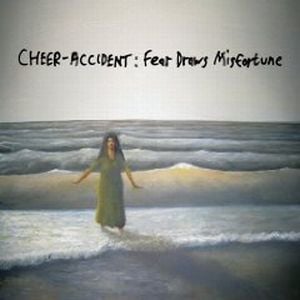
#21. Cheer-Accident - Fear Draws Misfortune (Cuneiform, 2009)

In the 25 years they've been active Cheer-Accident have tried on many different musical guises to varying degrees of success. I mean, in the 90s they went from Jesus Lizard gone math-rock (Dumb Ask) to fractured art-rock (Babies Shouldn't Smoke) to a full on progressive/RIO tribute (Not a Food) to the best approximation of what 10cc would sound like if they had formed a decade later in Chicago (their masterpiece, Enduring the American Dream) all the while adding their own stamp to the proceedings. That mainly came down to vocalist/band-leader Thymme Jones' unique (read: acquired taste) vocals and the production from his main foil in the band Phil Bonnet, who imbued their albums with the sort of deft touch you'd rarely hear in a band as small-time as they were. Unfortunately Bonnet succumbed to a brain aneurysm in 1999, but instead of that sinking the Cheer-Accident machine it seemed to completely revitalize them. Jones began doing a bit of a Mark E. Smith and altering the band's line up and sound even more with every album, leading to some their most intricate (Introducing Lemon's twinned 20+ minute bookends "The Autumn Wind Is a Pirate" and "Find") and accessible (What Sequel?) material ever. If that weren't enough they remained just as consistent as ever, never dipping below my ever changing 'pretty interesting' threshold for good albums even on the rare occasion where they seemed to get a bit over their head.

Really, I could have chosen any of their 00s releases for this list, and if you're even marginally interested in progressive rock that actually seems to be progressing you owe it to yourself to hear as much of their output as possible, but this year's Fear Draws Misfortune made my decision that much easier. Imagine an album that takes the band's most prog (avant or otherwise) tendencies and their most pop tendencies, grafts them together and winds up being both accessible and intricate to a fault. It's the odd instance where a band makes their most readily accessible album by amplifying some of the most challenging aspects of their sound, in this case fractured compositions, odd time signatures, non-standard instrumentation and a love of dissonance. A lot of that comes down to the line-up that Jones worked with on Fear Draws Misfortune, a streamlined variation of the What Sequel? line-up that dropped former U.S. Maple guitarist Todd Rittman and saxophonist Sheila Bertoletti and added new vocalist Carmen Armillas to the mix. Armillas' presence seems to be the element that lends the most accessibility to the album; though over half of it is instrumental her vocal contributions are a great foil for Jones. She's got just as distinct a voice as Jones, but hers is its opposite; strong where Jones is frail, lovely and well pitched where Jones isn't as concerned with the technicality of his vocals as the emotion behind them. Her addition to the group works so well that when Jones comes back for a couple of solo vocals late in the album I almost miss her, and I'm one of those weird people who love Jones' voice.

But the real strength here is how the instrumentalists interact. I mean, it's always the highlight of any Cheer-Accident album, but here it's at the fore more than ever. In the pure instrumental moments you're witnessing a very tight and very focused ensemble of players, with Jones providing his usual polyrhythmic drumming at the base, and the remaining members, all of whom are versatile multi-instrumentalists at this point, use his complex but focused patterns to lay down material that can range from driving (the guitar-focused "Blue Cheadle") to fanfare-ish (the sax and trumpet heavy "And Then You Realize You Haven't Left Yet") to dark and minimal ("Disenchantment"). It's a varied melange of stuff, but there's a lot of cohesion at its core, just listen to the should-be-jarring-but-isn't transition between "Mescalito" and "And then You Realize..." and the latter's quick shift into "Blue Cheadle"'s driving riff. Between that and the skill that the players bring to the table, as usual, it makes for one hell of great listen.

I'm saving a lot of my praise for the final trio of songs though. That's where Jones' vocals come back to the forefront after the almost choral approach to the vocals on the first six tracks and where the songs get long enough to really showcase just how great of an ensemble this incarnation of the Cheer-Accident line up can be. Essentially it feels a bit like the logical continuation of Enduring the American Dream 12 years after the fact - hell, "Your Weak Heart" might as well be called "Dismantling the Berlin Waltz Again" though it's not like that's a bad thing - with lots of quick-shifts within the songs, heavy emphasis on piano and keyboards and a lot of excellent interplay between the various members. It may not be as diverse as the rest of the album what with the lack of brass and Carmen, but it's the best example the album gives of what the band can do when they've got room to work. This is especially true of "Humanizing the Distance" where Jones' drumming drives the track for about 5 minutes before sputtering out in the most logical way and leaving the guitar duo of Jeff Libersher and Alex Perkloup to wind it up with some solemn, mournful lightness. It works excellently as a contrast to the more upfront and emotional work that Jones does on the tracks on either side of it, especially "Your Weak Heart" which might have his best vocal performance overall and certainly some of his most heartfelt lyrics. "Your Weak Heart" also manages to be just as varied as the rest of the album without using much more than piano and vocals, outside of Libersher and Andrea Fraught adding some mournful trumpet to the middle section it pretty much a Jones solo piece, and its transition into something resembling a particularly piano-heavy Aphex Twin track at about 4 minutes in is probably the best single section the album has to offer.

I feel like I should reiterate that the order you're seeing these in isn't necessarily reflective of the order they'd be in on my proper list, but in this case I have a feeling that Fear Draws Misfortune could be the kind of grower that might have a chance at attaining this position in a few years time. I know I haven't listened to any full album from this year more than it and none of them have excited me nearly as much as it has. I know that it's an improvement from the last few Cheer-Accident albums, and those were great albums that would make easy top 100 candidates on the "proper" list. I have a feeling it might be the best they've done since Enduring the American Dream, and I know that no progressive rock album this year is gonna top the variety and emotion contained herein. Call its placement hope for the future, I guess.